







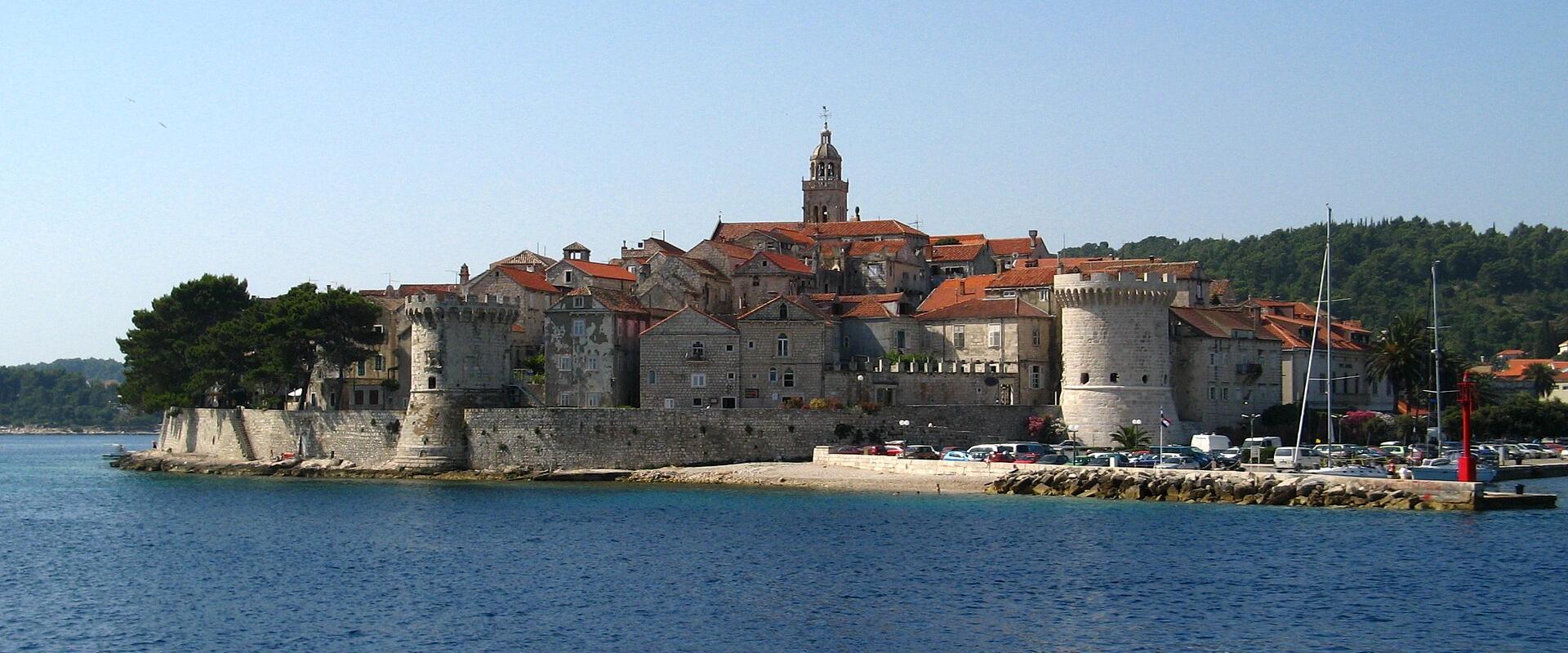
Korčula Old Town
Venetian-era fortified town on Adriatic coast
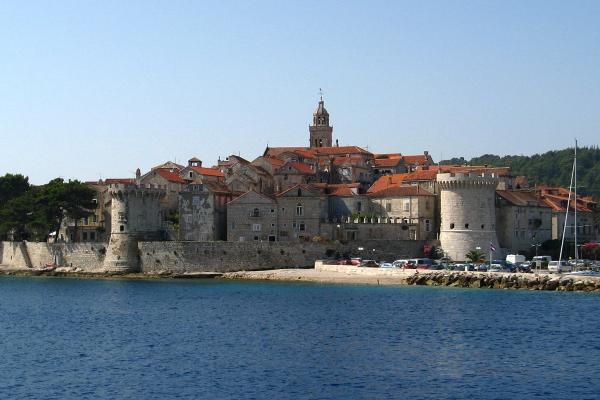
Korčula Old Town occupies a small, almost round peninsula on the northeastern side of Korčula Island in southern Croatia, facing the Pelješac channel across a narrow strip of sea. Greek colonists settled on the island in antiquity, and Roman and later medieval communities followed, but the walled town visitors see today is mostly the work of the Venetian centuries, when Venice held the island from 1420 until 1797. The Venetians strengthened the circuit of walls and towers, and the town kept its compact, tightly planned shape.
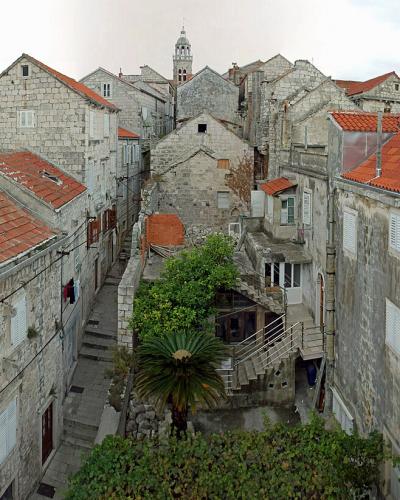
That plan is the first thing worth noticing. The main street runs along the ridge of the peninsula, and the side lanes branch off it in a herringbone pattern, with the lanes running down toward the water on both sides. Locals explain it as climate control: the lanes facing the bora wind are crooked and shielded, while those toward the gentler southern breeze are straighter and let air through. Wandering the lanes at summer midday shows how much shade the layout gives, whatever the exact reasoning.
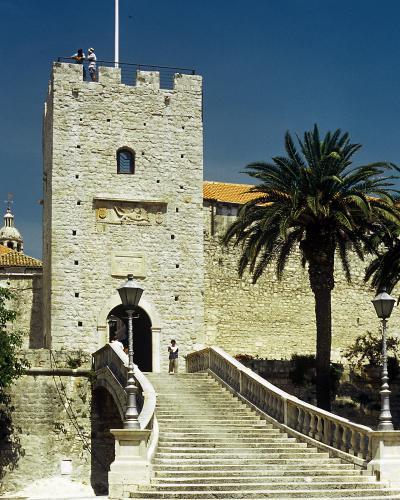
The skyline is dominated by the cathedral of St. Mark, a Gothic-Renaissance church in pale local stone, built over a long period and reached up a flight of steps from a small square. The old town museum and several Venetian-style palaces with carved doorways and coats of arms stand around it. Near the town entrance, the Land Gate and the Revelin Tower guard the approach from the landward side, and a handful of other towers survive along the walls. Several of them have their own entries, such as the Large Governor’s Tower, the Zakrjan Tower and the Kanavelić Tower, and you can compare their different styles as you circle the ramparts.
Korčula also holds a long-standing claim to be the birthplace of Marco Polo, and a house associated with that tradition can be visited, though the claim is a matter of local pride rather than settled history. A more reliable cultural thread is the Moreška, a sword dance with roots in Mediterranean tradition that is still performed in Korčula for visitors in summer. Another fact that surprises many people is that the town’s medieval statute dates back to the 13th century, one of the earliest such legal codes on the Adriatic coast.
The best times to be here are early morning and the hour before dusk, when day-trip crowds from cruise ships and tour boats have thinned and the stone turns warm. It suits history-minded walkers, photographers, and anyone who wants a small, car-free town where a full circuit on foot takes less than an hour but a day can easily fill with side streets, café terraces and views over the water toward Pelješac.
More photos coming soon
Nearby Attractions
Other places to visit in Korčula Island
Frequently Asked Questions
Quick Facts
Best Time to Visit
May to September offers warm weather, inviting sea, and lively festivals; spring and early autumn are quieter with pleasant temperatures for outdoor activities.