Renting a car in Croatia is straightforward: most companies want a driver of at least 21, a licence held for a year or more, a passport or ID card and a credit card in the main driver's name for the deposit. A car pays off in Istria, the Dalmatian hinterland, the Plitvice and Krka areas and on the Pelješac peninsula; for hopping between coastal cities and islands, buses and ferries are often easier.
Who can rent: age, licence and documents
Minimum and maximum ages are set by each rental company, not by law. A minimum of 21 is common, some firms accept younger drivers for small car categories, and drivers under 25 usually pay a young-driver surcharge. A few companies add a fee or require extra conditions for older drivers, so check the terms if this applies.
At the desk expect to show:
- a full driving licence, usually held for at least one or two years depending on the company
- a passport or national ID card
- a credit card (not debit, at most companies) in the main driver's name
- the booking voucher if you prepaid through a broker
Licences issued in the EU and EEA are valid as they are. Visitors with licences from elsewhere can generally drive on them for a short stay, but an International Driving Permit is advisable if the licence is not in the Latin alphabet, and some rental desks ask for one anyway. Every person who will drive must be named on the contract.
Deposits, insurance and extras at the desk
Third-party liability insurance is compulsory and included in every rental. Collision damage and theft cover are usually included too, but with an excess (the amount you pay if the car is damaged or stolen). The desk will offer to reduce that excess for a daily fee.
The security deposit is blocked on your credit card and depends on the car category and the level of cover you take. It is released after the car is returned, but it can take days for the hold to disappear from your statement. If you bought separate excess insurance through a booking site, the desk will still block the full deposit; you pay for any damage first and claim it back later.
Before leaving the car park:
- photograph or film every panel, the wheels and the windscreen
- confirm the fuel policy (full-to-full is the usual and fairest one)
- check that the warning triangle, first-aid kit and reflective vest are in the car
- ask whether the contract covers ferry crossings and taking the car to islands
When and where to book
Demand peaks in July and August, when small and automatic cars run short and prices rise. Booking several weeks ahead for summer is sensible; outside the season, short-notice rentals are usually easy. Manual gearboxes remain the default, so book early if you need an automatic.
Cars can be collected at the main airports (Zagreb, Split, Dubrovnik, Zadar, Pula, Rijeka on the island of Krk, and Osijek) and at city offices. International chains and Croatian firms operate side by side. Off-airport offices may be cheaper but often have shorter opening hours. One-way rentals, for example from Zagreb to Dubrovnik, are possible but usually carry a fee.
Crossing borders: Bosnia, Montenegro and the Schengen line
Croatia joined the Schengen area on 1 January 2023, so there are no routine border checks with Slovenia or Hungary. Bosnia and Herzegovina, Montenegro and Serbia are outside the EU, and crossing into them means a passport check and a requirement from the rental company: written permission, cross-border insurance documents and normally a cross-border fee. Driving across without permission can void the insurance.
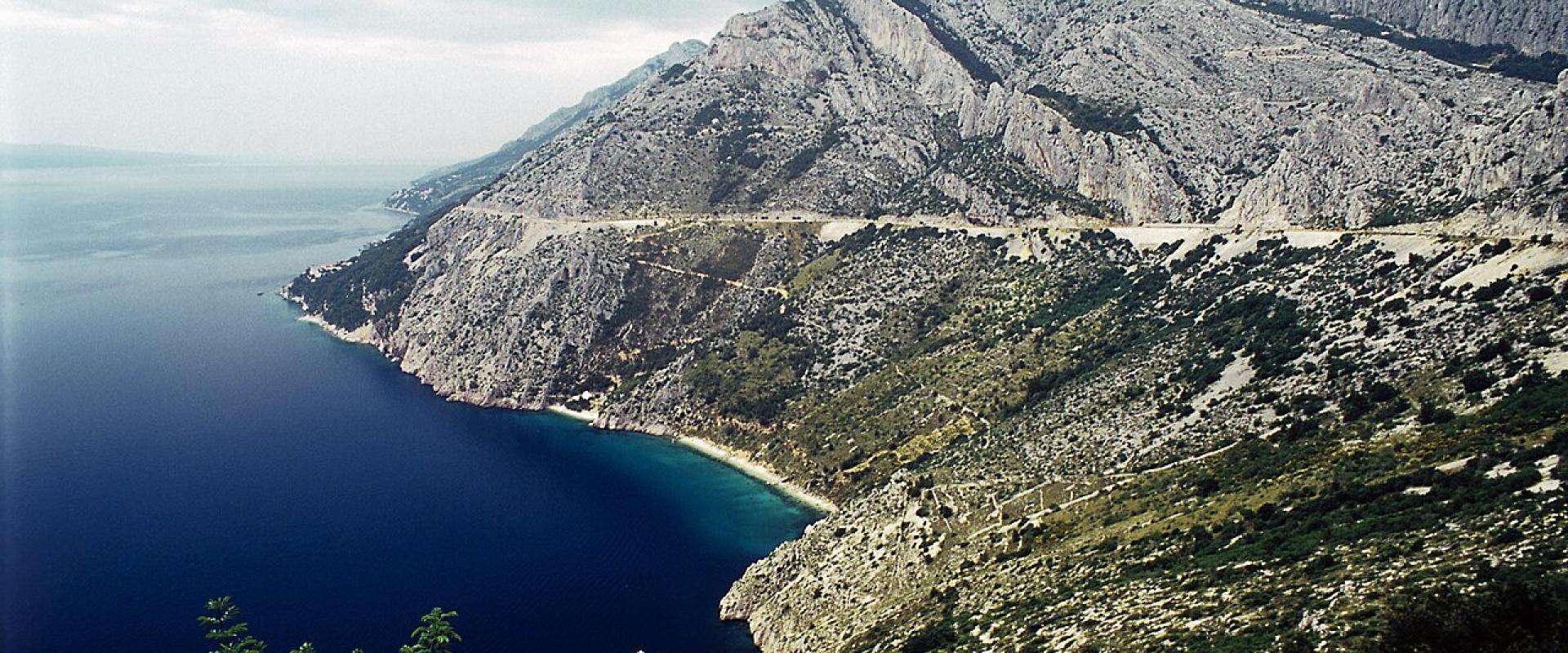
This matters most in the south. Day trips from Dubrovnik to Kotor in Montenegro or to Mostar in Bosnia and Herzegovina need cross-border permission. The coastal road between Split and Dubrovnik used to pass through the Bosnian town of Neum, but since the Pelješac Bridge opened in July 2022 drivers can stay on Croatian territory the whole way.
Road rules that differ from home
Croatia drives on the right. The rules most likely to catch visitors out:
| Rule | What applies |
|---|---|
| Speed limits | 50 km/h in built-up areas, 90 km/h on open roads, 110 km/h on expressways, 130 km/h on motorways, unless signed otherwise |
| Daytime headlights | Dipped headlights compulsory during the day from the last Sunday in October to the last Sunday in March |
| Alcohol | 0.5 g/kg for most drivers; zero for drivers under 24 and professional drivers |
| Equipment | Warning triangle, first-aid kit, reflective vest and spare bulbs; wear the vest if you step out onto the road |
| Phones | Hands-free only |
| Winter | From 15 November to 15 April, winter equipment is required on signposted roads when winter conditions apply |
The bura, a strong north-east wind, regularly causes speed limits or closures on the A1 motorway through Lika, on the Maslenica section and on the Krk Bridge. HAK, the Croatian Automobile Club, publishes live road conditions and runs roadside assistance on 1987. The general emergency number is 112.
Tolls, fuel and parking
Motorways such as the A1 (Zagreb to Split and on towards Ploče) and the A6 (Zagreb to Rijeka) are tolled. On most of the network you take a ticket on entry and pay at a booth when you leave, in euros or by card. A barrier-free system using number-plate cameras has been legislated to replace the booths, with launch planned for 2027, so check the current arrangements with HAC before travelling.
Petrol stations are frequent along the motorways and in towns, and the larger ones on motorways open around the clock.
Parking is the main headache on the coast. City centres use paid zones that you pay at machines, by text message from a Croatian mobile number or through an app; text payment may not work from a foreign SIM. The historic cores of Dubrovnik, Split and Hvar are closed to traffic, and spaces near them are limited and expensive in summer. Illegally parked cars in larger towns are towed. Many hotels and apartments have no parking of their own, so ask before booking.
Is a car worth it?
A car is the easiest way to see Istria's hill towns, the national parks, the vineyards of Pelješac and the inland areas of Slavonia and Zagorje, where buses are infrequent. It is less useful if you are staying in Dubrovnik or Split and taking day trips by boat. On the islands, taking a car on a ferry costs considerably more than travelling as a foot passenger, and in July and August car queues at busy ports can mean waiting for a later sailing. A common pattern is to travel the coast by bus and ferry and rent a car for a few days where the roads lead somewhere buses don't.