







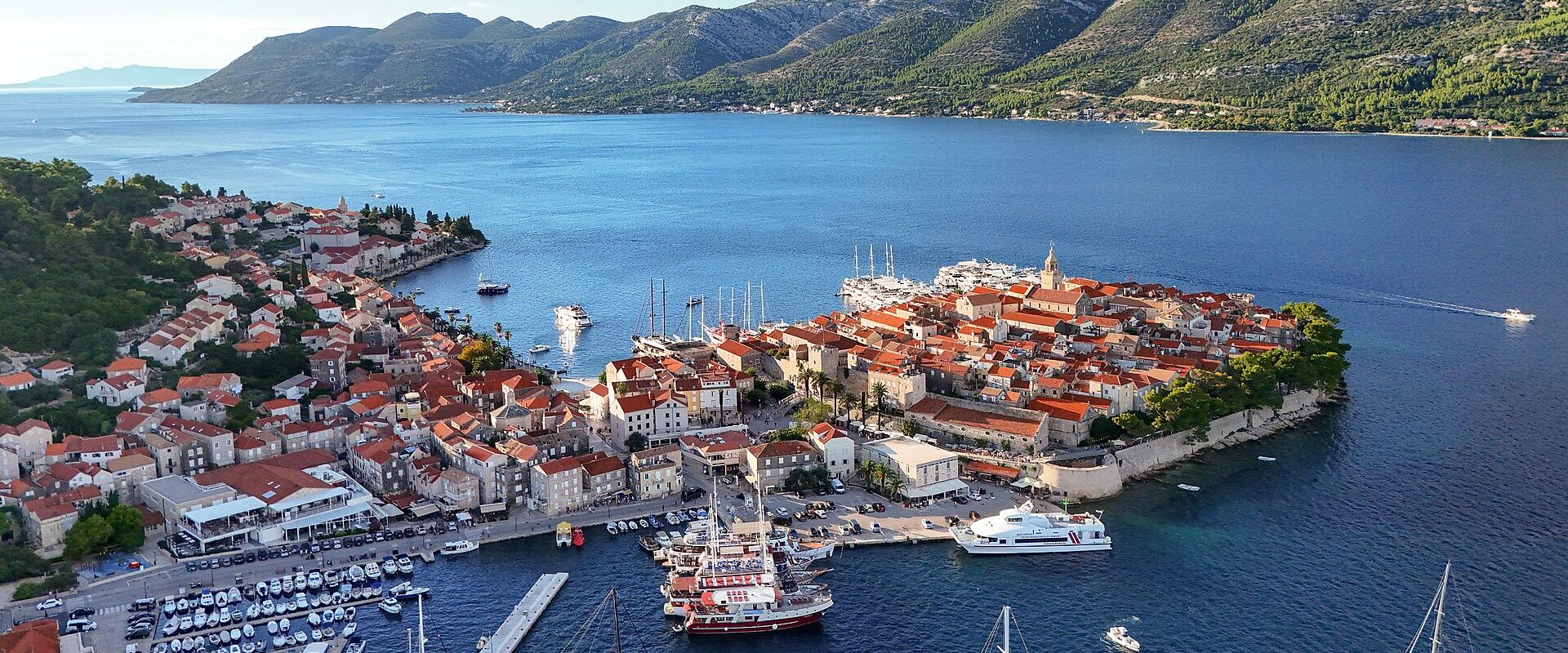
Korčula’s history stretches back to the 4th century BCE, when Greeks settled the island, and it later became a Roman and Venetian stronghold. Its position on a sea route made it a centre for trade, shipbuilding and stonework, and its residents developed customs that survive today, among them the Moreska sword dance and the production of Grk and Pošip wines. Korčula Town, the island’s historic centre, is a maze of stone streets, Gothic and Renaissance palaces and lively squares, laid out in a fishbone pattern designed to break the wind. The landmarks include St. Mark’s Cathedral, with its ornate facade and bell tower, the Marco Polo House, which is claimed to be the birthplace of the famous explorer, and the Land Gate, or Kopnena Vrata, which welcomes visitors into the old town. Towers such as Kanavelić Tower, Zakrjan Tower and the Large Governor’s Tower, known as Veliki Revelin, recall the town’s defensive past, and the West Gate and the Town Museum of Korčula add more layers of history.
The coastline is dotted with beaches and coves, among them Pupnatska Luka, Vela Pržina and the sandy bays of Lumbarda. Lumbarda’s sandy bays are unusual in Dalmatia and are surrounded by vineyards where Grk grapes grow in sandy soil. The clear water is good for swimming, snorkelling, kayaking and sailing, and boat tours run to nearby islets and hidden bays. Moro Beach Club, on the islet of Stupe in the Korčula archipelago, is one of the places that draws visitors to the water in summer. The villages of Lumbarda, Vela Luka and Račišće offer a slower pace, traditional stone houses and local konobas serving fresh seafood, olive oil and regional wines.
Korčula is a good island for outdoor enthusiasts. Cycling and hiking trails wind through vineyards, forests and up to scenic viewpoints, while the island’s marinas and sailing centres make it a popular base for yachting and regattas. Cultural life is lively, with summer festivals, open-air concerts and performances of the Moreska sword dance, which tells the story of a battle between Moors and Christians and is staged in the old town in season. Art galleries, museums and artisan workshops show the island’s creative side and heritage.
Wine and food are a strong reason to explore. Grk is a dry white grown around Lumbarda, and Pošip is grown in the villages near Smokvica and Čara, so a day trip through the interior can combine tastings with lunch in a village konoba. The island also produces olive oil and fish, and shellfish are served in many family restaurants.
Getting to Korčula Island is straightforward. The island is accessible by ferry and catamaran from Split, Dubrovnik and the Pelješac Peninsula, with main ports in Korčula Town and Vela Luka. Local buses, taxis and scooter rentals make it easy to explore the island’s towns and beaches. Accommodation options range from boutique hotels and guesthouses to private apartments and campsites, catering to all preferences and budgets.
The best time to visit Korčula Island is from May to September, when the weather is warm, the sea is inviting and the island’s beaches, festivals and outdoor activities are in full swing. Spring and early autumn offer mild temperatures, fewer crowds and excellent conditions for hiking, cycling and sightseeing. Whether you seek history, adventure or a taste of island life, Korčula offers a memorable Croatian escape.
Best time to visit
May to September offers warm weather, inviting sea, and lively festivals; spring and early autumn are quieter with pleasant temperatures for outdoor activities.
What to see in Korčula Island
Our picks first.
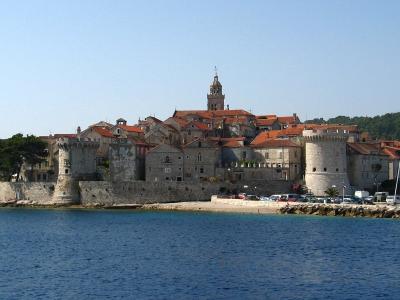
Korčula Old Town
Venetian-era fortified town on Adriatic coast
Cultural Experiences · History & Heritage
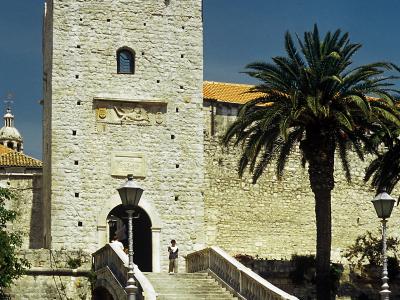
Large Governor’s Tower (Veliki Revelin Tower)
15th-century defensive tower guarding Korčula harbor
History & Heritage · Urban Exploration
West Gate
Medieval gateway marking Korčula Old Town entrance
Cultural Experiences
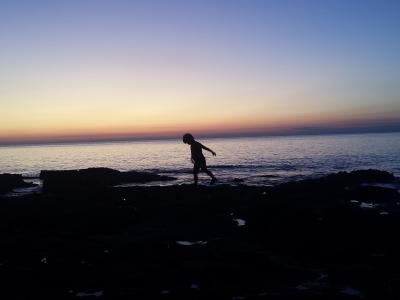
Moro Beach Club
Exclusive boat-access beach club with sea swing
Coastal & Maritime · Beaches
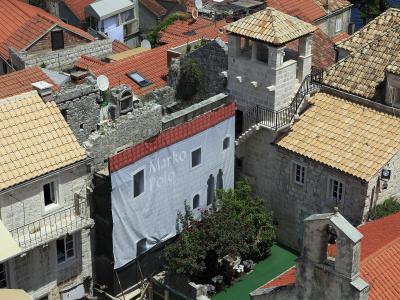
Marco Polo House
Birthplace of explorer Marco Polo on Korčula
Cultural Experiences
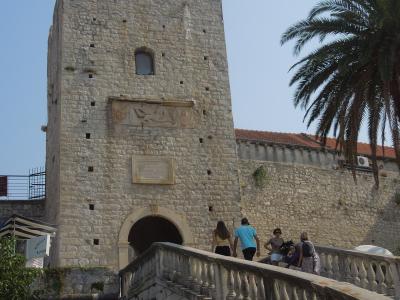
Land Gate (Kopnena Vrata) and Revelin Tower
13th-century stone gate and tower with Venetian lion
Cultural Experiences · History & Heritage
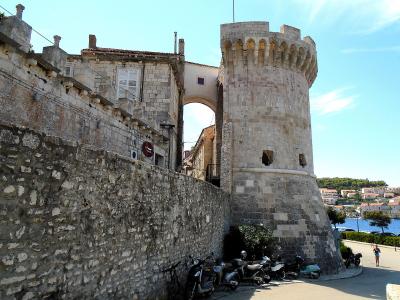
Zakrjan Tower (Zakerjan Tower)
Venetian medieval tower with historic coats of arms
History & Heritage · Castles
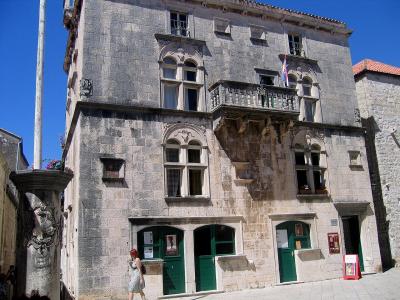
Korčula Town Museum (Gradski muzej Korčula)
16th-century palace showcasing Korčula’s history
From €8 Cultural Experiences · History & Heritage
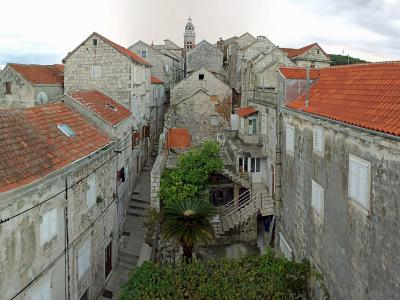
Kanavelić Tower
15th-century defensive tower with Adriatic views
History & Heritage · Castles
Korčula Island by interest
The same sights, grouped by what you came for.
- Cultural Experiences
- Korčula Old Town West Gate Marco Polo House Land Gate (Kopnena Vrata) and Revelin Tower Korčula Town Museum (Gradski muzej Korčula)
- History & Heritage
- Korčula Old Town Large Governor’s Tower (Veliki Revelin Tower) Land Gate (Kopnena Vrata) and Revelin Tower Zakrjan Tower (Zakerjan Tower) Korčula Town Museum (Gradski muzej Korčula) Kanavelić Tower
Did you know?
Checked facts about Korčula Island, each with its source.
-
Film & TV
A backdrop for HBO's Succession
HBO's Emmy-winning drama Succession shot part of its second season in Croatia over 12 days in July 2019, mostly on a yacht, with filming along the coast around the islands of Korčula, Mljet and Šipan.
Source: Croatian Audiovisual Centre -
Notable Person
Korčula Claims Marco Polo as Its Own
Korčula has long claimed to be the birthplace of Marco Polo, though no document records where he was born and many historians say Venice. The town house long shown as his birthplace was built at least two centuries after his death and now holds the Marko Polo interpretive centre.
Source: OBC Transeuropa
Planning a visit to Korčula Island
Itineraries that include Korčula Island
Good to know
- Currency
- EUR
- Language
- Croatian
Quick Facts
Book your stay
Questions people ask
More places in Dalmatia
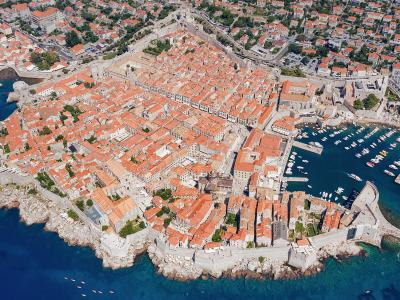
Dalmatia
Dubrovnik
Walled Adriatic city with UNESCO heritage and coastal views
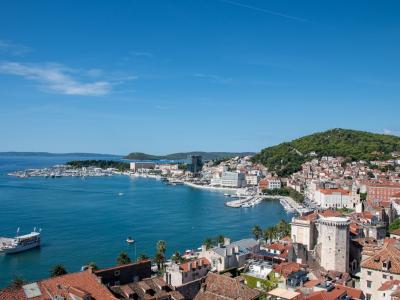
Dalmatia
Split
Roman palace city with Adriatic beaches and vibrant nightlife
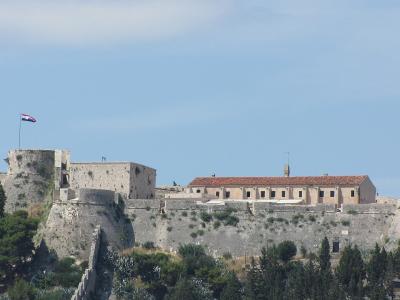
Dalmatia
Hvar
Sun-drenched Dalmatian island with beaches and lavender fields
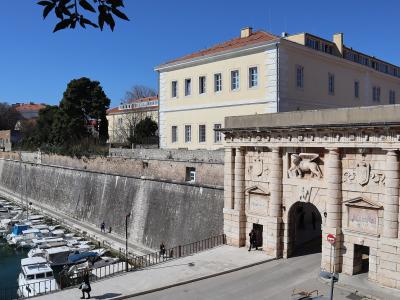
Dalmatia
Zadar
Ancient Dalmatian port with Roman ruins and modern art