Croatia's culture is layered: Roman cities on the coast, Venetian towns in Istria and Dalmatia, the independent Republic of Dubrovnik, and Habsburg Zagreb and Slavonia in the north. The country has 10 UNESCO World Heritage Sites and around twenty elements on UNESCO's intangible heritage lists, from klapa singing to lace, so heritage here means festivals, music and crafts as much as monuments.
History in brief
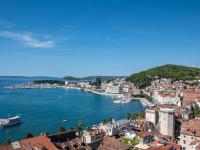
- Roman era: the coast was part of the Roman province of Dalmatia. Salona, near Split, was its capital, and Emperor Diocletian built his retirement palace in Split around 300 AD. Pula's amphitheatre is one of the best-preserved Roman arenas anywhere.
- Early Croatian state: Croats settled the region in the 7th century and a Croatian kingdom emerged in the 10th century. From 1102 the crown was joined with Hungary.
- Venice and Dubrovnik: for long periods Venice controlled most of Istria and the Dalmatian coast and islands, which explains the stone loggias, bell towers and lions of St Mark in towns like Zadar, Šibenik and Hvar. Dubrovnik (Ragusa) stayed an independent republic until 1808, surviving on trade and diplomacy.
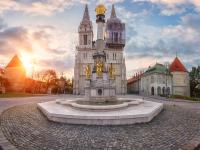
- Habsburgs and Ottomans: inland Croatia came under Habsburg rule, and a fortified Military Frontier faced the Ottoman Empire for centuries. Zagreb's Lower Town, Varaždin's Baroque centre and Osijek's Tvrđa reflect this Central European side of the country.
- 20th century: Croatia was part of Yugoslavia for most of the century. It declared independence in 1991, followed by the Homeland War (Domovinski rat) until 1995.
- Today: Croatia joined the EU in 2013 and adopted the euro and joined the Schengen area on 1 January 2023.
The 10 World Heritage Sites
| Site | Location | Listed |
|---|---|---|
| Old City of Dubrovnik | Dubrovnik | 1979 |
| Historical Complex of Split with the Palace of Diocletian | Split | 1979 |
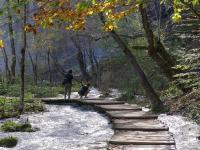
| Plitvice Lakes National Park (natural) | Lika | 1979 |
| Episcopal Complex of the Euphrasian Basilica | Poreč | 1997 |
| Historic City of Trogir | Trogir | 1997 |
| Cathedral of St James | Šibenik | 2000 |
| Stari Grad Plain | Hvar | 2008 |
| Stećci medieval tombstones (with neighbouring countries) | Cista Velika, Konavle | 2016 |
| Venetian Works of Defence (with Italy and Montenegro) | Zadar, Šibenik | 2017 |
| Primeval beech forests (European listing, natural) | Paklenica, Northern Velebit | 2017 |
The Euphrasian Basilica is one of the best-preserved early Byzantine church complexes, known for its 6th-century mosaics. Šibenik's cathedral is built entirely of stone, including its vaulted roof, and its outside wall carries a frieze of carved human heads. Stari Grad Plain on Hvar is an agricultural landscape whose field divisions go back to Greek colonists in the 4th century BC.
Living traditions on the UNESCO lists
Many of Croatia's intangible heritage elements are tied to particular places and dates, which makes them easy to plan around:
- Klapa singing: unaccompanied multipart singing from Dalmatia, traditionally by small groups of men, now also women. Look for concerts and klapa festivals in summer, notably in Omiš.
- Sinjska alka: a knights' tournament in Sinj, held on the first Sunday of August since 1715 to commemorate the defence of the town against an Ottoman army. Riders in historical costume aim a lance at a ring at full gallop.
- Festivity of St Blaise: Dubrovnik's patron saint's day, 3 February, with processions in the old town.
- Za križen: an all-night Maundy Thursday procession linking six villages on Hvar.
- Bell-ringers (zvončari): carnival groups from the Kastav area near Rijeka who walk between villages wearing sheepskins and large bells.
- Two-part singing in the Istrian scale: a distinctive Istrian and Kvarner style, often accompanied by the sopile, a pair of wooden shawms.
- Ojkanje: a shaking-voice style of singing from the Dalmatian hinterland, on UNESCO's list of heritage in need of urgent safeguarding.
- Bećarac: witty, often teasing sung couplets from Slavonia, usually with tamburica accompaniment.
- Nijemo kolo: the silent circle dance of the Dalmatian hinterland, danced without music.
- Međimurska popevka: folk songs from Međimurje in the far north.
- Crafts: lace from Pag, Lepoglava and Hvar; licitar gingerbread from northern Croatia; and children's wooden toys from Hrvatsko Zagorje.
Croatia also shares several multinational listings, including the Mediterranean diet and the art of dry stone walling, which you can see in the stone walls and terraces of the islands.
Regional character
- Zagreb and the north: Central European architecture, museums and cafés, castles and pilgrimage churches in Hrvatsko Zagorje, and Baroque Varaždin.
- Slavonia: flat farmland, tamburica music, folk costumes and festivals such as Đakovački vezovi in Đakovo in early July and Vinkovačke jeseni in Vinkovci in September.
- Istria: Roman Pula, Venetian coastal towns such as Rovinj and Poreč, and inland hill towns with a strong Italian influence; Italian is an official language in parts of the region. The Glagolitic Alley between Roč and Hum marks the Glagolitic script, Croatia's oldest alphabet.
- Dalmatia: Roman and Venetian stone towns, klapa, island life and the inland hinterland with its own song and dance traditions.
How to experience it
- Plan around dates: the Alka, St Blaise, Hvar's procession and carnival only happen on specific days. Summer festivals in Dubrovnik (10 July to 25 August) and Split (mid-July to mid-August) stage theatre and music in historic squares and courtyards.
- Use museums to frame the sites: the Archaeological Museum in Split and the Salona site in Solin give context to Diocletian's Palace; Zagreb's Ethnographic Museum shows regional costumes; Kumrovec's open-air museum shows village life in Hrvatsko Zagorje.
- Book a local guide for the dense sites, such as Diocletian's Palace, Salona and the Euphrasian Basilica; city tourist boards list licensed guides.
- Dress for churches: cover shoulders and knees in cathedrals and monasteries.
- Check hours: smaller museums often close on Mondays and many sites shorten their hours outside summer. Several Zagreb museums were closed for long periods after the March 2020 earthquake, so confirm before visiting.
- Ask the tourist board (turistička zajednica) in each town about local feast days. Almost every town and island village celebrates its patron saint with a Mass, procession and evening gathering, and these are often the most direct way to see local traditions without an audience of other visitors.