Yes, there is Uber in Croatia, and Bolt operates too. Both work reliably in Zagreb, Split, Dubrovnik, Zadar and the other larger cities, alongside conventional taxi companies with their own apps. On small islands and in rural areas, cars on the apps are scarce or absent, and a local taxi booked by phone is the usual option.
Uber and Bolt: where they work
Uber launched in Zagreb in 2015 and has since spread along the coast. Its own city list for Croatia is very long and includes many small towns and island municipalities, but a place appearing on that list only means the app can be used there, not that drivers are waiting. In practice:
| Area | What to expect |
|---|---|
| Zagreb | Uber and Bolt both easy to find around the clock |
| Split, Dubrovnik, Zadar | Good availability, especially in summer |
| Rijeka, Pula, Šibenik, Osijek | Both apps present; fewer cars, longer waits off-peak |
| Islands and small towns | Few or no cars; listed towns such as Hvar, Korčula or Bol can have the odd driver in season |
Bolt lists Zagreb, Split, Dubrovnik, Zadar, Rijeka, Pula, Osijek and Šibenik among its Croatian cities. Install both apps before arriving and register a payment card, so you can compare prices and availability on the spot.
Legally, app rides in Croatia are taxi services: Uber started in 2015 with licensed drivers, and the 2018 Road Transport Act opened up taxi licensing and allowed booking and payment through apps. App cars and taxis therefore often look alike.
Local taxi companies and apps
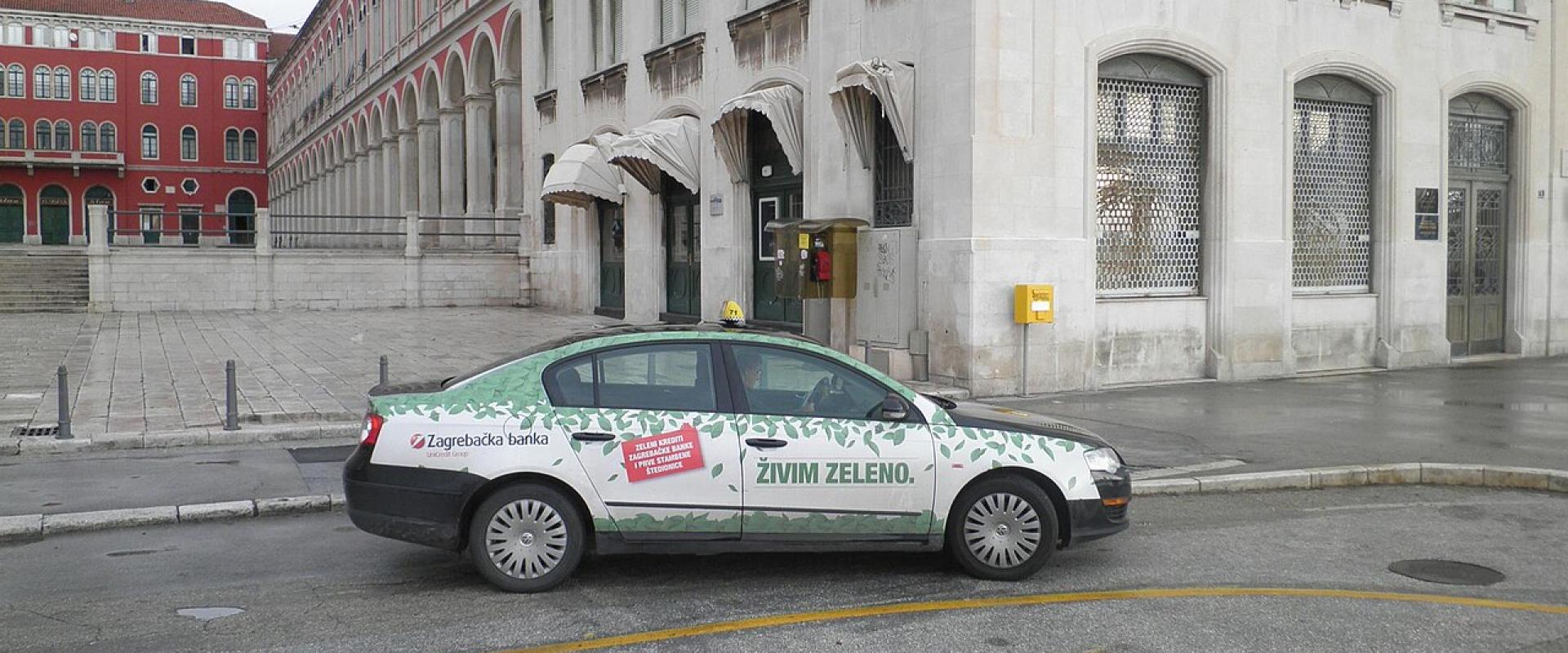
Traditional taxis remain widespread and are often the only option outside the cities. Wizi, the taxi company formerly known as Cammeo, has its own app and operates in Zagreb, Split, Rijeka, Pula, Šibenik, Osijek, Varaždin and a number of smaller towns, including several in Istria and on Krk. In Zagreb, Taxi 1717 and Ekotaxi are other established companies.
Tips for conventional taxis:
- Use official taxi ranks or book through a company's app or phone line rather than accepting offers from drivers approaching you at airports, ports or bus stations.
- Make sure the meter is running, or agree the price before setting off for longer trips such as airport transfers.
- On islands and in small towns, taxis are often run by a handful of local drivers; save a number from your accommodation and book early for morning ferries or flights.
Prices and payment
Fares on Uber and Bolt are calculated per trip, with the price shown before you confirm. Prices rise with demand: summer evenings in Split and Dubrovnik, the end of big concerts and festivals, and the hours when bars close often bring higher fares. Neither app is consistently cheaper, so compare both for each trip.
Payment is normally by card through the app. Cash is accepted on some rides depending on the app and the city; the payment options shown in the app for that trip are the ones that apply. Conventional taxis take cash and, increasingly, cards, but confirm card payment before the ride if you have no euros on you. Tipping is not expected; rounding up is a common courtesy.
Airports
Zagreb, Split, Dubrovnik and Zadar airports all have app pickups as well as taxi ranks and shuttle buses.
- Pickups for app rides are usually in a designated zone or car park rather than at the terminal door; the app shows where. Follow the in-app instructions and signs rather than guessing.
- Split airport lies near Trogir, around 25 km from Split, and Dubrovnik airport is near Čilipi, south-east of the city, so airport rides are among the longer trips you will take.
- In peak season, waits at the airport can be longer when several flights land together. If you arrive late at night or with a group and a lot of luggage, booking a transfer or taxi in advance removes the uncertainty.
- Shuttle buses timed to flights run from Zagreb, Split and Dubrovnik airports to the city bus stations and are much cheaper if you travel light.
Old towns, ports and pickup points
Several of the places visitors most want to reach are closed to cars. Dubrovnik's Old Town, Diocletian's Palace in Split and the centres of Hvar, Korčula and Rovinj are pedestrian areas, so app rides start and end at their edges. In Dubrovnik, the area around Pile Gate and Ploče Gate is the usual meeting point; in Split, the Riva and the streets just outside the palace walls.
Ferry ports are another pinch point. When a large ferry or catamaran docks in summer, demand spikes for a few minutes. Walking a short distance away from the terminal before requesting a ride usually makes pickup easier for the driver.
Practical tips
- Check the number plate and the driver's name against the app before getting in.
- Child seats are not standard in app cars. Some taxi companies offer a vehicle category with a child seat (Wizi has one), or book a transfer company that supplies them.
- Large luggage may not fit a standard car; choose a larger vehicle category in the app if one is offered.
- Mobile data is needed to request and follow a ride. EU visitors roam at domestic rates; others should consider a local or eSIM data plan.
- For journeys between cities, such as Split to Dubrovnik, buses are far cheaper than any app ride, and island trips need ferries regardless.
- Save the emergency number 112 and your accommodation's address in Croatian spelling, with diacritics, to avoid confusion with similarly named streets.