



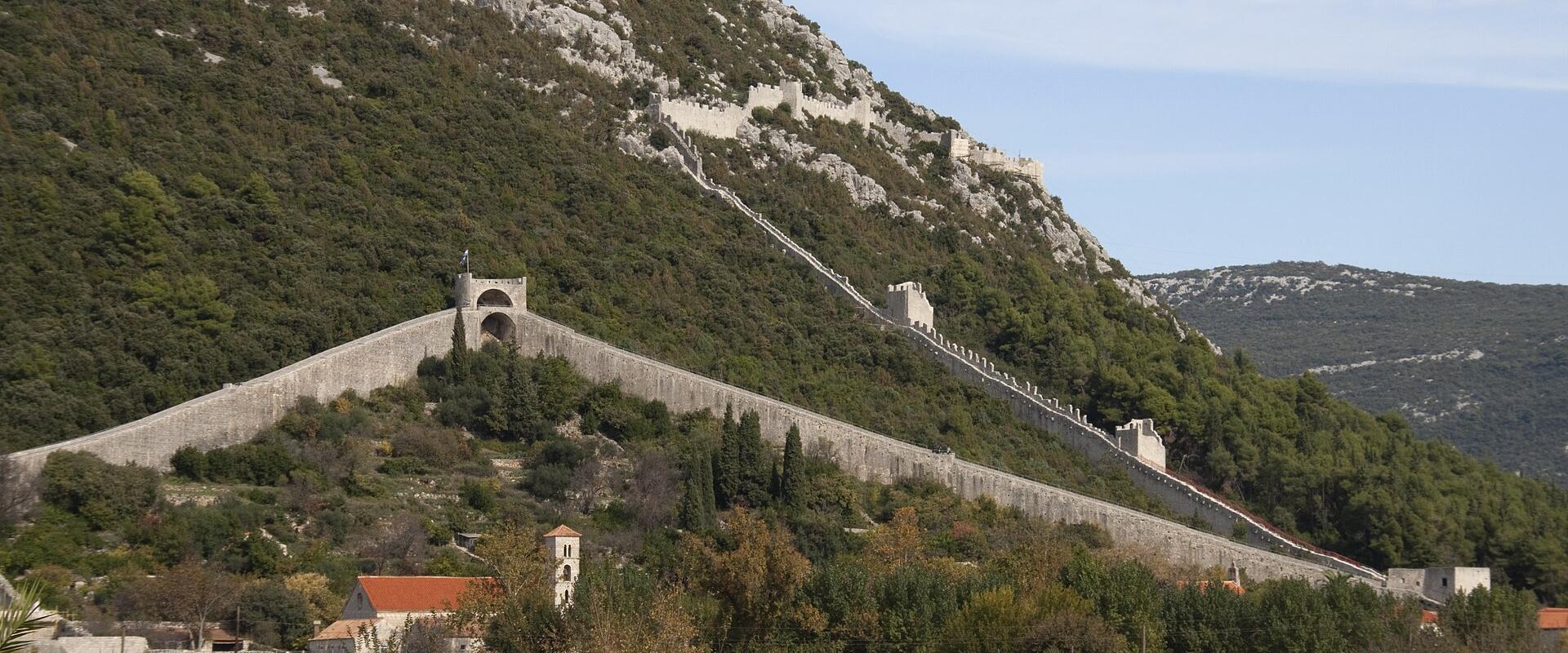
The Salt-Stained Ascent
Brine stings the nostrils as the Adriatic sun beats down on the 4.6-kilometer stretch of limestone. These 14th-century fortifications, raised by the Ragusan state to guard precious salt, now serve as a spine of history against the sky. Legs burn with every step up the ancient ramparts, but the tangible weight of the past makes the exertion worthwhile. This isn't just a wall; it is Europe’s longest continuous defense system, and you are standing right in the middle of it.
Guarding the Golden Harvest
You stride along the Great Wall of Europe, a 5.5-kilometer stone spine that once shielded the Republic of Ragusa’s most prized asset: salt. This medieval fortress was never designed to repel invading armies, but rather to keep Venetian thieves away from the nearby Pelješac salt pans. Thick walls and strategic towers stood as physical guarantees of economic power across the Adriatic. Today, the sun warms the limestone as you trace the path that secured Dubrovnik’s wealth for centuries. It is a tangible connection to an era when "white gold" dictated politics. The sheer scale of this engineering feat commands respect. You can almost hear the clinking of salt sacks from the 14th century. This is history you can touch.
Conquering the Longest Line
Europe’s most extensive defensive wall, the Ston fortifications, were erected in the 14th century by the Republic of Ragusa to shield its territory. Walking nearly two kilometers of this ancient stone path feels like stepping directly into a bygone era. You must pack sturdy boots and plenty of water, as the Pelješac sun provides minimal relief. The ascent remains steady rather than steep, offering ample opportunity to absorb panoramic views of the Neretva Delta. This physical exertion grants you direct access to the famous Ston salt pans. Local vendors nearby sell fresh oysters and sea salt, transforming your fatigue into a culinary reward. Every bite justifies the climb. You are treading upon a legacy that guarded a kingdom’s most prized asset for centuries.
Beyond the Stone
Leave the fortifications behind. The 4.5-kilometer defensive line built by the Ragusan state may have protected the salt pans, but the real story unfolds in the Neretva Delta. This historic landscape shifts dramatically from rigid stone to fluid water.
Rent a kayak and paddle into the shallow, brackish channels. Here, flamingos gather in serene flocks, offering a quiet contrast to the imposing walls you just climbed. The ecosystem that fueled the city’s medieval wealth is still alive here.
Afterward, seek out a local konoba for dinner. Order fresh Adriatic seafood paired with a glass of Plavac Mali. The region rewards travelers who look past the defenses to taste the terroir that once defined Dalmatian power.
Your Turn to Climb
For merely five euros, you can traverse the entire length of the Walls of Ston, a 14th-century defensive marvel constructed by the Ragusan state. This fee grants access to both the fortifications and the adjacent salt pans, offering a complete historical experience rather than just a glimpse of stone. Imagine the weight of history as you trace the exact path taken by medieval guards who once watched over the Adriatic.
The journey does not end at the ramparts. Just beyond the walls, the landscape shifts to the brine-rich flats where oysters thrive in the very water that fueled the city’s wealth. This connection between salt production and marine life provides a unique sensory backdrop, far removed from typical tourist traps.
From there, the adventure expands into the nearby Neretva Delta. Here, you can swap climbing for kayaking, paddling through calm waters alongside flamingos. It is a seamless transition from medieval defense to natural wonder, proving that the region offers much more than ancient stone.
Pack your bags now. The Adriatic coast is waiting for your exploration. Start planning this trip today.