







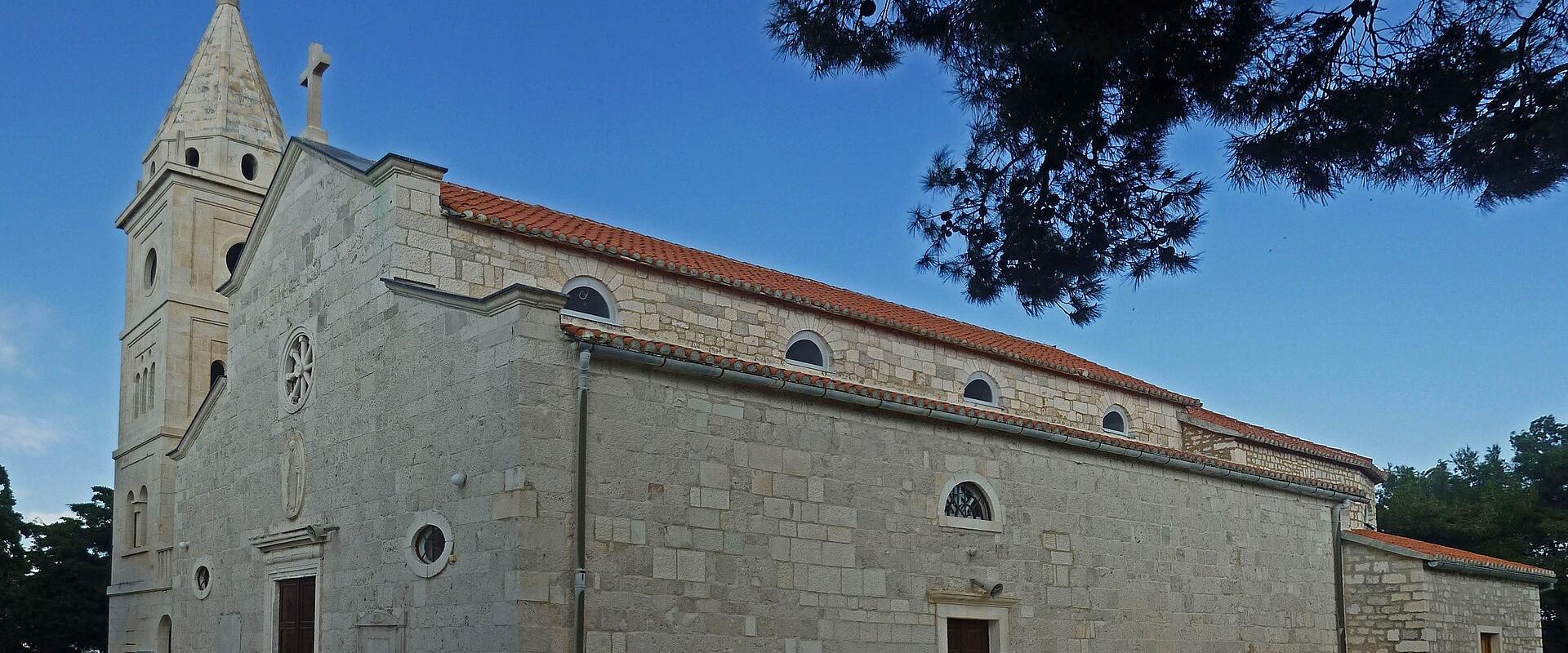
Church of St. George (Primošten)
15th-century church with white tower
The Church of St. George, Crkva svetog Jurja, stands on the summit of the hill at Primošten, the picturesque town in central Dalmatia, in Croatia, between Šibenik and Trogir. Its white bell tower is a landmark visible from many parts of the coast, and the walk up to it, through the winding lanes of the old town, is one of the most pleasant short walks in the region.
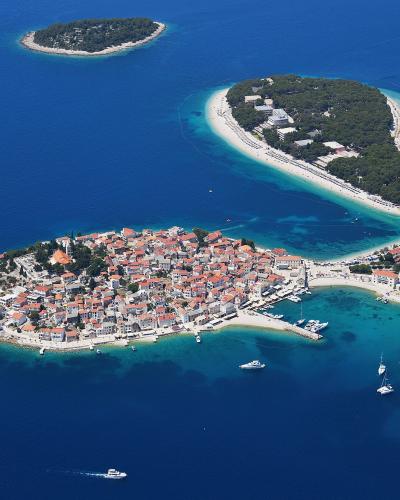
Primošten has an unusual setting. The old town occupies a small, almost round peninsula, which was originally an island, and the name, from the word for bridging, comes from the causeway that was later built to link it with the mainland. The houses are packed tightly together on the hill, built of pale local stone with red-tiled roofs and green shutters, and the streets are narrow, steep and stepped. From the sea, the whole town looks like a heap of white and terracotta blocks crowned by the church. The island location made the town easy to defend, and in the Middle Ages it was fortified, which explains the dense arrangement of the buildings.
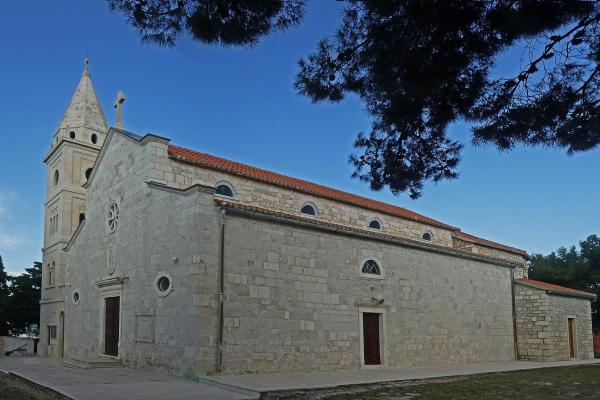
The church was built in the late Middle Ages, in the fifteenth century according to the usual account, and it serves as the primary religious and cultural landmark for the community. Saint George, a soldier and dragon-slayer, is one of the most popular saints along the Adriatic, and the dedication is common. Reaching it involves a climb along the lanes, with stone houses and balconies on either side, until the path emerges on the summit, where the church stands in an open space. The exterior is simple, built of white stone, with a bell tower that has become the symbol of the town.
Inside, the church has an interior of pristine craftsmanship, with a painted ceiling and an altar dedicated to Our Lady of Loreto. The atmosphere is serene, in contrast to the energy of the streets below, and it is a good place to rest in the shade. A highlight is the view. From the grounds of the church there are panoramic vistas over the red roofs, the sea, the islands and the coast, and in the distance there is a fortress. On clear evenings the sunset from here is memorable.
Next to the church lies the cemetery, which is notable for its well-tended graves, where the stones carry names, dates and occupations of the deceased, adding a layer of social history to the visit, as the records give an insight into the lives of fishermen, farmers and craftsmen. Visitors should be respectful in the cemetery and dress modestly in the church.
The site is accessible to all, and the walk takes about fifteen minutes from the harbour. It suits those who like views, small churches and old streets, and it is best in the morning or late afternoon, when the light is soft. Primošten is also famous for its vineyards, which produce a well-known red wine, and the old town is a good place to try it.
Categories
More photos coming soon
Nearby Attractions
Other places to visit in Primošten
Frequently Asked Questions
Quick Facts
Best Time to Visit
Late June to late August offers hot weather, warm sea, and lively festivals; May, June, and September are quieter with pleasant temperatures for outdoor activities.