







- Admission
- Free
- Hours
- Open 24 hours
- Where
- Primošten, Dalmatia
- Directions
- Directions
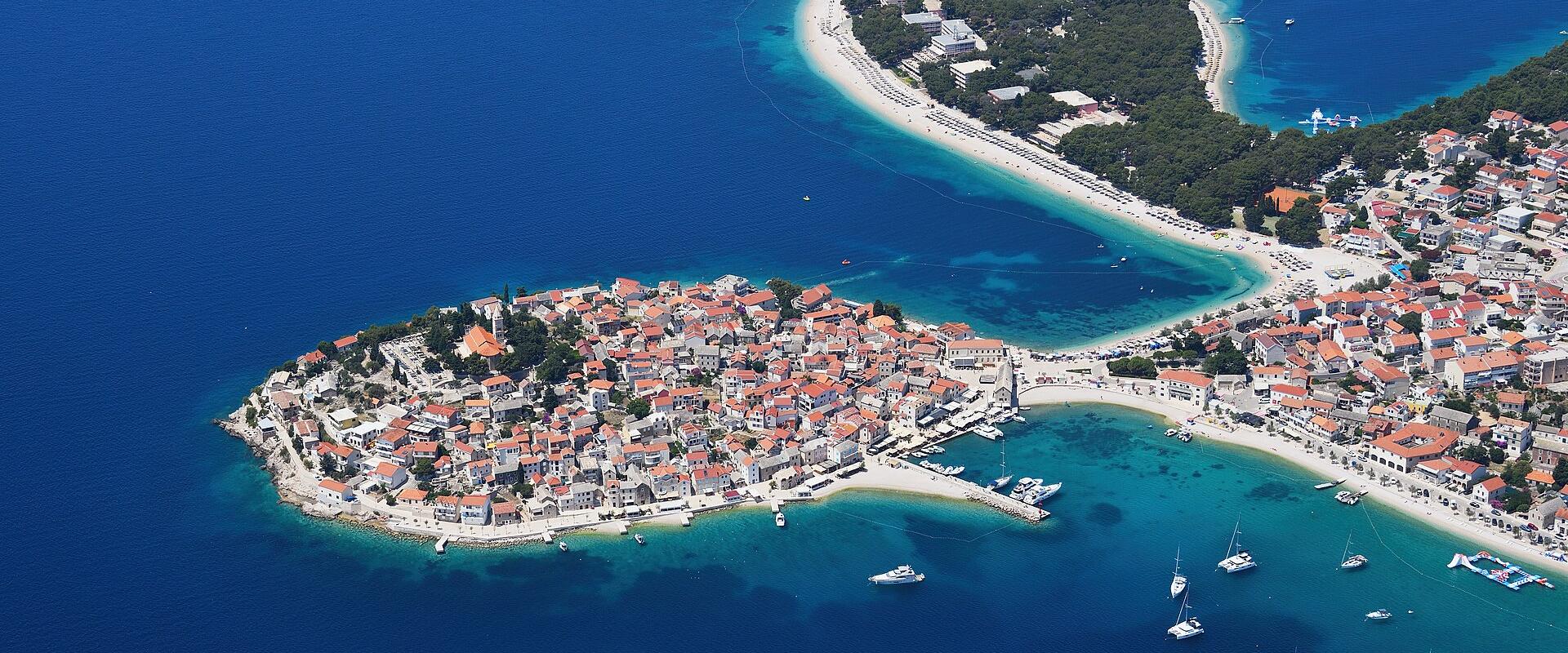
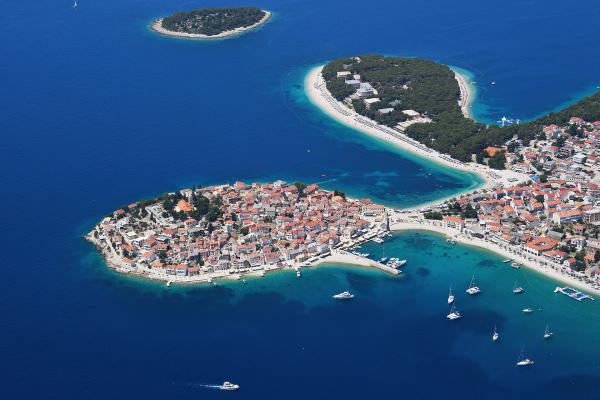
Primošten Old Town sits on a small, almost round peninsula that juts into the Adriatic Sea between Split and Šibenik, and from a distance it looks like a single hill of white stone houses rising out of the water. The Old Town covers the whole hill, with a ring of tiny streets spiralling up toward the summit, and it is among the best-known and most photographed places on the central Dalmatian coast. The name is said to come from the Croatian word for bridging, because the settlement began as an island and was later joined to the mainland by a causeway and drawbridge.
The town's story begins in the 16th century. As Ottoman troops moved through the Dalmatian hinterland, people from nearby villages sought safety on the island, which was easy to defend, and in 1564 a fortified community was founded there. A wall and a drawbridge protected the entrance, and the houses were built close together on the slope, with narrow lanes and steps that could be defended street by street. After the threat passed, the channel was filled in and the island became a peninsula, but the compact layout remains. Walking up from the bridge through the gate, you pass houses of pale local limestone with small windows, stone stairs, flower pots, laundry lines and cats, and the lanes are so narrow that two people can barely pass.
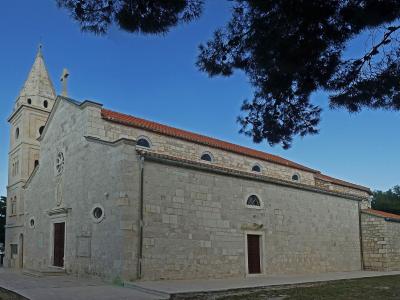
The crown of the hill is the Church of St. George (Sv. Juraj), whose bell tower can be seen from far out at sea. The church stands among cypress trees, and beside it a graveyard with views of the coast climbs the slope. The panorama from the top is the best reward for the climb: the red roofs below, the sea on three sides, the nearby islets and the long line of the coast. Sunrise and sunset are especially lovely, when the stone takes on warm colours.
Primošten is also known for its vineyards. The stony hills around the town have been terraced with dry-stone walls, and the traditional grape here is Babić, a red variety that produces a rich, dark wine that is one of the pride of the region. The patterns of vineyards and walls are so remarkable that they are often compared with lace, and some are protected as a cultural landscape. Wine cellars and restaurants in and around the town offer tastings.
The old town is free to visit and open at all times, but the surface is uneven and worn, so comfortable shoes with grip are essential. In July and August the streets are crowded, so go early or late. It suits couples, photographers and wine lovers.
Categories
More photos coming soon
Hours & Fees
- Open
- Open 24 hours
- Admission
- Free
Hours and prices change, especially out of season. Check with the venue before you go.
Nearby Attractions
Other places to visit in Primošten
Questions people ask
Quick Facts
Best Time to Visit
Late June to late August offers hot weather, warm sea, and lively festivals; May, June, and September are quieter with pleasant temperatures for outdoor activities.