







- Where
- Zadar, Dalmatia
- Directions
- Directions
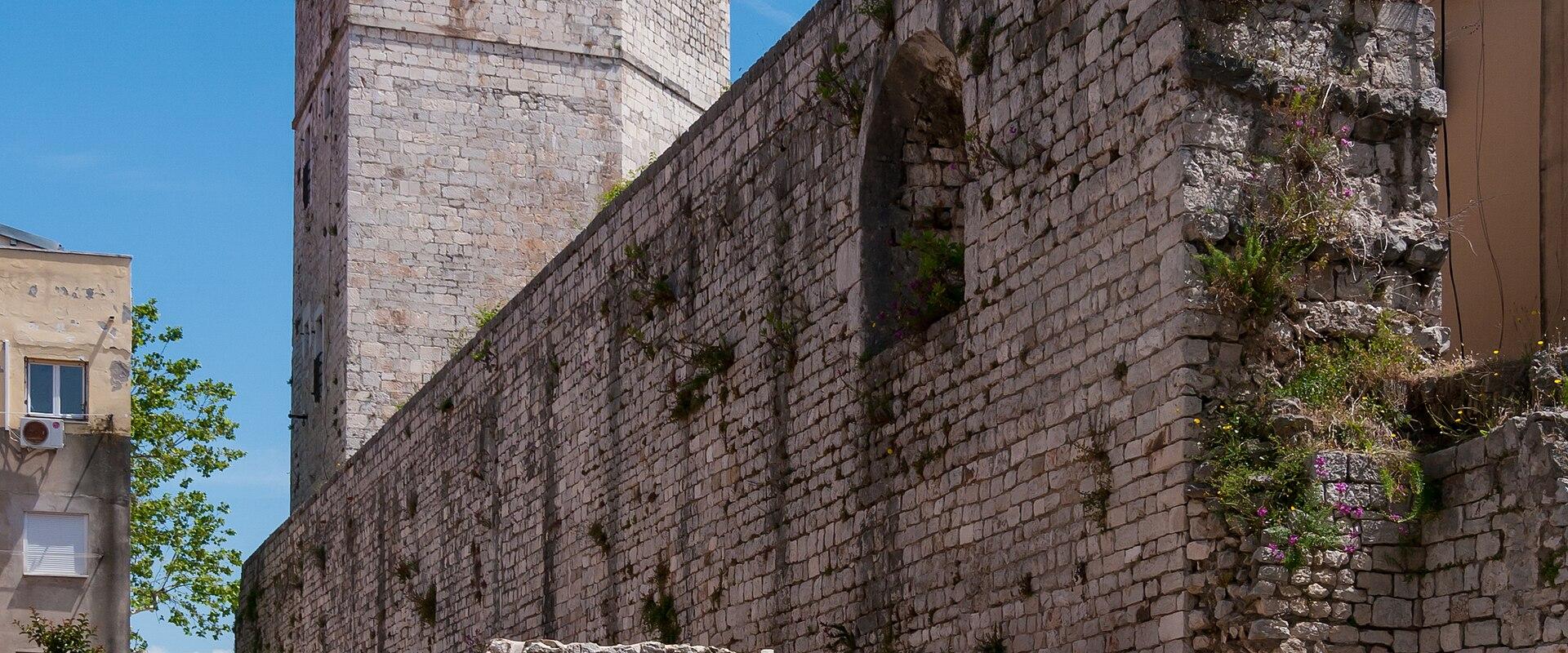
Zadar's old town, in Croatia, stands on a small peninsula, and for most of its history it was a place defined by walls. The city lay on a contested coast, at the meeting point of the Venetian Republic, the Ottoman Empire and the Habsburg lands, and between the 15th and 17th centuries Venice turned it into one of its principal fortress cities in the eastern Adriatic. The result is a compact fortified old town in which the walls, gates and bastions are still the key to understanding the layout, and in 2017 the fortifications of Zadar were included in the UNESCO World Heritage listing of the Venetian Works of Defence, together with similar systems in Italy and Montenegro.
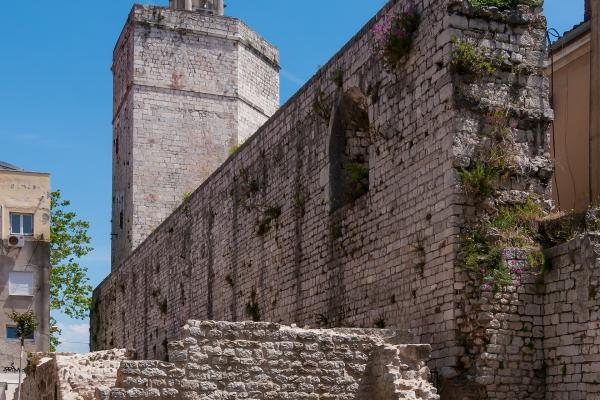
The walls enclose the whole peninsula, and they were built in stages. The main work belongs to the 16th century, when Venetian military engineers designed a new system of bastions and curtain walls to resist artillery, which had changed the nature of warfare. The Land Gate (Kopnena vrata), the main entrance from the mainland, dates from 1543 and is a fine piece of Renaissance architecture, with a carved winged lion of St. Mark, the symbol of Venice, above the arch. Beside it stands the Grimani Bastion, a heavy projecting fort that shows how the defenders could sweep the approaches with fire. On the harbour side, the Sea Gate recalls the sea arrival by Venetian galleys, and the Captain's Tower, part of the old castle complex, once housed the Venetian commander.
Inside the walls, the streets are narrow, straight and surprisingly easy to follow, and the pavements are made of polished stone that glistens in the sun and after rain. Five Wells Square (Trg Pet Bunara) is one of the pleasant surprises of the old town: a quiet square with a group of five wells in a row, built in the 16th century to store water for the garrison and the people during sieges, since a fortress without water could not hold out. Today the square is a calm place with cafés and shade trees. The peninsula is so small that a visitor can walk from end to end in about fifteen minutes, but exploring properly takes much longer.
Walking along the walls, particularly the section above the harbour, gives a feel for the former defences and for the views of the sea and the islands. Many parts are free to see, and others charge a small fee, and the Zadar Promenade At Sunset and the Sea Organ lie on the same side. The Queen Jelena Madije Park, a green space built on the old bastion, and St. Chrysogonus Church are close by.
The old town suits history lovers, couples and anyone who likes to wander. Early morning is the quietest time, and it can be hot in summer, so bring water.
More photos coming soon
Nearby Attractions
Other places to visit in Zadar
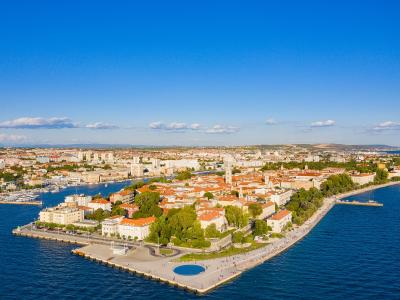
Greeting to the Sun
Solar-powered light circle symbolizing the solar system
Free Cultural Experiences
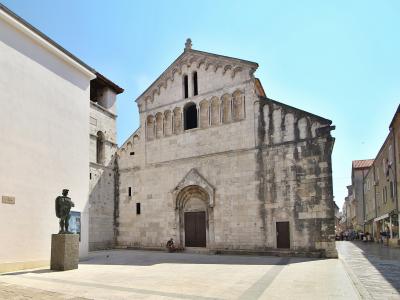
St. Chrysogonus Church
Romanesque basilica with Baroque altar and ancient columns
Cultural Experiences · History & Heritage

Queen Jelena Madije Park
Croatia’s first public park with sea views
Cultural Experiences
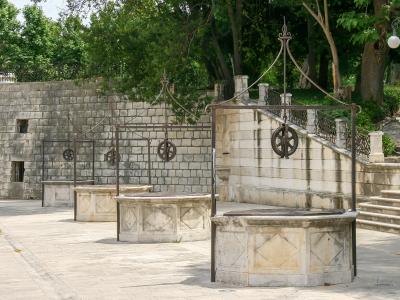
Five Wells Square (Trg Pet Bunara)
Five ancient wells and Croatia’s oldest park
Cultural Experiences · City Centers
Questions people ask
Quick Facts
Best Time to Visit
Late June to late August offers hot weather, warm sea, and lively events; May, June, and September are quieter with pleasant temperatures for sightseeing.