







St. Chrysogonus Church
Romanesque basilica with Baroque altar and ancient columns
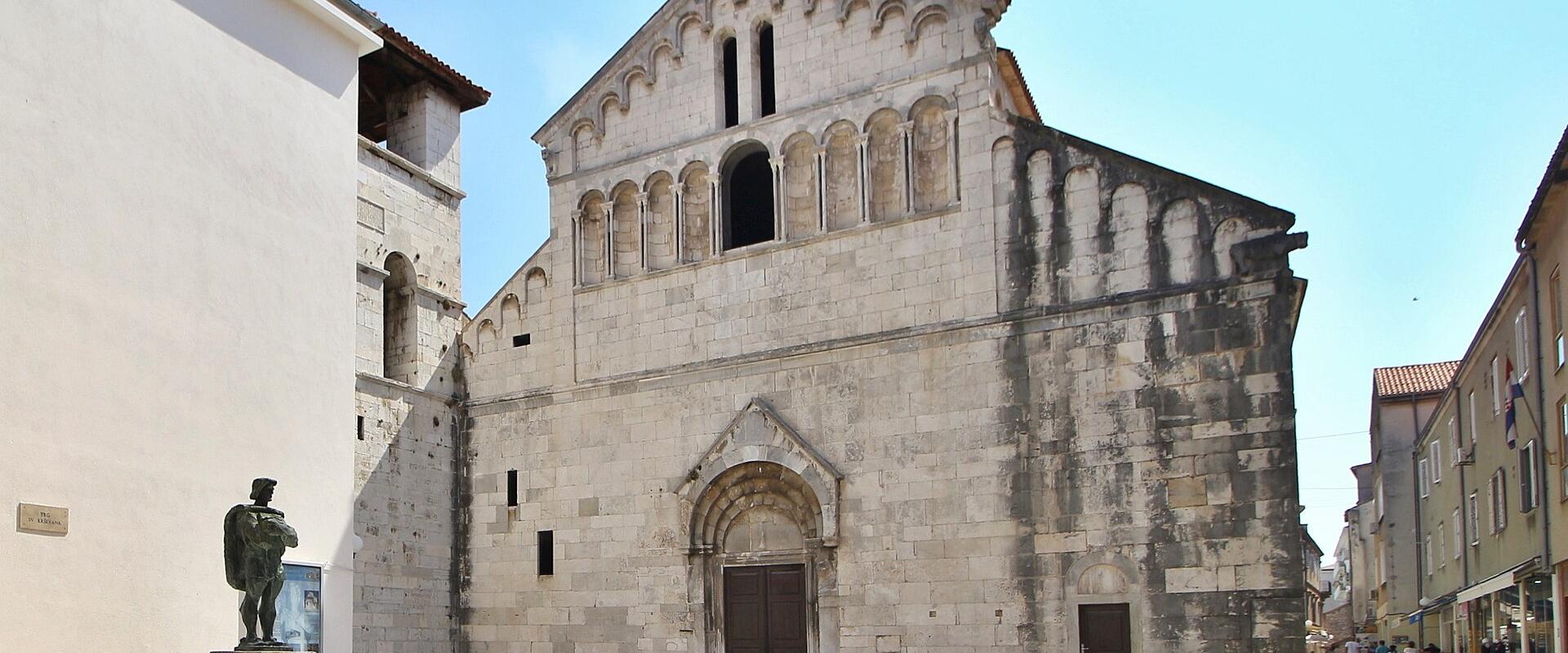
St. Chrysogonus Church, known in Croatian as Crkva sv. Krševana, is the largest Romanesque church in Zadar and one of the finest in Dalmatia. It stands in the old town on the peninsula, a short walk from the Roman forum and the other landmarks of the historic centre, and it is dedicated to the early Christian martyr who is one of the city’s patron saints. In Zadar he is known as Krševan, and his name is still used for the church, the square nearby and a number of local traditions.
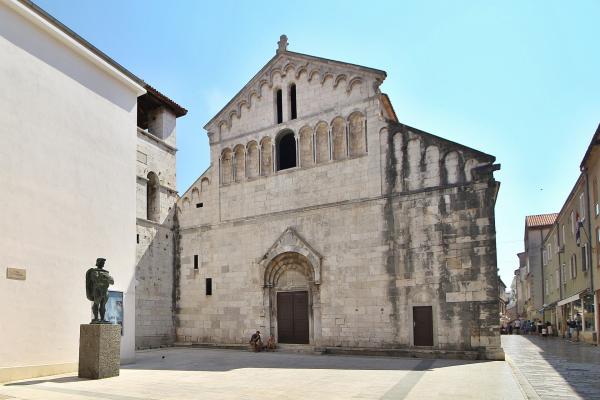
The building was consecrated in 1175, and it belonged to a Benedictine monastery of the same name, which was among the most important religious houses in medieval Zadar. The church has a long three-aisled plan, with a nave divided from the side aisles by columns that are partly reused from earlier buildings, a reminder that Zadar was a Roman city before it was a medieval one. The outside is plain but dignified, with a front that is simple in form and a tall apse decorated with a blind arcade, the row of shallow arches typical of Romanesque architecture in the Adriatic region. Seen from the street, it has a particular quiet power that contrasts with the more ornate churches of later centuries.
Inside, the proportions are lofty and the light is soft. The most obvious later addition is the Baroque altar of 1701, with statues of Zadar’s patron saints, work attributed to a Venetian sculptor named Alvise Tagliapietra. It stands out against the austere medieval stonework and gives a visual lesson in how churches were adapted over time. Fragments of older paintings and stone carving add detail for those who look closely.
The church also has a place in royal history. Queen Elizabeth of Bosnia, consort of the king of Hungary, was buried here in 1387 after her death at Novigrad, and her burial was carried out in secret because of the political tensions of the time. It is a striking story attached to a very calm interior.
The church is easy to combine with other places in the old town, including Five Wells Square, the Sea Organ and the nearby People’s Square. Visitors should note that, because it is a living place of worship and sometimes hosts concerts, visiting times vary, and visitors should dress modestly and behave quietly. It suits lovers of medieval architecture, history, and those who like quiet interiors away from the busy seafront.
More photos coming soon
Nearby Attractions
Other places to visit in Zadar

Frequently Asked Questions
Quick Facts
Best Time to Visit
Late June to late August offers hot weather, warm sea, and lively events; May, June, and September are quieter with pleasant temperatures for sightseeing.