







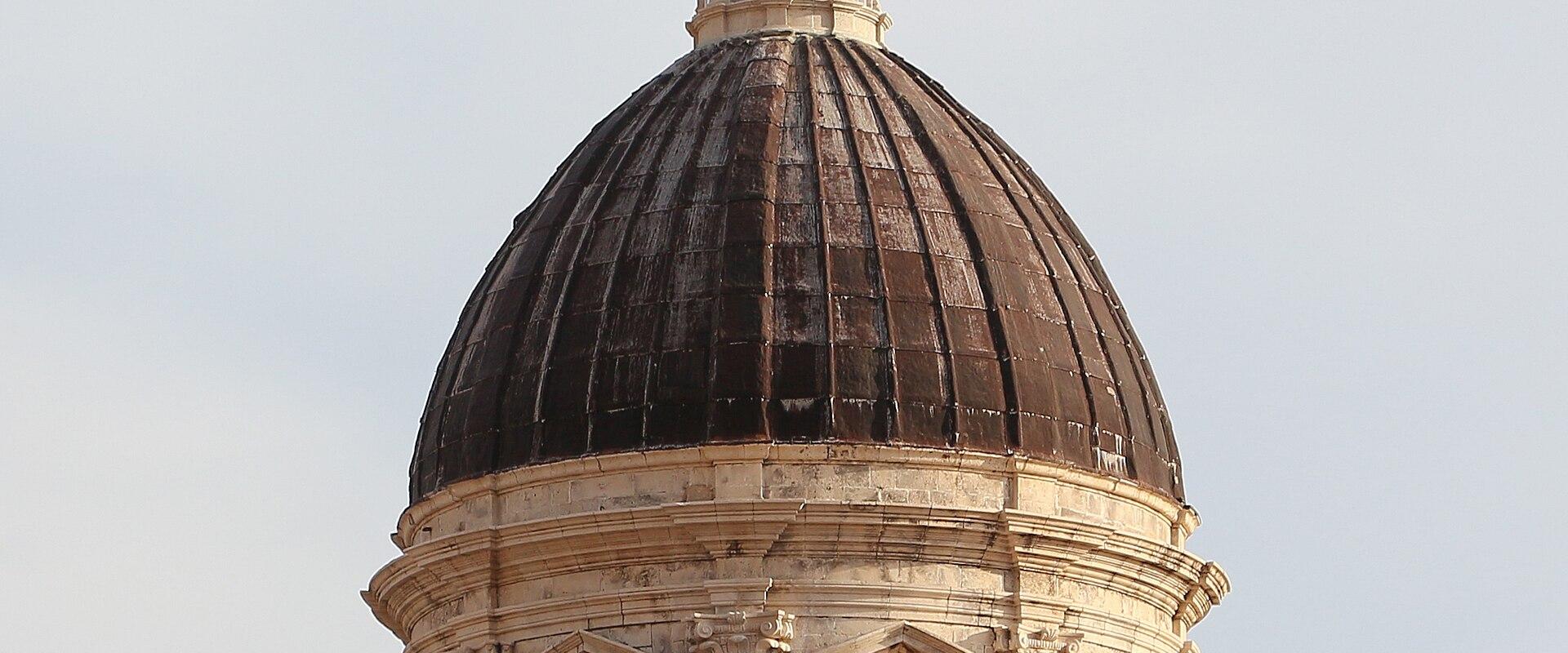
Dubrovnik Cathedral and Treasury
Baroque cathedral with 132 saint relics treasury
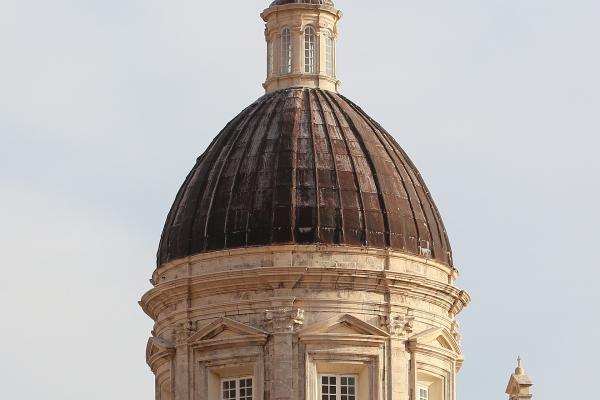
Dubrovnik Cathedral, officially the Cathedral of the Assumption of the Virgin Mary, stands in the southern part of the old town, close to the Rector's Palace and the harbour, and its great Baroque dome is one of the landmarks of the city skyline. It is smaller and less crowded than many of Dubrovnik's famous sights, and for visitors who want to understand the religious life of the old republic, it is one of the most rewarding stops. The cathedral is free to enter, while the treasury, a separate room with a large collection of relics and reliquaries, is a highlight that normally requires a small ticket.
The present building is largely the work of the early eighteenth century. An earlier cathedral stood on the site in the Middle Ages and was a Romanesque church of considerable size, and a popular legend says that it was financed by Richard the Lionheart, the English king, who was shipwrecked near Dubrovnik on his return from the Crusades in the late twelfth century and who vowed to give money for a church if he survived. Historians treat this story with caution, but it remains part of the city's tradition. In 1667, a catastrophic earthquake destroyed much of Dubrovnik, including the cathedral, and the republic commissioned an Italian architect to build a new church in the Baroque style, which was completed in the following decades. The result is a spacious, light interior with a high nave, chapels and altars of marble.
Among the artworks is a large altarpiece of the Assumption, attributed to the workshop of Titian, which hangs above the main altar, and other paintings and sculptures in the side chapels. The architecture is elegant and measured, in keeping with the character of the republic, which prided itself on moderation and good order.
The treasury is the main draw for many visitors. It holds a large collection of relics of saints, kept in reliquaries of gold, silver and gilded metal made over many centuries by the city's goldsmiths. Dubrovnik's patron saint, St. Blaise, is honoured with a number of reliquaries, including precious containers for parts of his body, and the celebration of his feast in early February is the city's main religious and civic festival, with processions through the streets. The treasury also contains Byzantine objects, such as an enamelled reliquary and a fine casket, which reflect the republic's long connections with the eastern Mediterranean. Visitors can sometimes ask to see the crypt below.
Opening hours vary with the season, being longer in summer and more limited in winter, and visitors are expected to dress modestly, with covered shoulders and knees. The cathedral is easy to combine with the Rector's Palace, the Large Fountain of Onofrio, the Stradun and the walls, which are all described in this guide. Allow thirty to forty-five minutes. It suits visitors interested in art, religion and the history of the republic.
More photos coming soon
Nearby Attractions
Other places to visit in Dubrovnik
Frequently Asked Questions
Quick Facts
Best Time to Visit
May to June and September to October offer warm weather, fewer crowds, and ideal conditions for sightseeing, walking the walls, and enjoying the coast.