







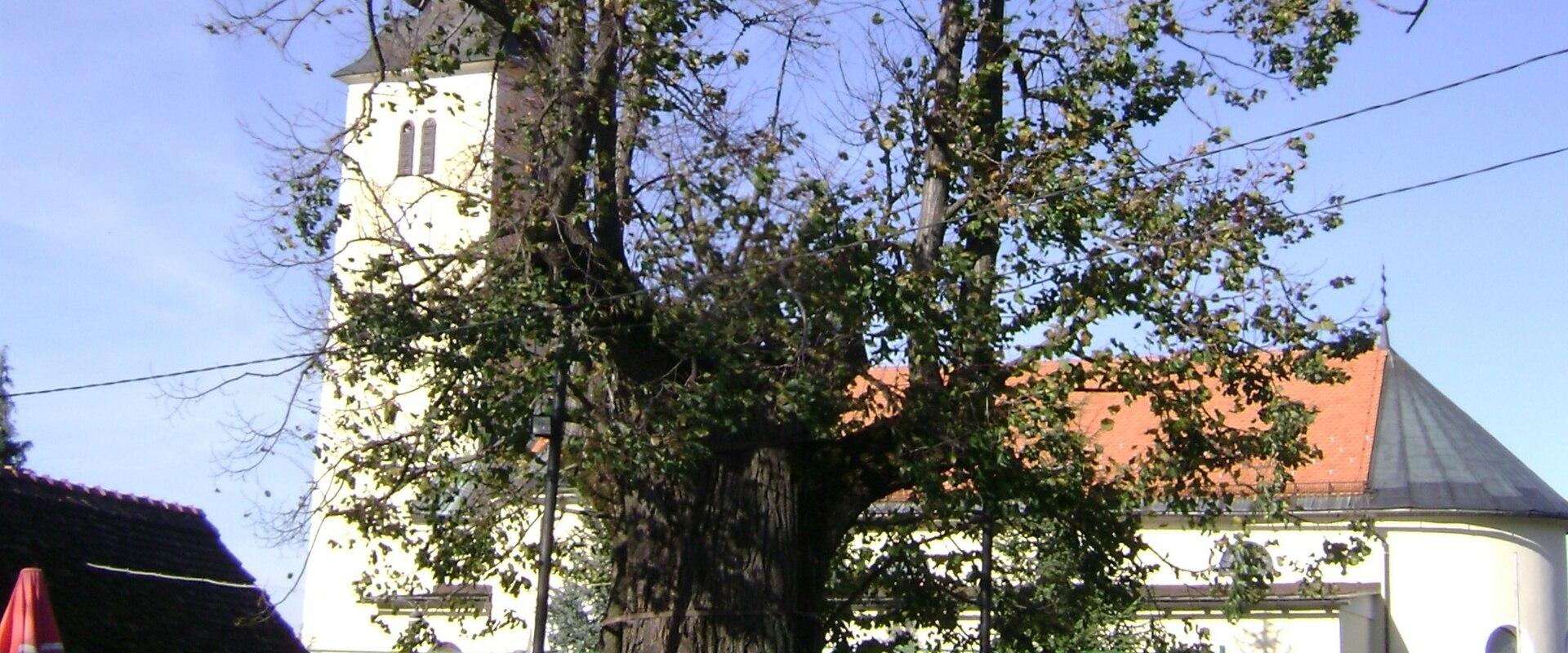
Gupčeva lipa
400-year-old linden, witness to peasant revolt
Gupčeva lipa, the Gubec Linden, is an ancient lime tree in Gornja Stubica, in the Zagorje region north of Zagreb, and it is one of Croatia's best-known natural monuments. The tree stands near the Church of St. George and is said to be more than four centuries old, which makes it a living link to the Peasants' Revolt of 1573. That uprising was one of the largest peasant rebellions in 16th-century Europe, and it began in the Zagorje and Slovenian borderlands as a protest against heavy feudal burdens and the harsh rule of the landlord Franjo Tahy. The rebels chose Matija Gubec as their leader, and the movement spread across the surrounding villages.
The revolt did not last long. In early February 1573, the peasant army was defeated in a battle near Stubica, and the leaders were captured. Matija Gubec was executed in Zagreb, on St. Mark's Square, in a particularly brutal public punishment. His name became a symbol of resistance and of the struggle for justice in Croatian memory, and many streets, schools and monuments are named after him. The tree is traditionally said to have witnessed the events, and it is regarded as the only living witness of the revolt, whatever the precise history of its roots.
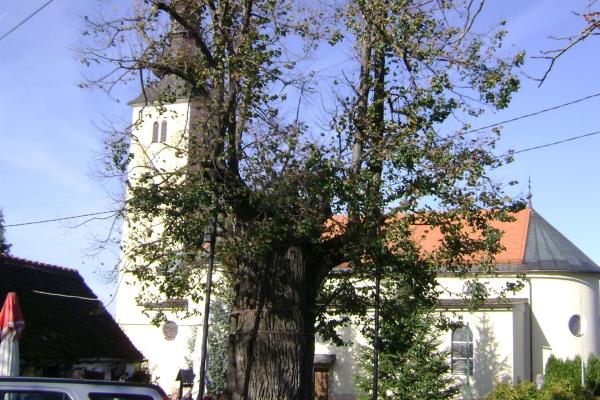
The linden is huge and gnarled, with a broad trunk that has been strengthened and supported over the years. It has been protected as a natural monument since 1957. In 2011, a Living Archive was created to preserve its genetic material, with cuttings and seedlings grown from the old tree so that its heritage can continue even if the original eventually fails. This effort shows how seriously the tree is treated, both as a historical symbol and as a piece of living nature. Visitors will find an information panel and a quiet setting, and the tree is open to view at any time, with no entrance fee.
The tree works best as part of a day in the Stubica area. The Museum of the Peasants' Revolt (Muzej seljačkih buna), housed in the Oršić manor in Gornja Stubica, tells the story with exhibits, a diorama and displays, and it is a natural companion to the tree. Donja Stubica has a view point, Majsec's Mill and Grad Labirinata among its local sights, and the Zagorje hills around offer small wine cellars, village churches and castles.
The tree suits history enthusiasts, school groups, families and people who enjoy remarkable old trees. Allow about 20 minutes at the site, and add a visit to the museum for the full story.
Categories
More photos coming soon
Nearby Attractions
Other places to visit in Donja Stubica
Frequently Asked Questions
Quick Facts
Best Time to Visit
Mid-June to mid-September offers warm weather, lush scenery, and lively festivals; spring and early autumn are ideal for hiking, sightseeing, and spa visits.