








Large Fountain of Onofrio
15th-century fountain delivering fresh spring water
The Large Fountain of Onofrio, Velika Onofrijeva fontana in Croatian, stands in a small square just inside Pile Gate, at the western end of Stradun in Dubrovnik. It is one of the first things visitors see after entering the Old Town of Dubrovnik, and it is among Dubrovnik’s most recognisable landmarks, a sixteen-sided stone basin where people stop to drink, rest and meet.
The fountain was built between 1438 and 1440 as the visible end of a remarkable engineering project. Dubrovnik, then an independent maritime republic, had always suffered from a shortage of fresh water, because the walled city stands on a rocky promontory with no springs of its own, and residents depended on cisterns that were vulnerable in dry summers. The government commissioned a Neapolitan builder, Onofrio della Cava, who is usually called an Italian architect, to bring water from the spring at Šumet in the valley of Rijeka Dubrovačka, about twelve kilometres away. The water travelled by gravity through channels and pipes across the slope, dropping steadily toward the city, which was a considerable feat for the fifteenth century. The same system fed a second, smaller fountain on Luža Square, at the other end of Stradun.
The design of the large fountain was grander than its function required. It originally had a dome above the basin and rich carved decoration by the sculptor Pietro di Martino of Milan, which made it the showpiece of the republic’s waterworks. The great earthquake of 1667 destroyed much of the city and removed the dome and most of the sculptural detail, and what remains today is the sturdy polygonal base. Around it are sixteen carved stone masks, each with a spout that still delivers cool, clean water, and the dripping and splashing give the little square its own soundtrack. Locals and visitors fill their bottles here, and the water is safe to drink.
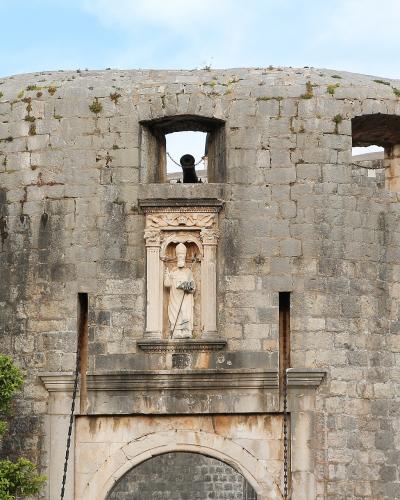
Because the fountain is just inside the gate, it is a natural meeting point and the place where many walking tours begin. It stands beside the Franciscan monastery with its old pharmacy and cloister, and the Church of St. Saviour is a few steps away. From here Stradun runs straight ahead to the Clock Tower and Luža Square, while stairs beside the gate lead up to the city walls. Pile Gate, Fort Lovrijenac, the Rector’s Palace and the cathedral treasury are all within easy walking distance.
The best times for a visit are early morning and evening, when fewer people crowd the square. It takes only a few minutes to see, and it is free. It suits anyone interested in history, engineering and the everyday life of a medieval city, and it is a good place to refill a bottle on a hot day. Take care on the worn stone steps around the fountain.

More photos coming soon
Nearby Attractions
Other places to visit in Dubrovnik

Frequently Asked Questions
Quick Facts
Best Time to Visit
May to June and September to October offer warm weather, fewer crowds, and ideal conditions for sightseeing, walking the walls, and enjoying the coast.