








Monastery in Malinska
15th-century Franciscan monastery with Glagolitic heritage
The Franciscan Monastery in Malinska stands in the Dubašnica area of the island of Krk, in the Kvarner Gulf, a short distance from the seaside resort of Malinska, and it is one of the most interesting religious and cultural sites on the island. The monastery was founded in the late 15th century and was given to the Franciscan friars of the Third Order Regular in 1480. These friars were known as the Glagolitic Franciscans, because they used the old Glagolitic script and the Croatian Church Slavonic language in their prayers and manuscripts, a tradition that survived on the islands and coast of the Kvarner for centuries. The monastery was a centre of religious life for the surrounding villages, and the friars also worked the land and copied sacred texts by hand.
The present buildings date mainly from the 17th century. A charming cloister with a central well forms the core of the complex, and the surrounding walls are plain and sturdy, in the style of a rural monastery. The church is dedicated to St. Mary Magdalene, and inside it holds a marble altar made in Venice in 1730 and a polyptych of St. Mary Magdalene, a painting in several panels. These works show the links between the island and the Venetian Republic, which ruled much of the Adriatic coast, and they add richness to a modest interior. The atmosphere is quiet and contemplative, and the small scale gives it an intimate feel.
The monastery is also valued for its cultural treasures. It has preserved valuable manuscripts, among them the Žgombić Miscellany and the Sabljić Miscellany, which are collections of religious and literary texts written in the Glagolitic script, and they are of great importance to scholars of the Croatian language and literature. The lapidarium, a collection of stone fragments, inscriptions and architectural pieces from the area, was established by Branko Fučić, one of the leading Croatian experts on Glagolitic heritage and medieval wall painting, and it preserves local stone artefacts that would otherwise have been lost. Together, these collections show how deeply the written and carved word shaped life on Krk.
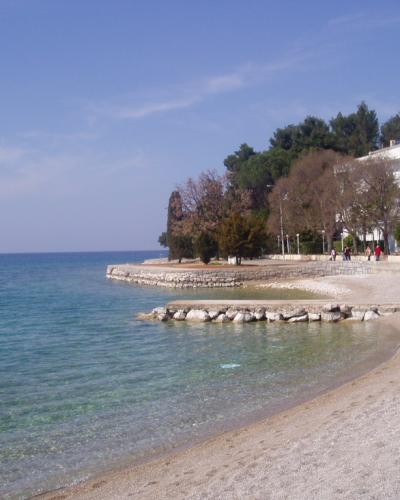
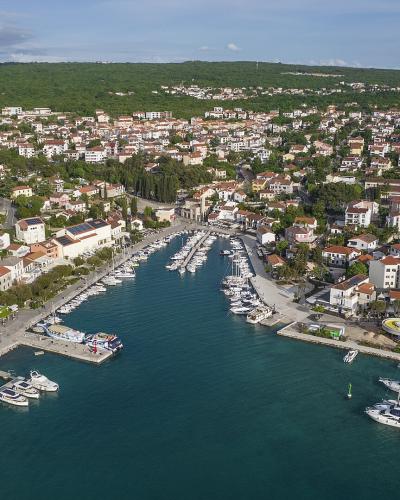
The monastery is compact and can be seen in under an hour. Opening hours are not always clearly posted, and access may be inconsistent, so it is wise to ask at the tourist office in Malinska or at the monastery gate, and to visit respectfully, with modest clothing and a quiet voice. The location makes it easy to combine with the other attractions of the area, including the Malinska promenade, the harbour and the town centre, and beaches such as Cuklićevo and the Plaža Malinska, which provide a place to swim after sightseeing.
The monastery suits visitors interested in religious history, the Glagolitic tradition and manuscripts. Allow about an hour, and combine it with a walk along the seafront.
Categories

More photos coming soon
Nearby Attractions
Other places to visit in Malinska

Frequently Asked Questions
Quick Facts
Best Time to Visit
May to September offers warm weather, inviting sea, and lively festivals; late spring and early autumn are quieter with pleasant temperatures for outdoor activities.