Zagreb's street art scene in context
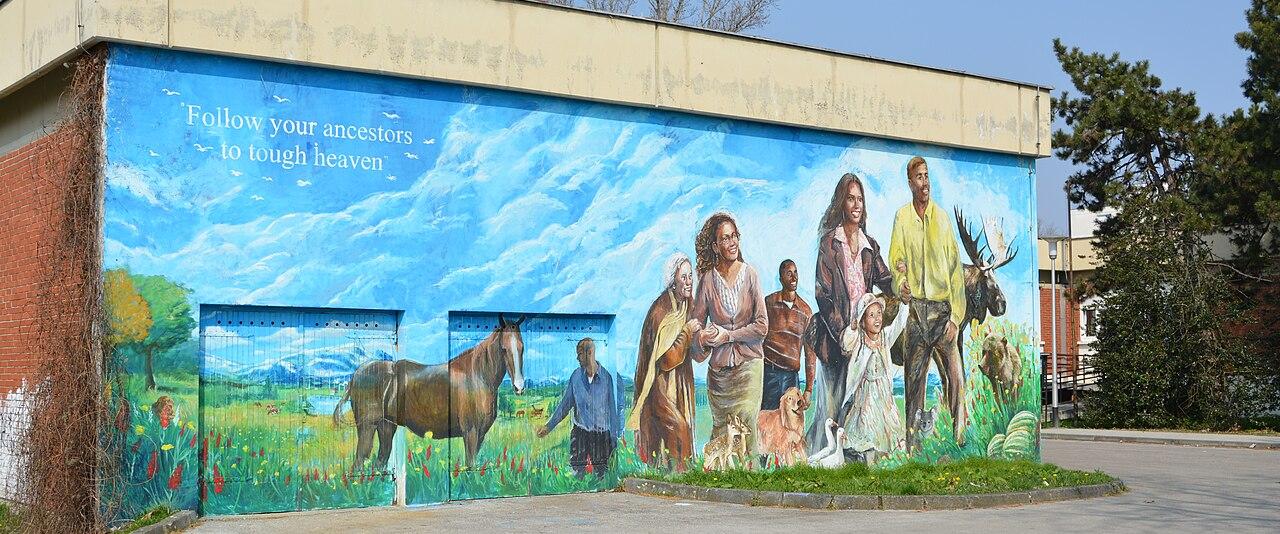
Zagreb does not have a single famous street art district in the way some capitals do. Its murals are spread across the city, from the historic centre to the post-war housing estates south of the Sava. Much of what exists today came from organised projects rather than unsanctioned graffiti, and the scene changes often: walls get repainted, buildings are renovated, and pieces disappear. Treat any list, including this one, as a starting point and expect some surprises.
The Branimirova wall
The long wall along Branimirova Street, beside the railway tracks east of the main station, has been associated with street art since 1987, when it was painted for the Universiade, the World Student Games held in Zagreb that year. In 2010 the Museum of Street Art (Muzej ulične umjetnosti, MUU), a volunteer-run project, invited dozens of artists to paint sections of the wall, which was about 450 metres long.
Part of the wall was later taken down or covered for billboards, but some painted sections remain. It is an easy walk from Zagreb Glavni Kolodvor, the main station, and works well as the first stop on a self-guided route.
Novi Zagreb: Dugave and Siget
The MUU went on to organise mural festivals in the concrete housing estates of Novi Zagreb, south of the River Sava. The Dugave project produced more than 30 murals by local and international artists on the sides of residential blocks, and Siget was another focus. These are large-scale pieces on tall buildings, best seen from the open spaces between the blocks.
Novi Zagreb is a residential area rather than a tourist district. Visit in daylight, be discreet when photographing near people's homes, and reach it by tram from the centre.
Art Park and the Upper Town
Below the Strossmayer promenade, on the slope between the Upper Town and the city centre, Art Park Zagreb uses the old retaining walls and terraces as a space for murals and summer events. It is close to the funicular and the Lotrščak Tower, so it fits easily into a walk around Gornji Grad. The murals here are refreshed over time, so what you see will vary.
Smaller pieces around the city
Some of Zagreb's most charming urban art is small:
- Painted water pumps. The Pimp My Pump project, started by a design studio and a local project group, turned old cast-iron public water pumps around the city into painted pieces. Look for them on street corners in the centre and inner neighbourhoods.
- Trešnjevka. Under the railway overpass in Trešnjevka, west of the centre, wheat-pasted posters and smaller works appear and change frequently, often advertising theatre or cultural events.
- Courtyards and side streets. In the Lower Town, building renovations sometimes include commissioned murals on side walls and in courtyards. Many of these appear on community mapping sites such as Street Art Cities, which is the best way to find recent additions.
A self-guided street art day
A practical route for one day:
- Morning: start at the main station and walk the Branimirova wall.
- Late morning: walk north through the Lower Town, looking for painted pumps and courtyard murals, to the funicular and Art Park below the Strossmayer promenade.
- Afternoon: take a tram south across the Sava to Novi Zagreb to see the large murals at Dugave and Siget.
- Return: come back to the centre by tram, or stop at Trešnjevka on the way if time allows.
Zagreb's trams cover all of these areas. Buy and validate your ticket before or immediately after boarding.
The whole route is manageable in a day without rushing, but the Novi Zagreb leg takes the most time because the estates are large and the murals are spread across several blocks. If you only have a morning, the Branimirova wall, the Lower Town and Art Park make a compact walk that ends close to the cafés of the Upper Town and Tkalčićeva Street.
Tips for photographing street art
- Morning light suits west-facing walls, afternoon light east-facing ones; large Novi Zagreb murals are easier to photograph from a distance.
- Check community maps shortly before your visit to confirm pieces still exist.
- Do not add your own tags or stickers. Painting public walls without permission is illegal, and much of Zagreb's art exists because owners and the city gave permission.
- Some walls are on railway or private property. Stay on public pavements.