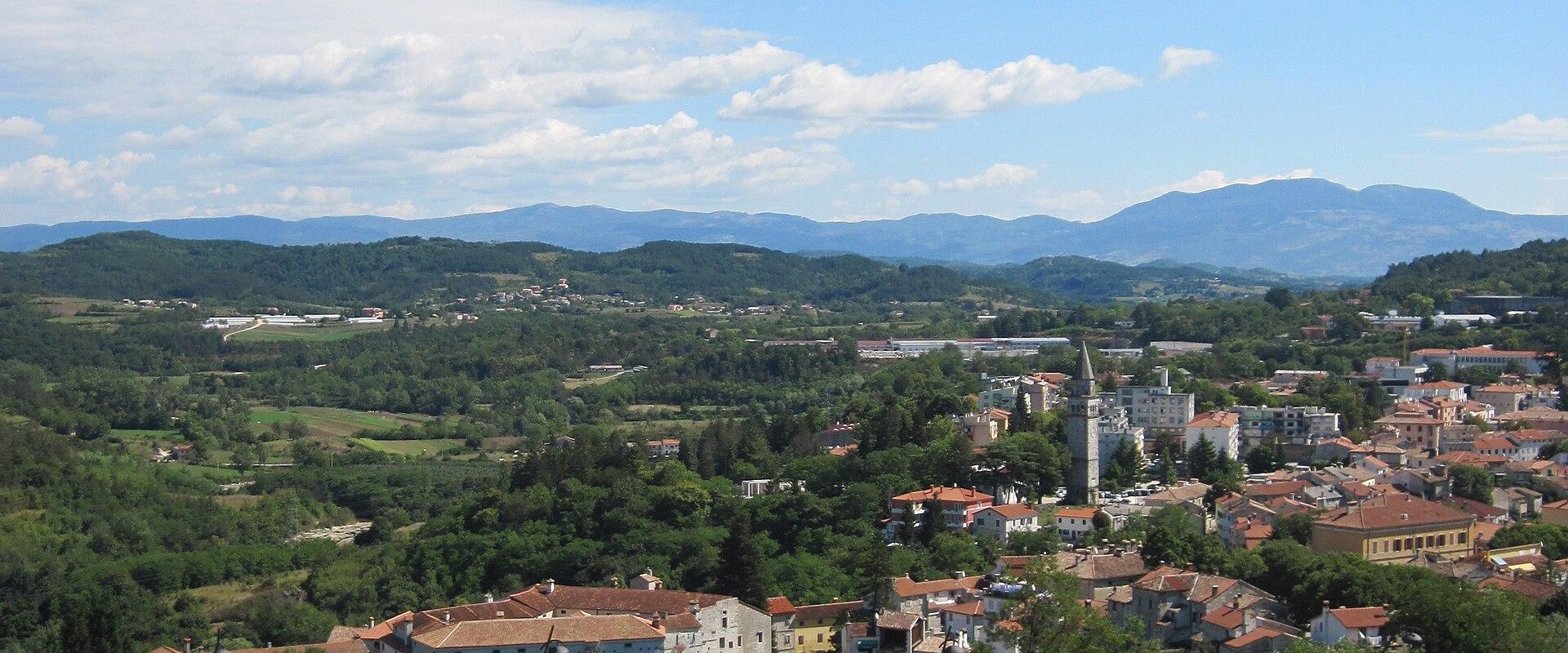
Pazin’s history stretches back to Roman times, but it rose to prominence in the Middle Ages as a fortified stronghold and the seat of the Istrian margraves, later passing to the counts of Gorizia and then to the Habsburgs. For centuries it was the capital of the inland part of Istria, a status it retains today as the seat of the county. The town’s most iconic landmark is Pazin Castle, the Kaštel Pazin, perched dramatically above the Pazin Chasm, the Pazinska jama. The castle, first mentioned in the 10th century, has served as a noble residence, fortress and administrative center over the centuries. Today it houses the Ethnographic Museum of Istria and the Pazin Town Museum, where visitors can explore exhibits on local history, culture and traditional crafts, including old tools, costumes and a collection of items from village life. Steep walls, towers and a drawbridge give it a fairytale look from the bridge on the other side of the chasm.
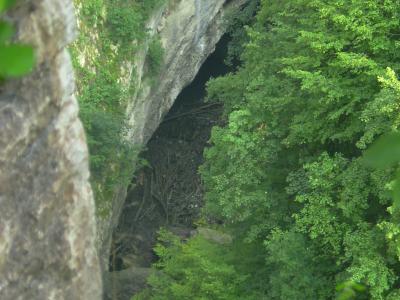
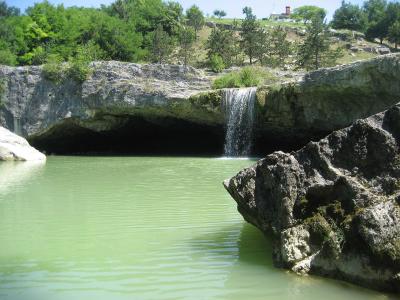
The Pazin Chasm is a natural wonder that has inspired writers such as Jules Verne, who set part of his novel 'Mathias Sandorf' in its depths. In the book, the hero escapes by following the river underground, and the story helped to make the chasm known in Europe. Adventurous visitors can take guided speleo-adventures into the cave system, zipline across the gorge or hike the trails that wind along the river and through the forest. The natural feature known as Zarečki krov, a short distance from the town center, is a popular spot for swimming, picnicking and, in summer, cliff jumping. Pazin Cave, in the town itself, is part of the same karst system.
The old town is a maze of narrow streets, stone houses and small squares. The Church of St. Nicholas, with its Gothic frescoes, and the Franciscan Monastery are highlights for lovers of art and architecture. The town’s cultural life includes music festivals, art exhibitions and the annual Jules Verne Days, which celebrate the town’s literary connections with talks, performances and a lively fair. Local markets, cafes and restaurants offer a taste of Istrian cuisine, with truffles, wild asparagus, homemade pasta and regional wines. Anđelini Winery, at Velanov Brijeg near the town, welcomes visitors for tastings of Malvasia and Teran and gives a view of the vineyards that cover the surrounding hills.
Outdoor enthusiasts will find plenty to do in the surrounding countryside. Cycling and hiking routes connect Pazin with nearby hilltop villages such as Gračišće and Beram, known for their historic churches and panoramic views. At Beram, the small church of St. Mary on the Rocks has a famous cycle of late Gothic frescoes, including a Dance of Death, which is among the great medieval wall paintings of the Adriatic. The region’s karst landscape is dotted with caves, sinkholes and underground rivers, which makes it a rich area for speleologists and nature lovers.
Getting to Pazin is straightforward. The town is centrally located in Istria, with excellent road connections to Pula, Rovinj, Poreč and Rijeka. Regular buses link Pazin to major Istrian towns and the coast. Accommodation options range from boutique hotels and guesthouses to rural villas and private apartments, catering to all budgets and preferences.
The best time to visit Pazin is in June and September, when the weather is warm, the countryside is lush and the town’s festivals and outdoor activities are in full swing. Spring and early autumn offer mild temperatures, fewer crowds and beautiful scenery, suited to sightseeing, hiking and exploring the region’s natural wonders. Whether you are drawn by history, adventure or Istrian gastronomy, Pazin offers a memorable and authentic stay.
Best time to visit
June and September offer warm weather, lush scenery, and lively festivals; spring and early autumn are ideal for hiking, sightseeing, and outdoor activities.
What to see in Pazin
Our picks first.
Pazin by interest
The same sights, grouped by what you came for.
Did you know?
Checked facts about Pazin, each with its source.
-
History
Pazin Castle Was First Recorded in 983
Pazin Castle, the biggest and best-preserved medieval fortress in Istria, was first mentioned in 983, when Emperor Otto II gave it to the Bishop of Poreč. It later passed to the Counts of Gorizia, who held it until 1374, and then to the Habsburgs.
Source: Istria Tourist Board - Pazin Castle
Planning a visit to Pazin
Good to know
- Currency
- EUR
- Language
- Croatian