







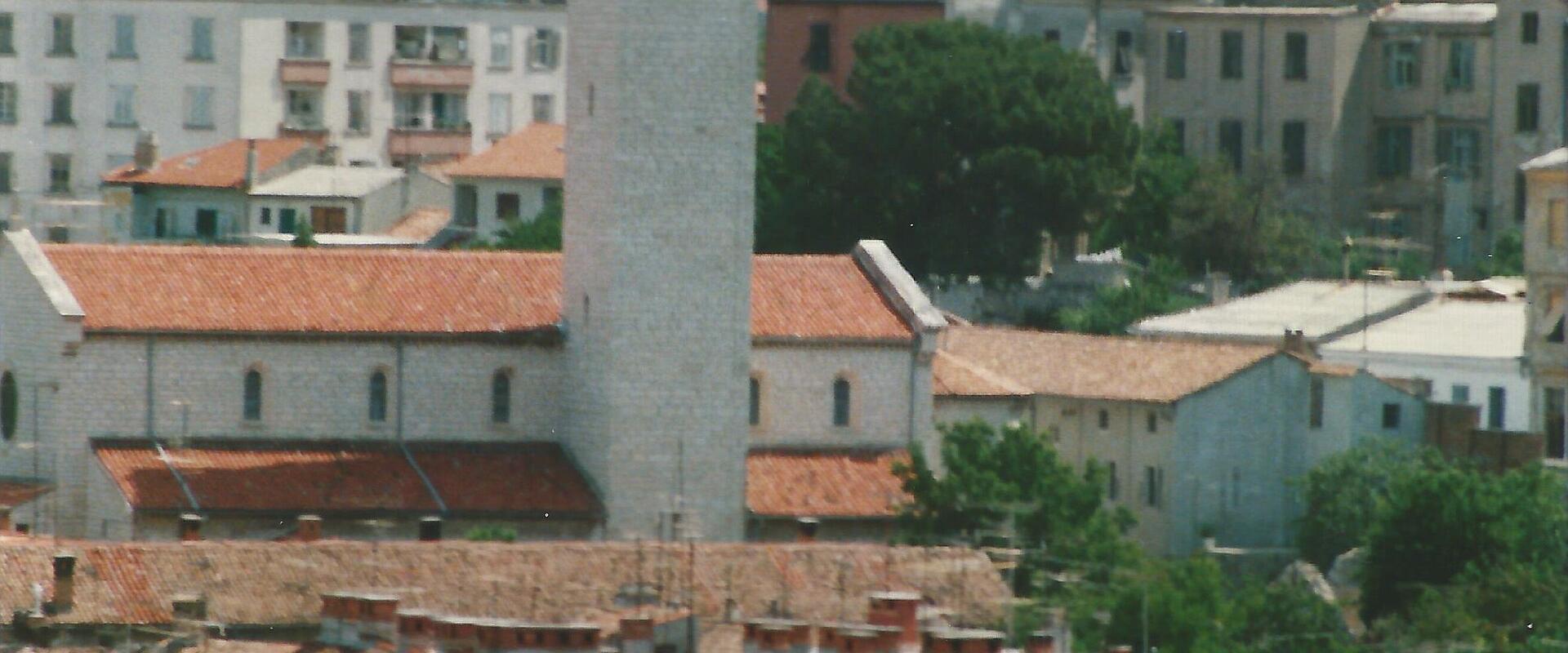
Church of St. Anthony of Padua
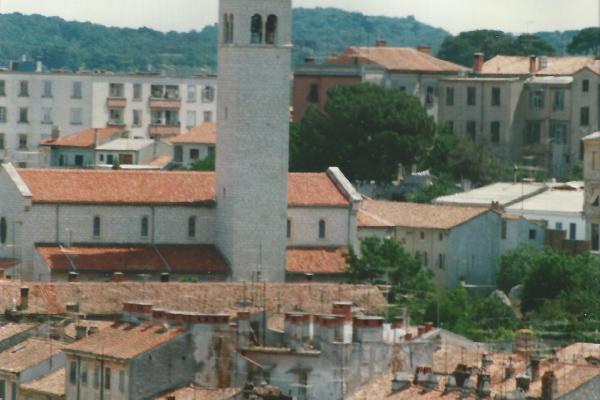
Church of St. Anthony with 35m belfry, Crikvenica
The Church of St. Anthony of Padua is a landmark of Crikvenica, the seaside town on the Kvarner coast, at the northern end of the Adriatic, and it is recognisable by its tall bell tower. The church stands on Pavla Radića Street in the town, a short distance from the sea front. Its construction began in 1934, and it was consecrated five years later, which makes it a 20th-century building in a town whose older monuments include a medieval Pauline monastery. The belfry, around 35 metres high, was completed much later, in the early 21st century, and it now dominates the skyline, visible from the beaches and promenade and from the hills behind the town.
The church is dedicated to St. Anthony of Padua, one of the most popular saints in the Catholic world. Born in Lisbon in the late 12th century, Anthony became a Franciscan friar and a gifted preacher and teacher, and he died in Padua in 1231. He is remembered for his compassion for the poor and for his role as a patron of lost things, and many Croatian parishes are named after him. His feast day, celebrated on 13 June, is an occasion for services, processions and local gatherings, and in Crikvenica it falls at the start of the summer season.
The interior is simple and dignified, and it offers a calm contrast to the activity of the seafront. Visitors enter a bright nave with a modest altar, statues and stained or plain glass windows, and the quiet atmosphere invites a few minutes of rest. The architecture reflects the style of its time, with clean lines, an emphasis on proportion rather than decoration and a bell tower designed to be a visible landmark. It is not a large or richly adorned church, but its role in the community is significant, and it hosts weekly Masses and special celebrations. Opening hours are not fixed, and the church is usually open during services and on feast days, so visitors should respect worshippers and dress modestly.
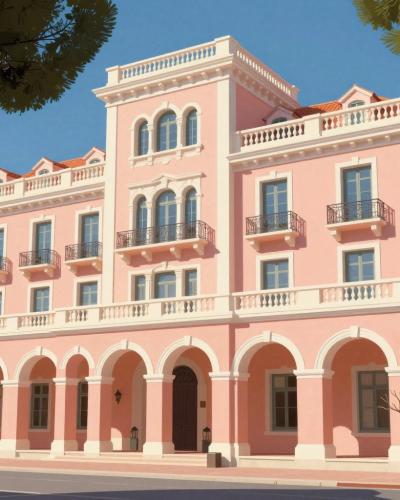
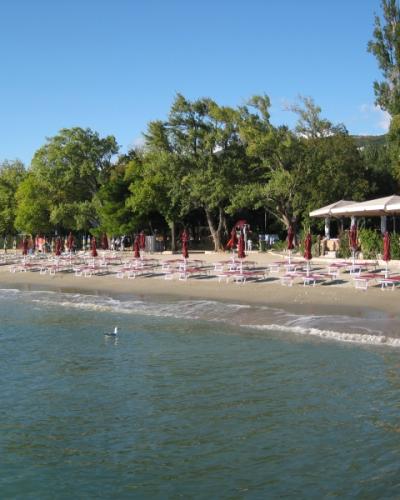
Crikvenica has more to see nearby. The Church of the Assumption of the Blessed Virgin Mary, linked to the old Pauline monastery that was founded in the Middle Ages under the Frankopan family, gives a view of the town's older history. The grand Hotel Kvarner Palace recalls the late 19th century, when Crikvenica became one of the first seaside health resorts on the Adriatic, and the long promenade and Crikvenica Beach are only a few minutes away. The surrounding Vinodol valley and the Kvarner hills offer walking and cycling.
The church suits visitors interested in religious architecture, travellers who like quiet stops and anyone looking for a landmark to orient themselves in town. Allow about fifteen minutes.
More photos coming soon
Nearby Attractions
Other places to visit in Crikvenica

Frequently Asked Questions
Quick Facts
Best Time to Visit
Early July to late August offers hot weather, warm sea, and lively events; May, June, and September are quieter with pleasant temperatures for outdoor activities.