







Diocletian's Palace
Ancient Roman palace and UNESCO site in Split
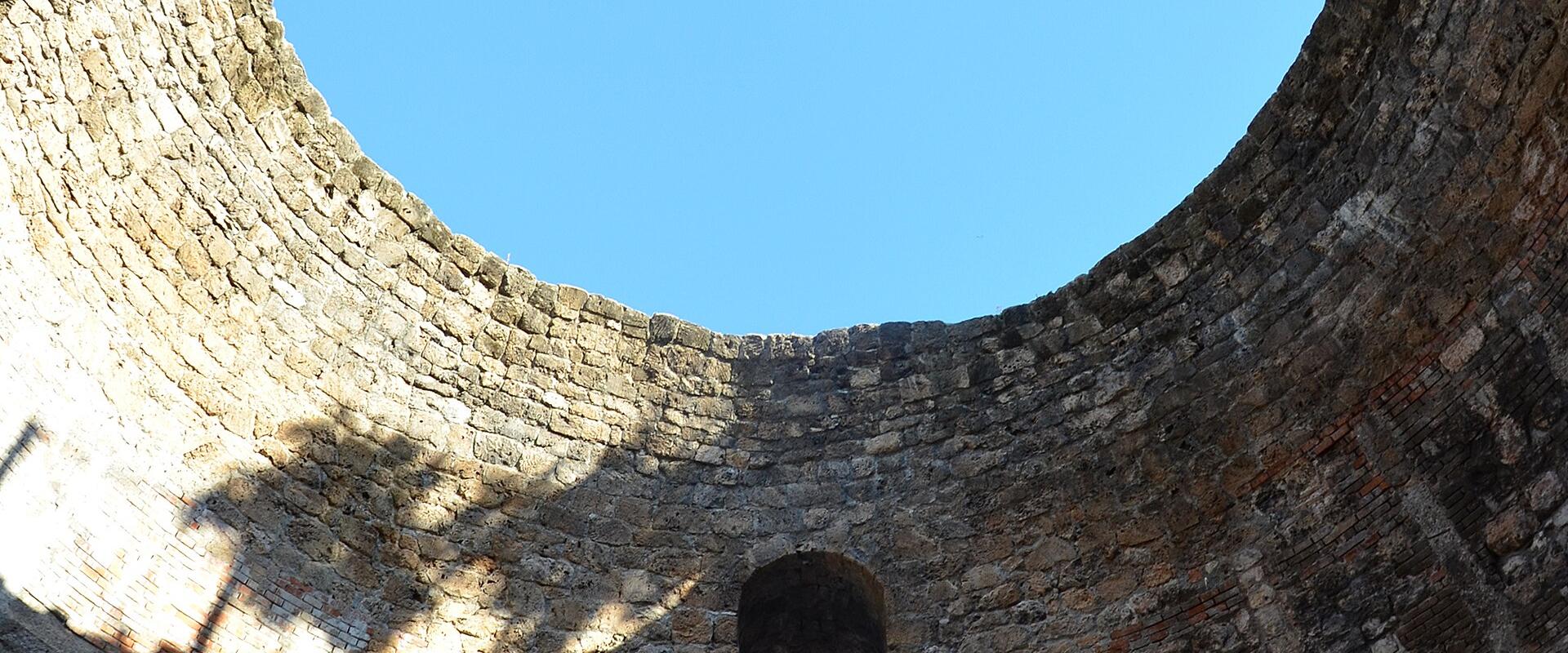
Diocletian's Palace is not a museum behind a gate but a whole neighbourhood: the old town of Split grew inside and around the walls of a Roman imperial residence, and people still live, work and eat within them. The Roman emperor Diocletian, born near the nearby city of Salona, had the palace built in the late 3rd and early 4th centuries AD as a place to retire after he abdicated in 305. It combined a luxurious residence with the layout of a military camp, and it is one of the best-preserved examples of late Roman palace architecture. The complex was inscribed on the UNESCO World Heritage List in 1979.
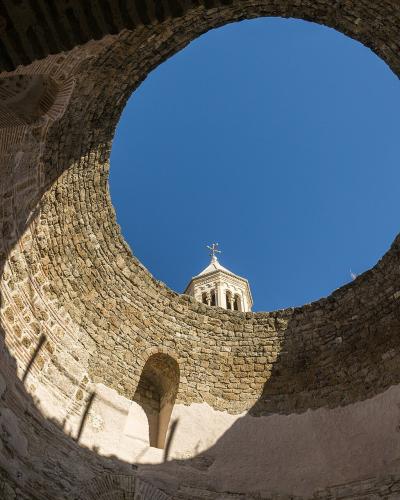
The plan is roughly a rectangle of about 200 metres on each side, enclosed by tall limestone walls, with four gates named Golden, Silver, Iron and Bronze, and two main streets crossing at the central courtyard. The Peristyle is that courtyard, framed by columns and arches, and it is Split's open-air living room, where cafés set out chairs and concerts are staged on summer evenings. On one side, Diocletian's mausoleum, an octagonal building, was converted into the Cathedral of Saint Domnius in the early Middle Ages, which makes it one of the oldest cathedrals still in use in the world. Opposite stands the small Temple of Jupiter, later turned into a baptistery. The stone came largely from nearby quarries on the island of Brač, and decorative details such as the granite columns and sphinxes were brought from Egypt.
Beneath the southern half of the palace, the substructures survive as a set of vaulted halls that copy the plan of the imperial rooms above. They are the best way to feel the original scale, and they were used as a filming location for the television series Game of Thrones, which explains why many guided tours mention it. Above ground, the narrow lanes between the Peristyle and the waterfront Riva hide small squares, Romanesque houses and Venetian windows added in later centuries.
The palace is open as a public space, and many parts can be walked freely at any hour, although individual sites such as the cathedral, the bell tower and the cellars have their own tickets and times. Mornings and late evenings are the quietest, while midday in summer is crowded. Wear shoes with grip, because the polished paving is slippery.
It suits everyone from history enthusiasts to casual visitors. Allow at least two hours for a first visit, and consider a local guide, who can explain how the Roman layout is hidden within the modern town.
More photos coming soon
Nearby Attractions
Other places to visit in Split

Frequently Asked Questions
Quick Facts
Best Time to Visit
May to June and September to October offer warm weather, fewer crowds, and ideal conditions for sightseeing, beaches, and exploring Split’s vibrant old town.