







Diocletian's Palace with St. Domnius' Bell Tower
Roman palace with bell tower in Split
Diocletian's Palace is the Roman retirement residence that became the core of the city of Split. The emperor Diocletian, who was born nearby, had it built on the coast at the turn of the fourth century, and it was designed as a fortified villa with the layout of a Roman military camp: four gates, a grid of streets, and a long central street crossing at the Peristyle. When Roman rule weakened, people from the surrounding region took shelter inside its walls, and over the following centuries they converted its halls and corridors into houses, churches and shops. Today the palace is protected as a UNESCO World Heritage site, and it is still lived in, which sets it apart from most ancient monuments.
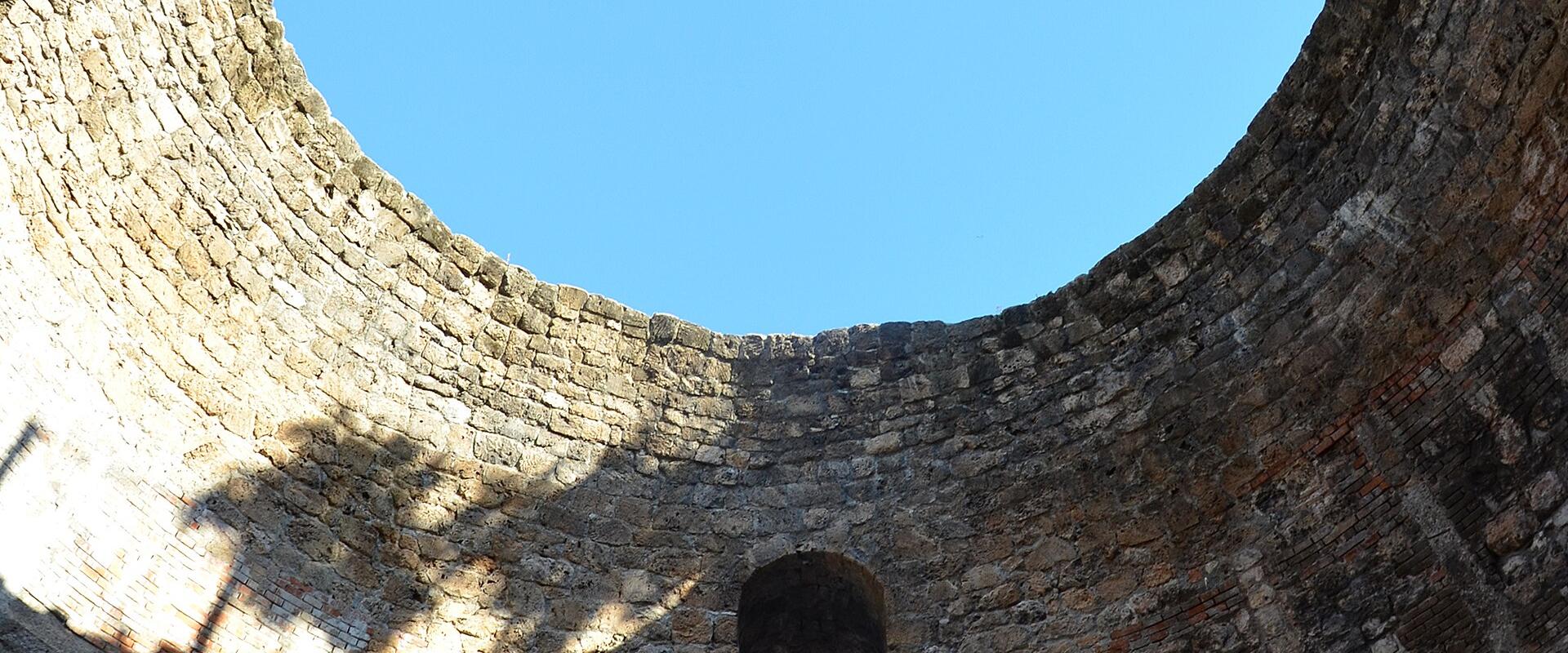
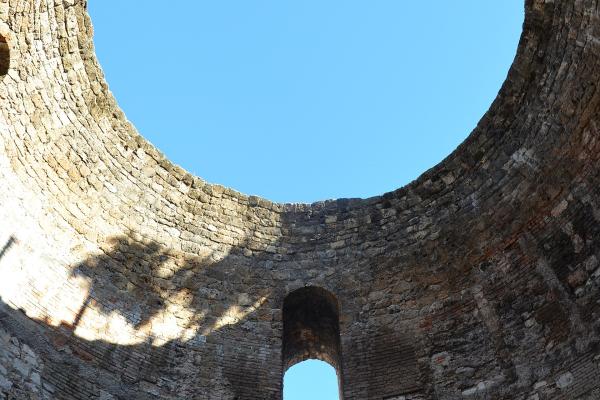
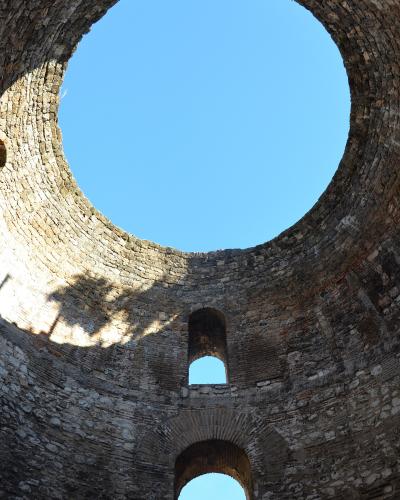
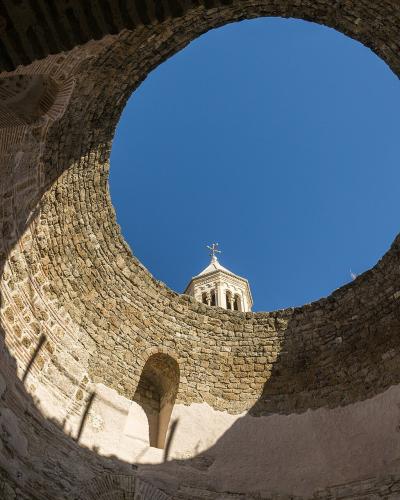
The Peristyle is the ceremonial centre of the complex. It is an open courtyard framed by columns and arches, with an Egyptian sphinx guarding one side, and cafe terraces fill it throughout the day. Off it lies the Vestibule, a round open-topped hall that once led into the emperor's private quarters. Below the palace, the vaulted basement halls survive remarkably intact, as they were used as the foundation for the residential rooms above, and they offer the clearest sense of the original floor plan. These halls have also been used as a filming location for television.
The cathedral was originally built as the emperor's mausoleum, and it is now dedicated to Saint Domnius. Its octagonal shape and ring of columns are still Roman, while the interior contains medieval wooden doors, carved choir stalls and Baroque altars. The adjoining Bell Tower of Saint Domnius, a landmark of the Split skyline, rises to roughly 60 metres and was built over several centuries and reworked in more modern times. Climbing it rewards you with a view of the tiled rooftops, the harbour and the Riva promenade, as well as the island-dotted Adriatic beyond. The stairs are narrow and open in places, so it is best avoided if you are afraid of heights.
The four gates, Golden, Silver, Iron and Brass, remain as entrances. A large statue of Bishop Gregory of Nin, the work of Ivan Meštrović, stands just outside the Golden Gate, and local tradition says that touching its toe brings good luck.
Plan about two hours to wander through the palace without rushing. Early morning and late evening are the best moments for atmosphere, since daytime brings crowds. Nearby, the Cathedral Treasury, the Church of St. Vitus, Riva and the Museum of Croatian Archaeological Monuments make good follow-ups.
More photos coming soon
Nearby Attractions
Other places to visit in Split

Frequently Asked Questions
Quick Facts
Best Time to Visit
May to June and September to October offer warm weather, fewer crowds, and ideal conditions for sightseeing, beaches, and exploring Split’s vibrant old town.