







- Where
- Rovinj, Istria
- Directions
- Directions
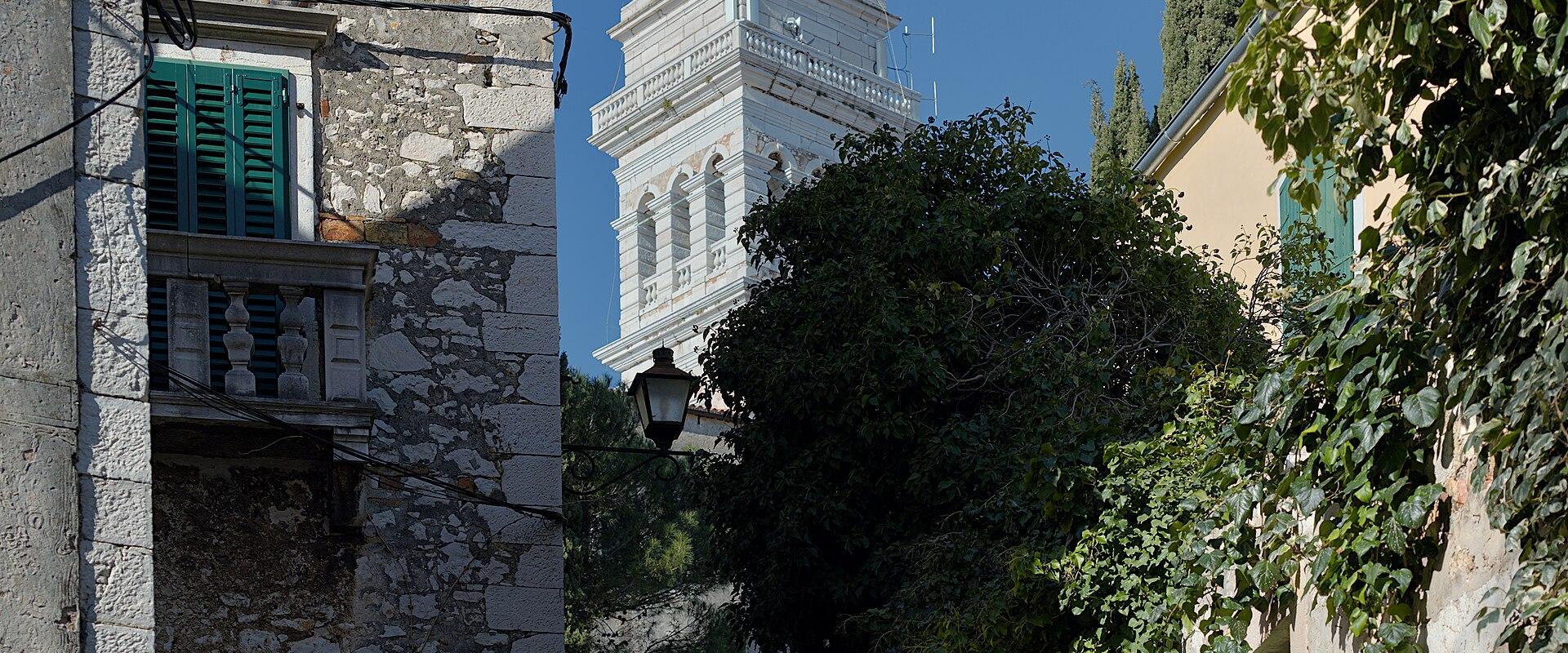
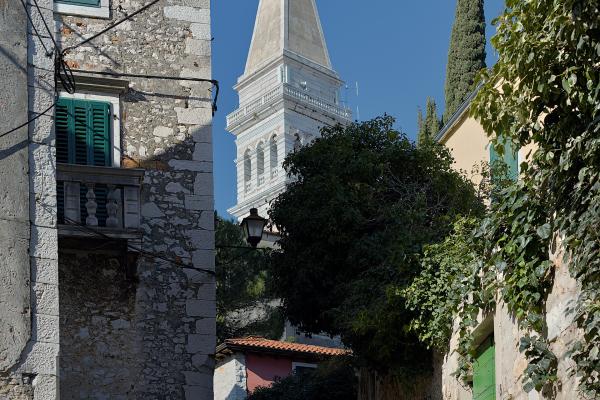
Grisia Street, Ulica Grisia, is the steepest and most famous lane of Rovinj, the Istrian town on the western coast of Croatia that grew on a rocky peninsula and was once an island. It climbs through the old town toward the church of St. Euphemia on the summit, paved with polished cobbles and broken into short flights of steps, and it is lined with galleries, studios and small shops housed in tall, narrow houses with colourful shutters.
The street is easiest to understand as part of the shape of Rovinj. The old town rises in a cone from the harbour to the hilltop church, and all its lanes run either around the hill or straight up it. Grisia is one of the straight ones, running from the area near the Balbi Arch, the town’s main old gate, up toward the church. Rovinj’s houses on either side are Venetian in style, with arched doorways, stone staircases and small balconies, and washing lines and flower pots add a lived-in, Mediterranean touch. Rovinj was ruled by Venice for centuries, and Italian is still spoken alongside Croatian in the town, which is why street names, signs and menus often come in two languages.
Grisia is best known for the open-air art exhibition that fills it every August. Since 1967 artists from Croatia and abroad have hung and propped their paintings, drawings and prints along the walls, steps and doorways for a day, turning the whole street into an open gallery. The event draws large crowds, and visitors can chat with the painters and buy work directly from them. Painters who show there include amateurs as well as professionals, so the standard varies, but the atmosphere is festive and the setting is hard to beat. Even outside the festival, the lane remains a place of galleries and workshops where artists sell paintings, ceramics, jewellery and souvenirs all year round.
The rest of the old town is within reach. At the top, the Church of St. Euphemia, a baroque church with a tall bell tower topped by a statue of the saint, holds her relics in a marble sarcophagus and gives wide views over the roofs and the sea. Down at the harbour, the Rovinj Marina, the market, the Batana Eco-Museum, which celebrates the local flat-bottomed fishing boat, and the Rovinj Heritage Museum add cultural stops. For nature, the Punta Corrente forest park, known as the Golden Cape, offers shaded walks along the coast, and Lone Bay and the Rovinj Aquarium are other nearby attractions. Archaeology fans can visit Monkodonja, a prehistoric hill fort in the countryside.
Wear shoes with good grip, since the cobbles are slippery when wet. The street is free and open at all hours, and it is quietest early in the morning or late in the evening. It suits walkers, photographers and art lovers, and it works best as part of a slow climb to the church.
Categories
More photos coming soon
Nearby Attractions
Other places to visit in Rovinj
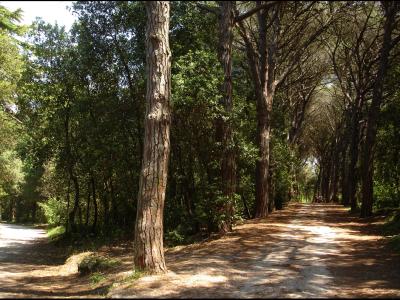
Punta Corrente (Golden Cape) Park
Protected forest park with diverse native flora
Activities & Adventure · Coastal & Maritime
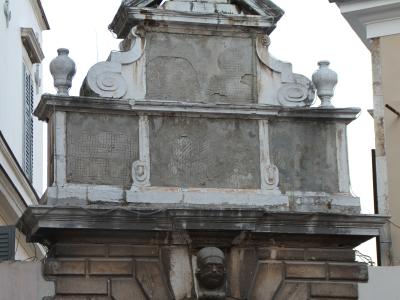
Balbi's Arch
17th-century Venetian arch marking Rovinj’s old town entr...
Free History & Heritage · Urban Exploration
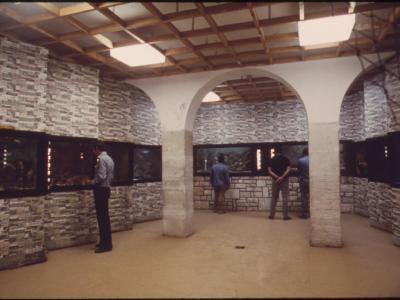
Rovinj Aquarium
Adriatic marine life showcased in coastal Rovinj
Coastal & Maritime · Cultural Experiences
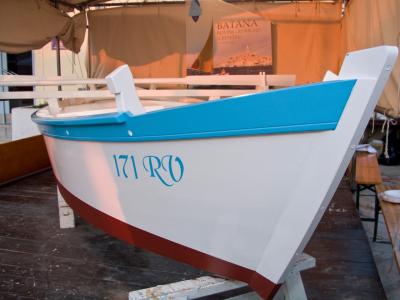
Batana Eco-Museum
Traditional wooden boats and maritime heritage
Cultural Experiences · Natural Wonders
Questions people ask
Quick Facts
Best Time to Visit
April to September offers warm weather, lively festivals, and ideal conditions for sightseeing, beaches, and exploring Rovinj’s old town and islands.