







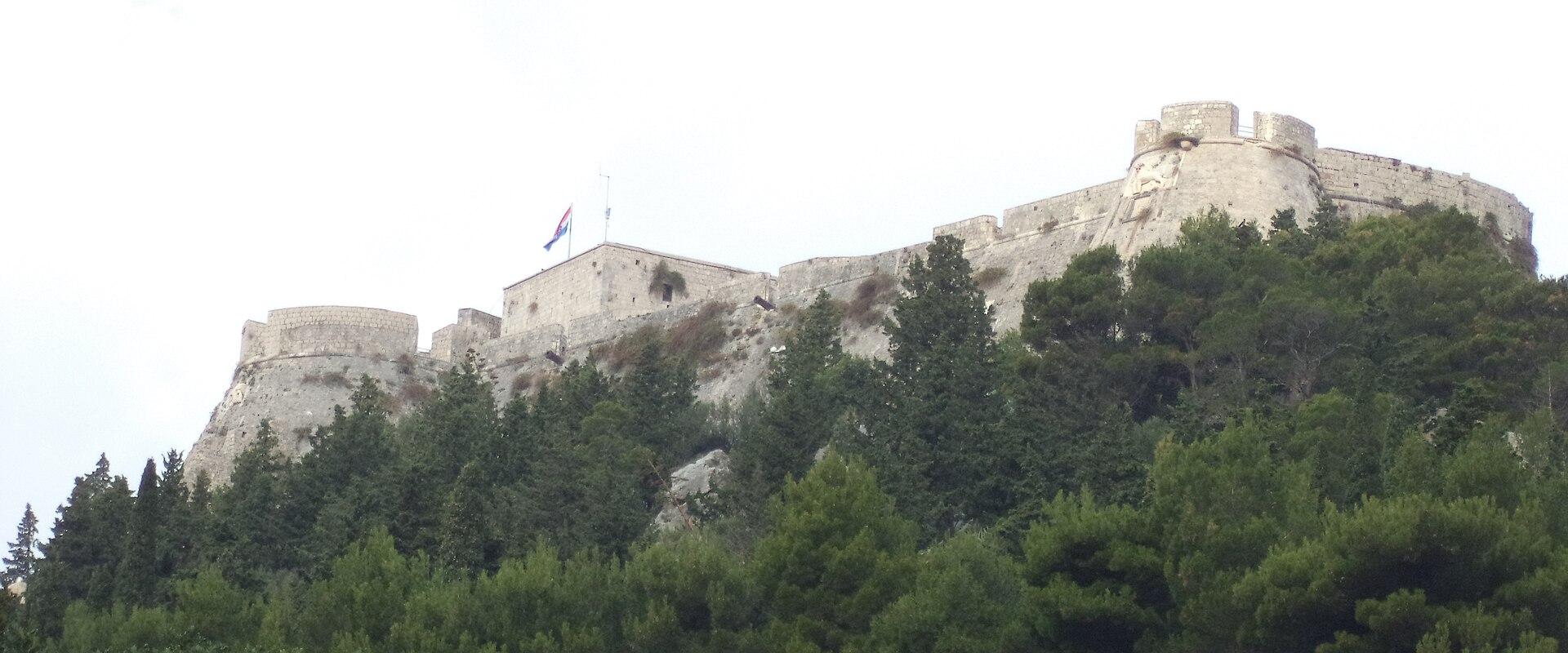
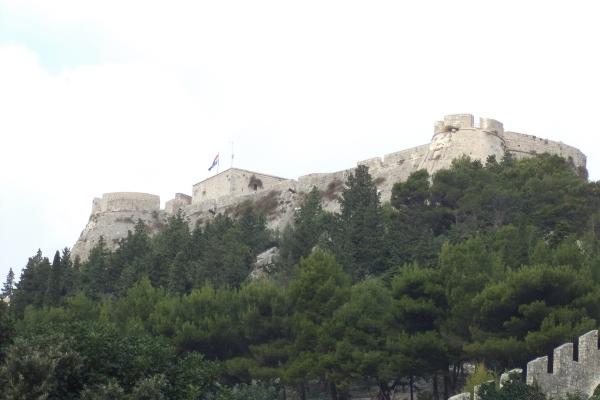
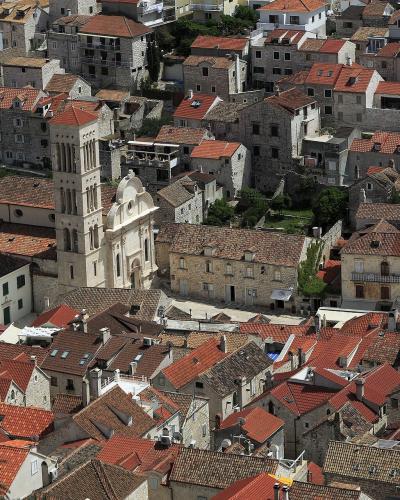
Hvar Town clings to a narrow shore between a deep, sheltered harbour and a steep hill, and the fortress that crowns the hill is the best viewpoint in the town. It is known as the Fortica, and also as the Spanish Fortress, a name that local tradition has attached to it for centuries. The climb from the main square takes about fifteen minutes along a zigzag path, past walls, cypress trees and agaves, and the reward at the top is a panoramic view of the red roofs, the harbour, the bell tower of the cathedral and the Adriatic Sea beyond.
The fortress was built under Venetian rule, which began in Hvar in the early 15th century, on the site of earlier fortifications. The Ottoman threat made the defence of the town a priority, and the work of strengthening the walls and bastions went on through the 16th century. In 1571, Ottoman raiders attacked Hvar and burned much of the town, though the fortress above was never taken, and after that raid the Venetians strengthened it further. Today the thick stone walls, bastions and a cistern are the main features, along with a small exhibition and a café in season, and from the ramparts you can see why this position was so valuable, with a clear view of every approach by sea.
The view is the main draw. To the south lie the Pakleni Islands, a chain of small wooded islands that are the most popular swimming and boating destination in the area, with turquoise water and hidden coves. To the east and west the coast of Hvar runs away in a long line of cliffs and small bays, and to the north the mainland ridges of Dalmatia are visible on a clear day. The light is best at sunrise and sunset, when the stone glows and the town below turns gold, and many visitors time the climb for evening. The fortress is open during the day, with longer hours in summer, and there may be a small entrance fee, so check locally.
Practical points are simple. Wear shoes with grip, because the path and steps are worn and uneven, and take water, since there is little shade on the way up. Midday in summer is hot, so go early or late. The climb is steep in places, and the fortress may not be suitable for those with limited mobility.
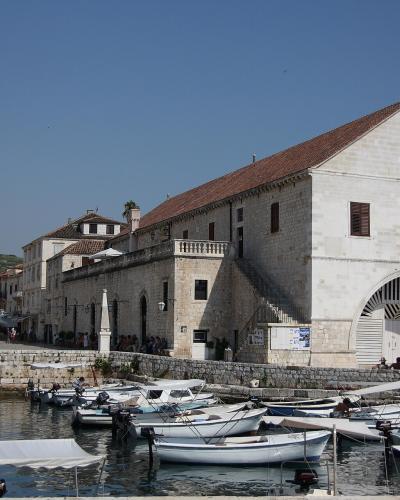
In the town below, the Hvar Town Theatre (Hvarska kazališta), dating from the early 17th century and often described as one of the oldest public theatres in Europe, is also worth a visit. The fortress suits walkers, photographers and anyone who wants to see Hvar from above.
Categories
More photos coming soon
Nearby Attractions
Other places to visit in Hvar
Frequently Asked Questions
Quick Facts
Best Time to Visit
June to September offers hot, sunny weather, warm sea, and lively festivals; late spring and early autumn are quieter with pleasant temperatures for sightseeing.