







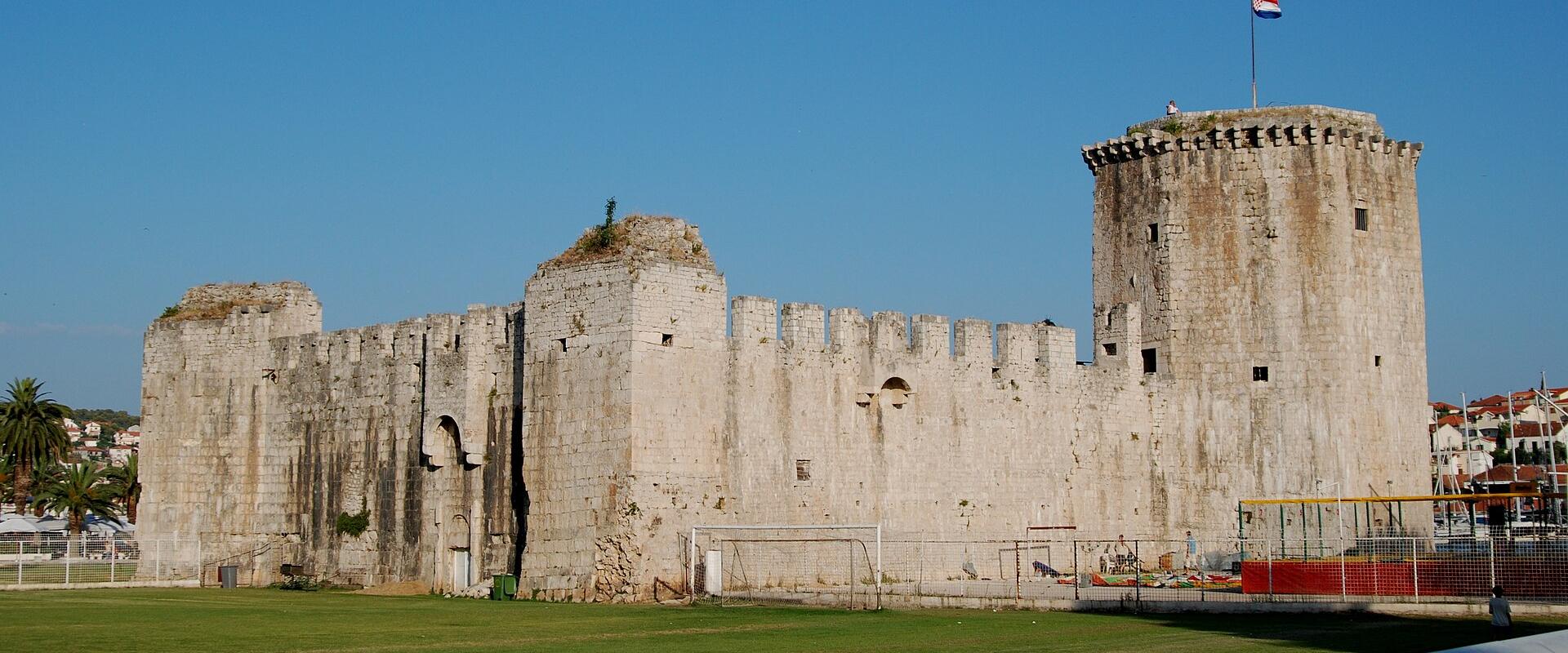
Kamerlengo Fortress
15th-century Venetian fortress with coastal views
Trogir is a small, walled island town on the Dalmatian coast of the Adriatic, joined to the mainland and to the island of Čiovo by short bridges, and its old centre is a UNESCO World Heritage site, a dense tangle of Romanesque, Gothic and Renaissance buildings. At the western end of the waterfront, on the point where the town meets the open sea, stands the Kamerlengo Fortress, the best-preserved part of its defences. It is a good place to start a visit, because its walls and towers give a clear sense of why the town needed protection.
The fortress was built by the Venetians in the early 15th century, in the years after Venice took control of the Dalmatian coast, and the work is usually dated to between 1420 and 1437. The name comes from the camerlengo, the Venetian official who served as treasurer and who was housed in the fort. The building is a trapezoidal enclosure with a number of towers and a high curtain wall, positioned to guard the harbour and the sea approaches, and to keep a watchful eye on the town itself, since Venice did not always trust its subjects. Part of an older tower, from the previous century, was incorporated into the new structure. The fort also served as a prison for a time, and it saw several centuries of military use.
Today visitors can walk through the courtyard and climb the walls and towers, which are among the best viewpoints in Trogir. From the ramparts you look back over the red roofs and the bell tower of the cathedral, across the channel to Čiovo and out over the sea, and the stone glows in the evening light. In summer the courtyard turns into an open-air stage, with concerts, theatre performances and film screenings, so an evening visit can be especially atmospheric.
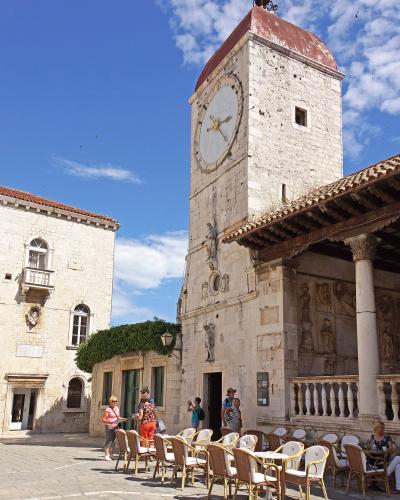
The fort is only a few minutes' walk from the other monuments of Trogir. The St. Lawrence Cathedral (Cathedral of St. Lovro), with its famous Romanesque portal, is the town's masterpiece, and the Cipiko Palace, the Town Loggia, St. Sebastian's Church and Clock Tower and St. Dominic Monastery all lie within the old walls. The North Gate (Land Gate) marks the entrance from the mainland, and the Trogir Promenade (Riva) is the place for a stroll and a coffee.
Opening times and ticket prices vary with the season and with events, so check locally. The fortress suits history lovers, photographers and anyone who likes a good view, and it is best visited early or late in the day to avoid midday heat and crowds.
Categories
More photos coming soon
Nearby Attractions
Other places to visit in Trogir
Frequently Asked Questions
Quick Facts
Best Time to Visit
Late June to late August offers hot weather, warm sea, and lively events; May, June, and September are quieter with pleasant temperatures for sightseeing.