







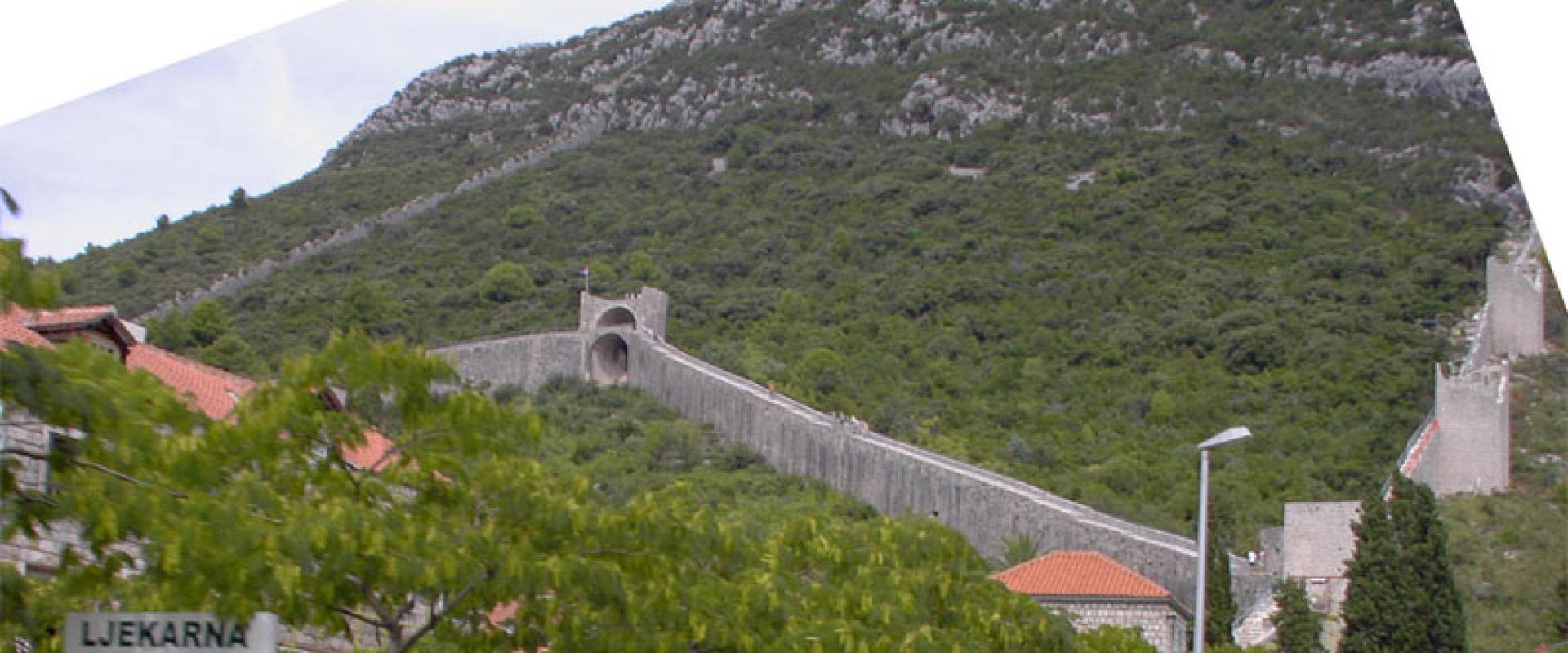
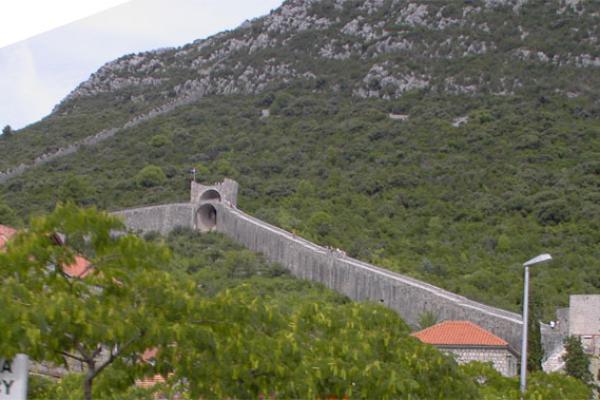
The Ston Walls are a long defensive wall that climbs over the hills around the town of Ston, at the neck of the Pelješac Peninsula in southern Dalmatia, one of Croatia’s great medieval monuments. They are often called the European Great Wall, a nickname that reflects their length, and they are among the longest surviving medieval fortification systems in Europe. Visitors will find that the walls are an invitation to a steep, rewarding walk with views over the sea, the salt pans and the oyster beds.
The Dalmatian republic of Ragusa built the walls, as Dubrovnik was then called, after it acquired the Pelješac Peninsula in the early fourteenth century. The peninsula was valuable for two reasons. It formed a land link between the Ragusan territory and the coast beyond, and at Ston were the salt pans, which produced one of the republic’s most important sources of income. To protect them, Ragusa planned a new settlement and encircled it with a huge defensive system. The main wall runs from the town of Ston to the small harbour of Mali Ston on the other side of the peninsula, over a distance of about five and a half kilometres, climbing the ridge in between. Along the way stand dozens of towers and several larger fortified points. A shorter wall encloses Ston and its salt works down in the valley, and a second line of defence strengthened the system.
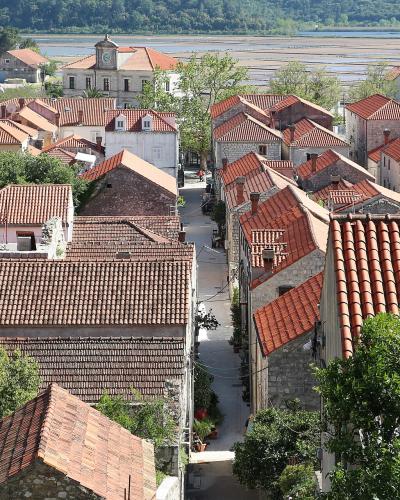
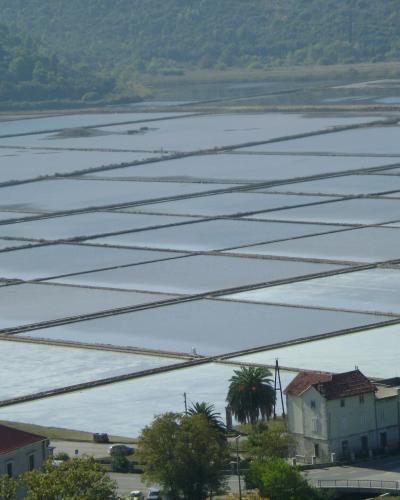
Walking the wall is a physical experience. The stone path along the top is narrow and uneven, with steps in places, and the climb from Ston up to the first high tower is steep. The reward is the view. From the heights you look down on the geometric pans of the saltworks, the red roofs of the town, the shellfish farms in the bay and the long, low coast of the mainland. The effort is moderate for a fit person, but there is little shade, so go early in the morning or late in the afternoon in summer and carry water. Some visitors walk only the first section, while others go the whole length to Mali Ston.
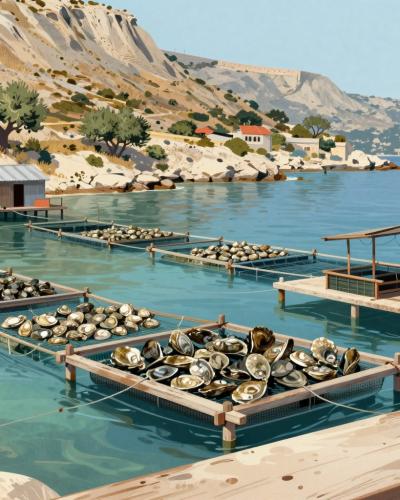
The walls were damaged by an earthquake in 1996 and have been repaired in stages, so some sections are in better condition than others, and the route is sometimes changed or closed for restoration work. It is therefore wise to ask locally before setting out. Exploring Ston itself adds to the visit: the main street and square, Placa, lie at the foot of the wall, the Saltworks, known as Solana Ston, can be visited for a look at traditional salt production, and the Ston Oyster Farms supply restaurants in both Ston and Mali Ston with some of the best oysters on the Adriatic.
A visit takes one to two hours for the main section. The walls suit walkers, photographers, history lovers and anyone who enjoys combining a hike with a plate of fresh oysters afterwards. Wear shoes with good grip.
Categories
More photos coming soon
Nearby Attractions
Other places to visit in Ston
Frequently Asked Questions
Quick Facts
Best Time to Visit
Late May to September offers warm weather, inviting sea, and ideal conditions for hiking the walls, oyster tastings, and exploring the Pelješac Peninsula.