A Different Side of the Dalmatian Coast
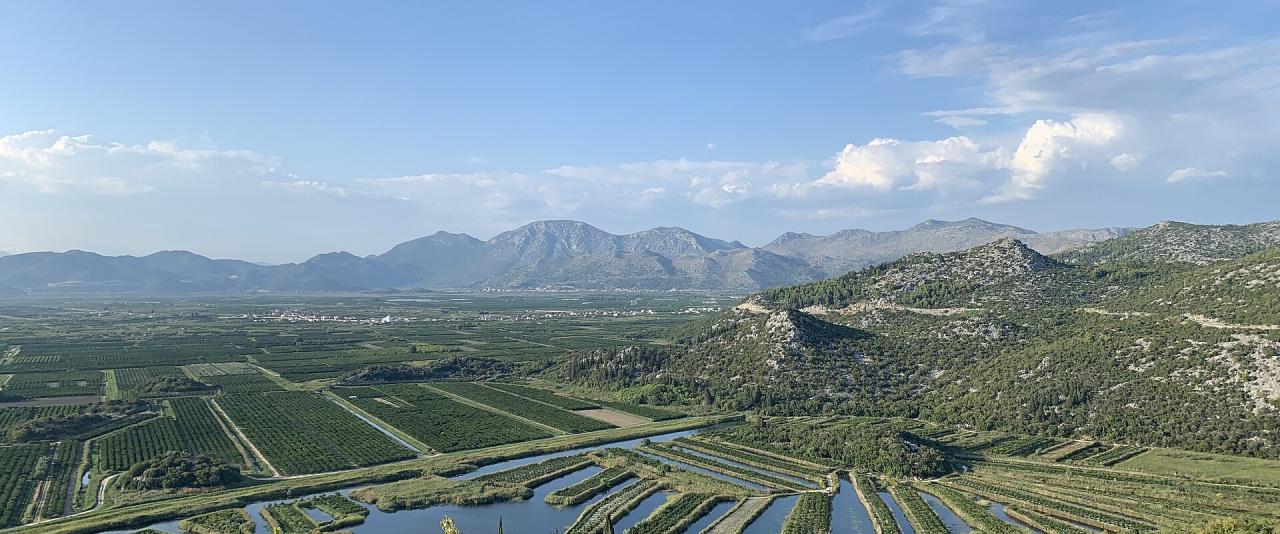
The Neretva river rises in Bosnia and Herzegovina and reaches the Adriatic in southern Dalmatia, between Makarska and Dubrovnik. In its last stretch it spreads into a wide, flat delta of channels, reed beds, lagoons and farmland, unlike anything else on Croatia's rocky coast. The Croatian part of the delta covers about 12,000 hectares, and the wider wetland system continues across the border into Hutovo Blato in Bosnia and Herzegovina.
The main towns are Metković, near the border, and Opuzen, with the port of Ploče at the river's mouth and villages such as Komin, Rogotin and Vid in between. Most travellers only see the delta through the car window on the coastal road to Dubrovnik. It is worth stopping for a day.
Wetlands Shaped by People
The delta you see today is largely man-made. Land reclamation and drainage since the 19th century reduced the river's branches in Croatia from twelve to three and turned most of the former marshes and lagoons into fields and orchards, divided by drainage channels. What remains of the original wetland is protected in five reserves, together about 1,620 hectares, covering ornithological, fish and landscape reserves.
The Neretva Delta and Hutovo Blato are listed together as a wetland of international importance under the Ramsar Convention, effectively one wetland site split by the state border.
Birdwatching
The delta lies on a migration route along the Adriatic, and its reed beds, lagoons and channels attract herons, egrets, cormorants, ducks and many other waterbirds, especially during spring and autumn migration and in winter. The protected reserves are the best places to look, and the quieter lagoons near the river mouth reward patience with binoculars.
Metković has an ornithological collection in its town museum, a useful introduction before heading out. Across the border, Hutovo Blato nature park is another well-known birdwatching area. Respect reserve boundaries and seasonal restrictions, which exist to protect nesting birds.
Lađa Boats and Delta Boat Trips
The traditional boat of the Neretva is the lađa, a narrow, flat-bottomed wooden boat suited to shallow channels. For generations it was the main way of moving people and produce around the delta. Today, several operators in the delta villages offer boat trips in lađe through the channels and reed beds, often combined with a meal of local specialities. Ask about the route and length beforehand, as trips vary.
Every August the Maraton lađa, a rowing race in these boats, runs 22.5 km down the river from Metković to Ploče, with crews of ten rowers plus a drummer and a cox, and draws teams from across the region; it is one of the main events in the delta's calendar.
Mandarins and Local Food
The reclaimed fields are now Croatia's main mandarin-growing area, along with other fruit and vegetables. The harvest runs through autumn, roughly October and November, when roadside stalls along the main road sell mandarins by the crate and Opuzen hosts harvest celebrations. It is a good time to visit: the weather is mild, the orchards are full and there are few tourists.
The delta's cuisine reflects its wetlands. Brudet, a stew made with eel and frog, is the dish most associated with the Neretva, and many local restaurants serve it.
Narona: The Roman Town at Vid
The village of Vid, just north of Metković, stands on the site of Narona, which began as a Greek trading post and became an important Roman town in the 1st century BC. In 1995 archaeologists uncovered a Roman temple there with a group of marble imperial statues, including figures of Augustus and Livia. The Archaeological Museum Narona, built over the temple site, displays the statues where they were found. It is one of the more remarkable archaeological museums in Croatia and well worth an hour or two.
Practical Tips
A car is the easiest way to explore the delta, though coastal buses between Split and Dubrovnik stop in Opuzen and Ploče and some serve Metković. The area works well as a day trip from Makarska or as a stop on the way to Dubrovnik or Pelješac. Mosquitoes can be a nuisance in the wetlands in warm weather, especially in the evening, so bring repellent. Spring and autumn are the best seasons for birdwatching and walking. Croatia uses the euro; carry some cash for roadside fruit stalls.