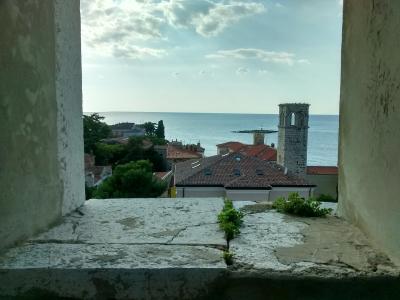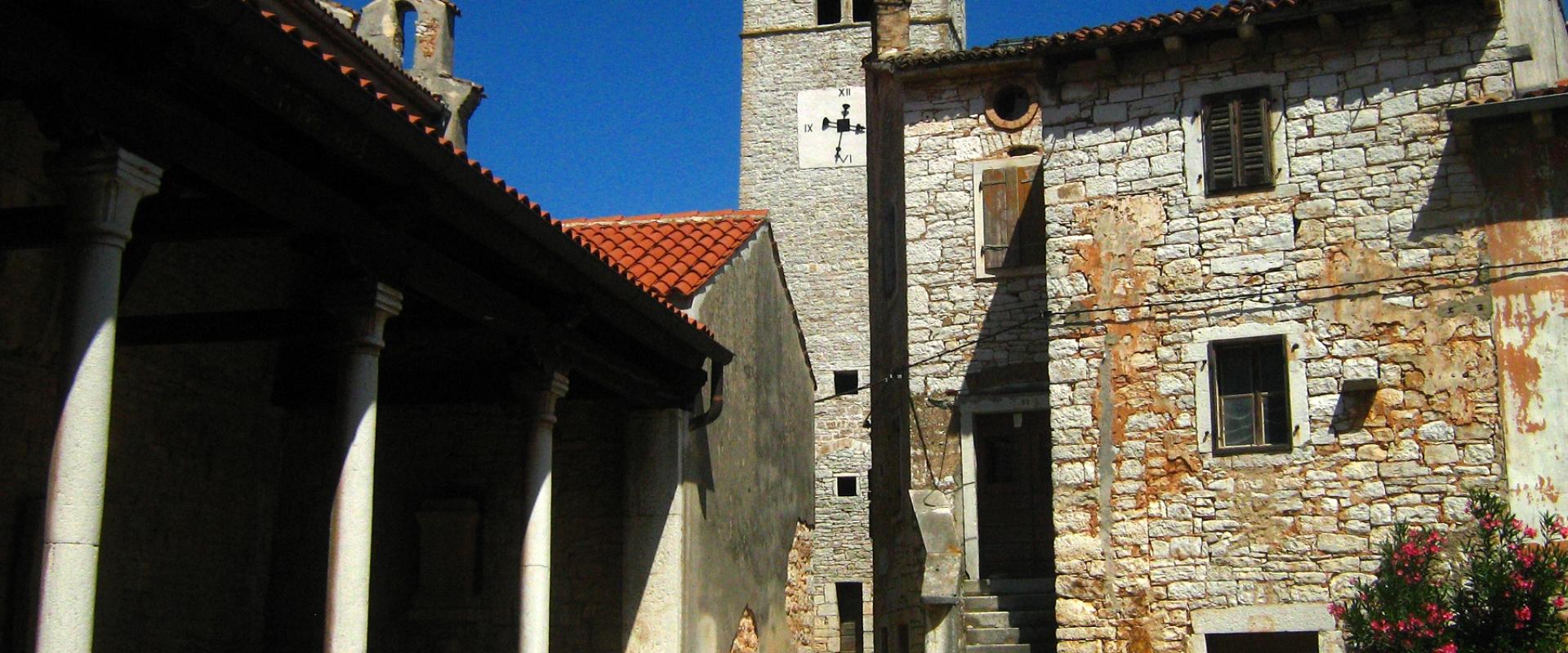
Sveti Lovreč’s origins date back to Roman times, but its character as a fortified town was shaped during the Middle Ages, when it became an important administrative and defensive center in Istria. The town’s massive stone walls, towers and gates were built to protect against invasions and have been remarkably well preserved. Walking through the main gate, visitors enter a world of narrow alleys, stone houses and peaceful squares that have changed little over the centuries. The Sveti Lovreč medieval town and bell tower form the core of the old settlement, and the bell tower is visible across the hills.
The center of Sveti Lovreč is the main square, framed by the Romanesque Church of St. Lawrence, known as Sv. Lovro, which has ancient origins and features frescoes and a distinctive bell tower. The town’s loggia, once the seat of local government, is another architectural highlight, which gives a glimpse of the civic life of medieval Istria. Other notable sites include the Church of St. Rocco, with its 14th-century frescoes, and the remnants of the town’s ancient fortifications, which give wide views of the surrounding countryside. The historic village center is small enough to see in an hour, but its atmosphere invites a slower pace, with benches under old trees and doors that open onto small courtyards.
Sveti Lovreč is also known for its community life and traditional festivals. Throughout the year the town hosts events celebrating Istrian culture, music and gastronomy, including olive oil and wine tastings, folk performances and artisan markets. Local producers offer extra virgin olive oil, regional wines and homemade delicacies, which makes Sveti Lovreč a favorite stop for food and wine enthusiasts. Farmers markets sell fresh produce, cheese, honey and sausages, and the restaurants and konobas of the town, including Tomažova Konoba and Gostiona San Lorenzo, serve homemade pasta, grilled meat and truffle dishes.
The countryside around Sveti Lovreč is good for outdoor activities. Cycling and hiking trails wind through olive groves, vineyards and forests, connecting the town with nearby villages and scenic viewpoints. Horseback riding is available at local equestrian clubs, such as the Konjički klub Jakici, and guided tours introduce visitors to the area’s natural and cultural heritage. The town’s closeness to the coast makes it easy to combine a visit with trips to the beaches and attractions of Vrsar, Poreč and Rovinj. A day might begin with a morning ride through the vines, continue with lunch in a konoba and end with a swim on the coast.
The surrounding villages are also worth a visit. Small hamlets with stone houses and churches lie within a few kilometers, and many farms offer tastings of olive oil and wine. Istria’s inland is known for its truffles, wild asparagus in spring and mushrooms in autumn, and local guides can arrange tours at the right season.
Getting to Sveti Lovreč is straightforward. The town is accessible by car from major Istrian cities, with well-maintained roads leading through picturesque landscapes. Public buses connect Sveti Lovreč with Poreč and other regional centers. Accommodation options include guesthouses, rural villas and agritourism estates, many offering wide views and a peaceful setting.
The best time to visit Sveti Lovreč is from May to June and September, when the weather is warm, the countryside is lush and the town’s festivals and outdoor activities are in full swing. Summer brings lively events and long, sunny days, while spring and early autumn offer mild temperatures and fewer crowds. Whether you are drawn by history, gastronomy or the serene beauty of Istria, Sveti Lovreč offers a memorable and authentic stay.
Best time to visit
May to June and September offer warm weather, lush countryside, and lively festivals; summer is also pleasant for exploring the town and surrounding trails.
What to see in Sveti Lovreč
Our picks first.
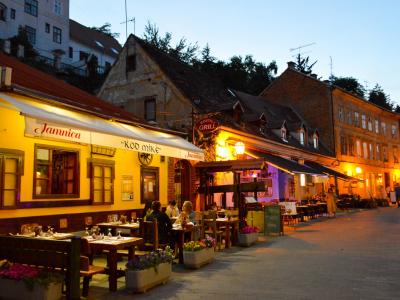
Gostiona 'San Lorenzo'
Italian and Mediterranean cuisine in Sveti Lovreč
Food & Gastronomy · Restaurants
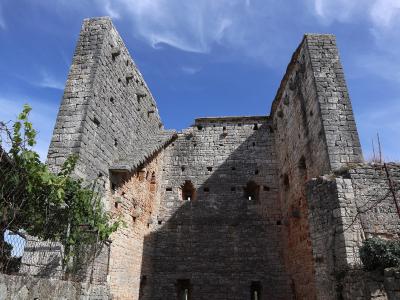
Historic Village Center
Medieval village with nine towers and ancient walls
Cultural Experiences · History & Heritage
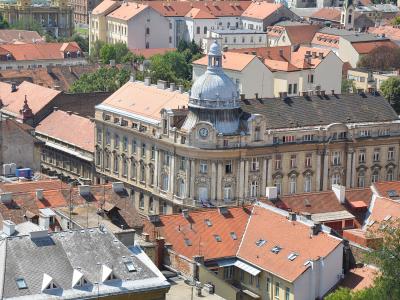
Sveti Lovreč Medieval Town and Bell Tower
Medieval fortified town with Romanesque bell tower
Cultural Experiences · History & Heritage
Sveti Lovreč by interest
The same sights, grouped by what you came for.
Did you know?
Checked facts about Sveti Lovreč, each with its source.
-
History
Sveti Lovreč's Round Plan Comes From a Prehistoric Hillfort
Sveti Lovreč's round street plan goes back to a prehistoric hillfort on the hilltop. The town was already walled in the Byzantine era, but most surviving fortifications are Venetian, from when it was seat of the pazenatik, Venice's military administration for Istria.
Source: Istria Tourist Board
Planning a visit to Sveti Lovreč
Good to know
- Currency
- EUR
- Language
- Croatian