







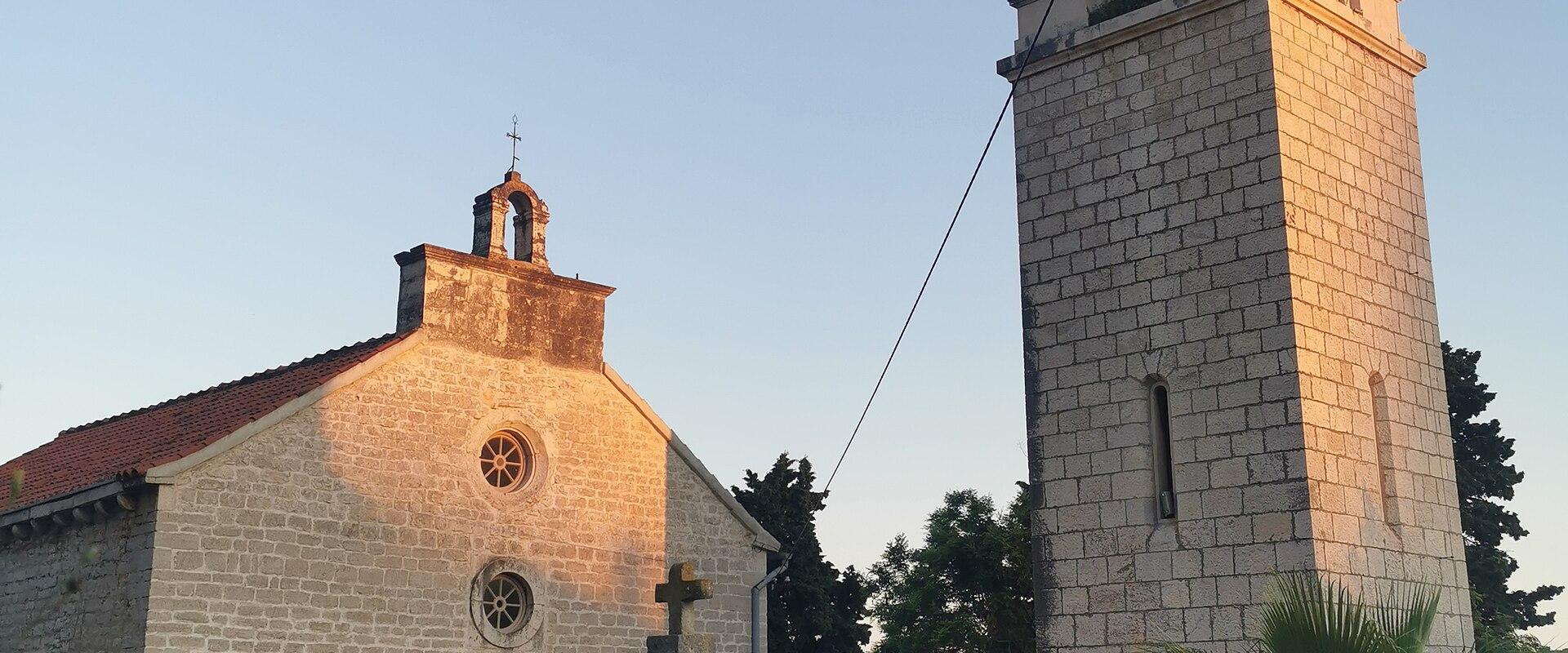
Crkva Svete Marije
15th-century church with renowned Istrian frescoes
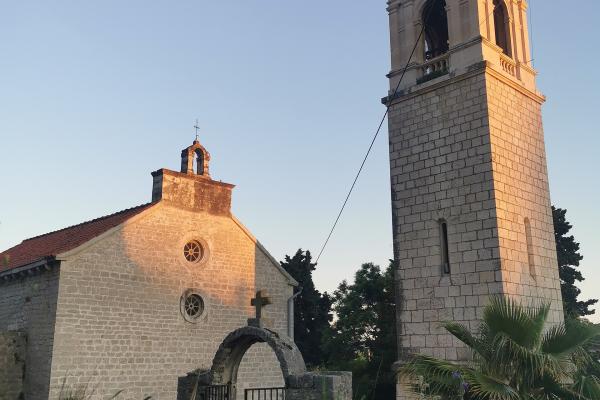
Crkva Svete Marije, the Church of St. Mary, is a small fifteenth-century church just outside the hilltop town of Oprtalj, in central Istria, in Croatia, and it is renowned for the frescoes that cover its interior. It stands by the road that leads toward Zrenj, Šterna and Buje, among tall cypress trees, and the setting alone makes it a quiet and photogenic stop on a tour of the Istrian hill towns.
Istria is one of the richest regions in Croatia for medieval wall paintings. In the Middle Ages and the early Renaissance, small village churches across the peninsula were decorated with frescoes by local and travelling painters, and many of the cycles have survived because the churches were rarely altered. They offer a vivid view of religious life, with scenes from the Bible and the lives of saints painted in strong colours for a congregation that could not read. Oprtalj’s Church of St. Mary belongs to this tradition, and its frescoes are among the best preserved in the area, some Renaissance-influenced and others still Gothic.
The paintings inside were made by several hands. The most famous is Klerigin, a painter from Koper, who in 1471 painted the Annunciation on the triumphal arch, the arch that frames the sanctuary. This work shows the influence of the Renaissance, with clear lines, a sense of space and architectural motifs, in contrast to the older Gothic manner that dominates other parts of the church. Elsewhere on the walls you can see scenes from the life of Mary, saints in rows and the dramatic image of St. George slaying the dragon, painted in a soft Gothic style, with some figures in the so-called Knitterungstil, a manner in which drapery is drawn in angular, crumpled folds that was fashionable in Central Europe in the late Middle Ages. Together the paintings form a gallery of fifteenth-century styles in a single small room.
Inside, the paintings come as a surprise against the plain exterior of the church; the interior comes as a surprise, and many visitors say it is the unexpected richness that they remember. Because the building is small and the paintings are delicate, visits are often arranged by appointment or as part of organised cultural tours, so it is wise to ask locally or at the tourist office before making a special trip. The key is usually kept in the town.
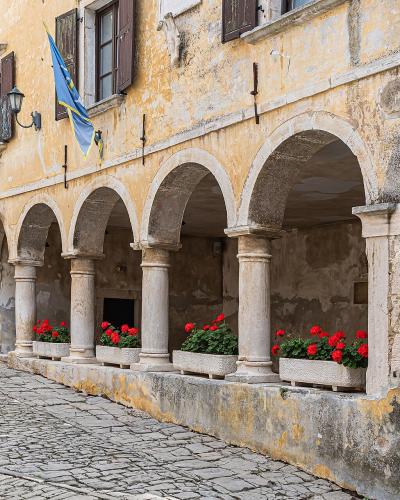
Oprtalj itself is worth the time. The old town on its hilltop has cobbled streets, a loggia with a lapidarium, the Church of St. Rocco and the Loggia Square, and many of its houses stand empty, which gives it a quiet, atmospheric character. A walk from the town to the church takes only a few minutes.
The church suits lovers of art and history, photographers and anyone interested in Istria’s hidden treasures.
More photos coming soon
Nearby Attractions
Other places to visit in Oprtalj

Frequently Asked Questions
Quick Facts
Best Time to Visit
Early July to mid-August offers warm weather and lively festivals; spring and early autumn are ideal for hiking, truffle hunting, and exploring in mild conditions.