







- Where
- Gornja Stubica, Zagorje
- Directions
- Directions
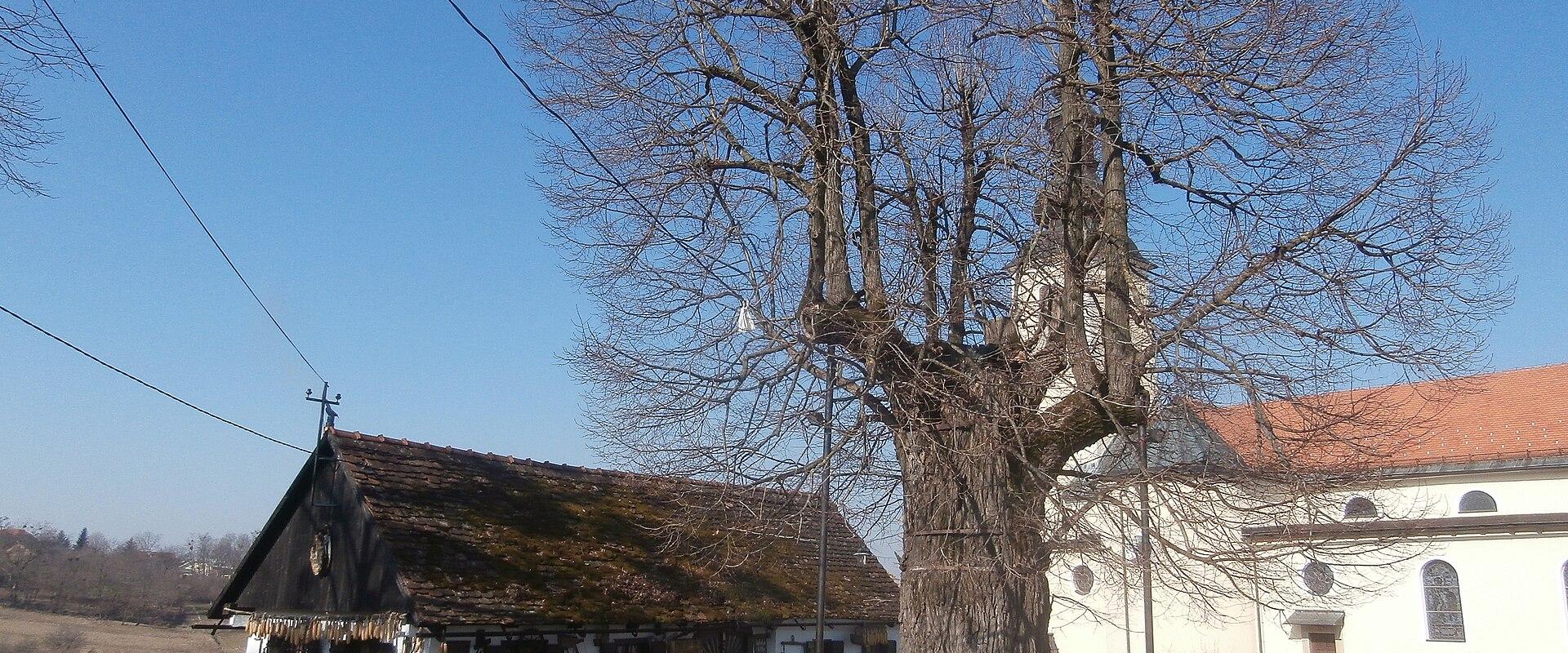
The Gubec Linden (Gupčeva Lipa) is an ancient lime tree that stands beside the parish church in Gornja Stubica, a village in the hills of Hrvatsko Zagorje, and it is among the best-known trees in Croatia. The Gubec Linden Tree is a symbol of the Great Peasant Rebellion of 1573 and of its leader, Matija Gubec, and it has become a place of pilgrimage for anyone interested in the story of the revolt. Few trees in the country have such a strong place in the national imagination.
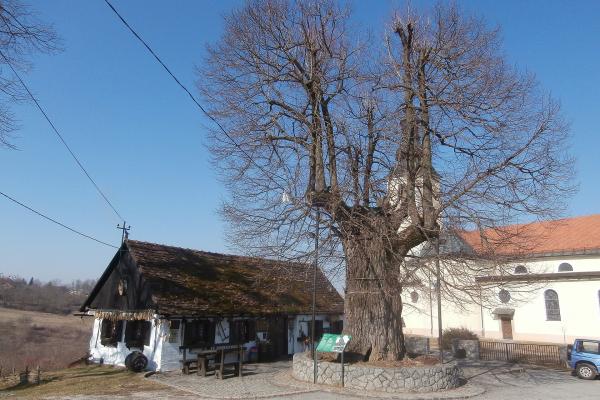
The tree is enormous. The trunk is hollow and gnarled, with a diameter of several metres, and the branches spread wide, though they are supported and the tree is carefully protected. Estimates give it an age of about four centuries. Tradition holds that the rebels gathered under its branches, and that Gubec spoke to them there before the uprising, but a tree of that age is unlikely to have been standing in 1573, so it is better seen as a living symbol of the story than as an eyewitness. That does not diminish its meaning for the people of the region, who have treated it as a monument for generations. It was declared a protected natural monument in the 20th century, in 1957, and since then it has been guarded as a landmark of both nature and history.
The tree is also part of a Living Archive, a project to preserve its genetic heritage. Cuttings and seedlings from the tree are cultivated and kept, so that if the old tree dies, its descendants will continue the line. This kind of living archive is a modern way of caring for a historic tree, and it adds to the sense that the linden is part of an unbroken story. The tree stands in a calm setting in the village, with the Church of St. George nearby and the hills of Zagorje around.
The story behind the tree is told in the nearby Oršić Castle and Museum of the Peasants' Revolt. In 1573 the peasants of the region rose against harsh feudal lords, were defeated in a battle near Stubica, and Gubec was executed in Zagreb. The revolt has been remembered in songs, books and films ever since. Other places in the area include the Stubički Golubovec Castle, the Dišeća Starina Ethno Village, the Burnjak Dam and Retention Basin and the Rudolf Perešin Memorial Park.
The tree is free to visit and always accessible. It suits history lovers, families and travellers exploring Zagorje, and a visit can be combined with the museum and the church. Allow half an hour, and keep a respectful distance from the protected roots.
Categories
More photos coming soon
Nearby Attractions
Other places to visit in Gornja Stubica

Rudolf Perešin Memorial Park
Memorial park honoring pilot Rudolf Perešin
History & Heritage · Monuments
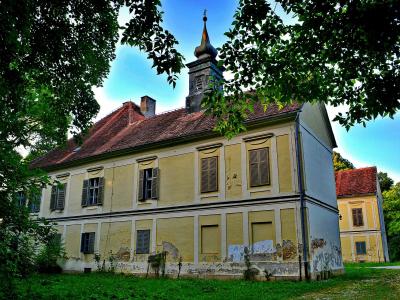
Stubički Golubovec Castle
Late Baroque castle with landscaped park and forest
History & Heritage · Castles

Burnjak Dam and Retention Basin
Large flood control dam with 1.8M m³ retention
Activities & Adventure · Natural Wonders
Dišeća Starina Ethno Village
Traditional Croatian village showcasing heritage
Cultural Experiences · History & Heritage
Questions people ask
Quick Facts
Best Time to Visit
June to August offers warm weather, lush scenery, and lively festivals; spring and early autumn are ideal for hiking, sightseeing, and cultural events.