







Pula Arena
Roman amphitheater, one of the best-preserved worldwide
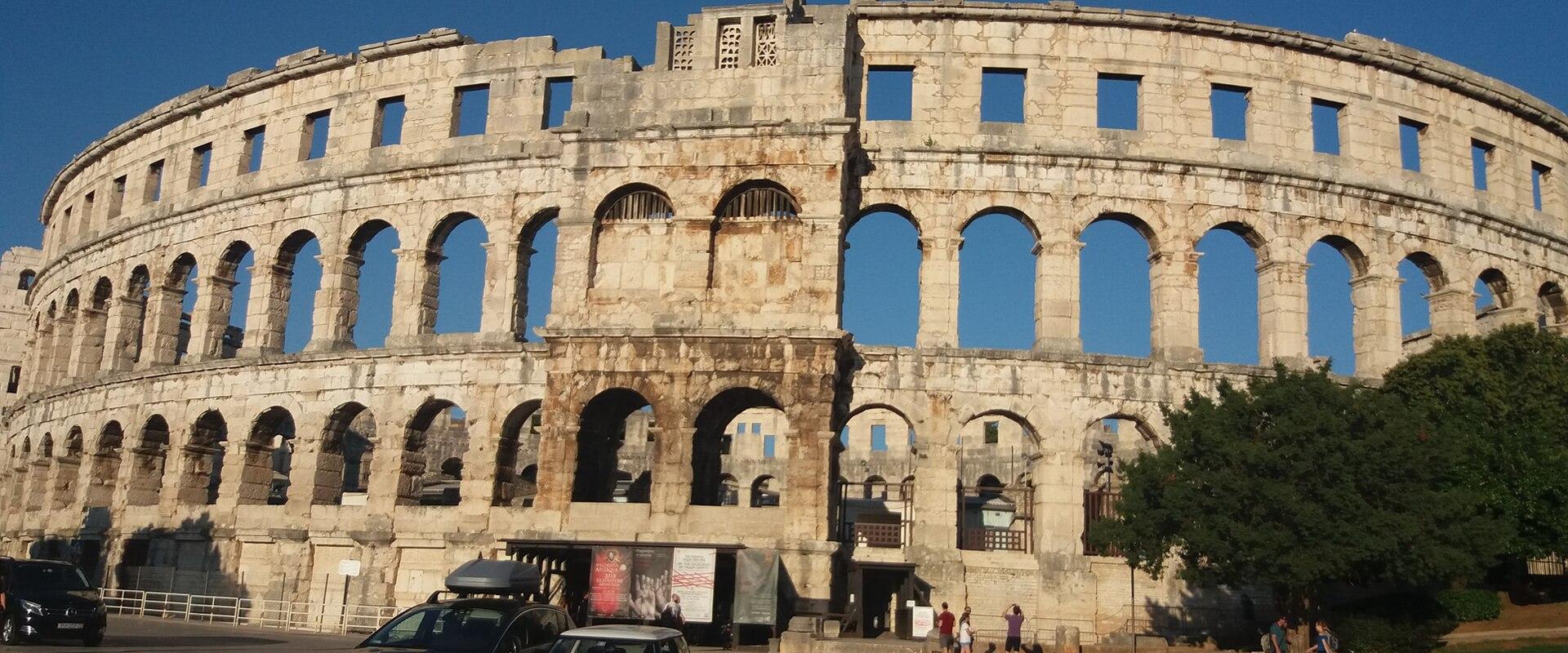
The Pula Arena is the best-known monument of Istria and one of the best-preserved Roman amphitheaters anywhere. It rises beside the harbour in the old town of Pula, a city that was the Roman colony of Pola, and its limestone outer wall still runs unbroken around the whole ellipse. Work began under Emperor Augustus in the first decades of the Roman era, when a smaller wooden and stone structure stood on the site, and the grand stone building took its final form in the reign of Emperor Vespasian in the second half of the first century AD. It measures roughly 130 by 100 metres, and in antiquity it could hold around 23,000 spectators.
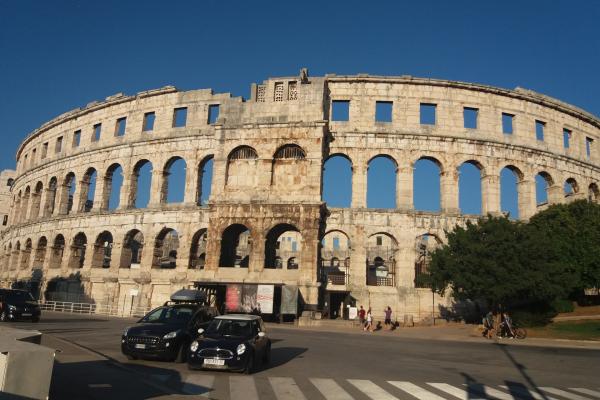
What makes the Arena unusual is how complete the exterior is. On the seaward side the wall climbs through three levels of arches and a top row of rectangular openings, while on the hillside facing the town it drops to two levels because the ground rises there. Four towers once held cisterns that fed perfumed water to the stands. Inside, the tiers of seats are only partly preserved, since much of the stone was carried off over the centuries, but the oval of the arena floor and the passages beneath it are easy to read. Gladiator fights and animal hunts were the original program here, until such contests faded out in late antiquity.
Today you can walk the upper galleries for views over the red roofs of Pula, the bay and the shipyard cranes, then go down into the underground corridors. These passages hold a permanent exhibition on Istrian olive oil and wine production, which fits a region where both have been made since Roman times. Pieces of ancient amphorae and press equipment help explain how the countryside around Pula supplied the empire's tables.
The Arena is also a working venue. The Pula Film Festival, Croatia's long-running national film showcase, screens films in the arena each summer, and concerts bring crowds of thousands under the open sky, with a modern capacity far below the Roman one. Seeing the walls lit in the evening during an event is quite different from a quiet morning visit, so it is worth checking the event calendar before choosing your day.
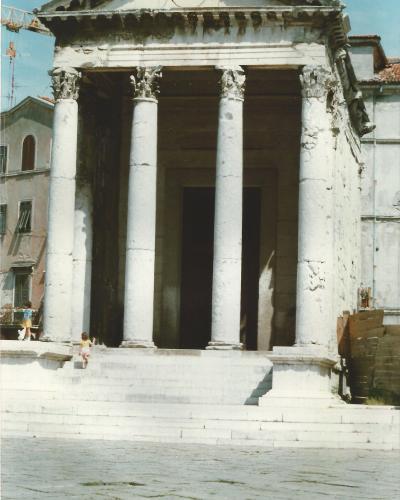
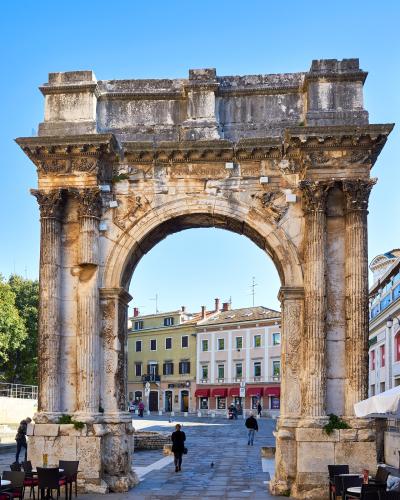
The monument sits in the middle of town, so it combines easily with the nearby Arch of Sergii, the Temple of Augustus on the Forum and the Twin Gates. It suits history lovers, families with children who enjoy climbing through old stone passages, and anyone who wants a single clear picture of what Roman entertainment architecture looked like. Allow around an hour for the structure and the exhibition, a bit longer on a hot day when shade inside is limited.
Categories
More photos coming soon
Opening Hours
Hours
Open daily; hours vary by season (typically 8:00–22:00). Check official website for details.
Nearby Attractions
Other places to visit in Pula
Frequently Asked Questions
Quick Facts
Best Time to Visit
May to October offers warm weather, lively festivals, and ideal conditions for sightseeing, beaches, and exploring Pula’s Roman and medieval heritage.