







- Where
- Pula, Istria
- Directions
- Directions
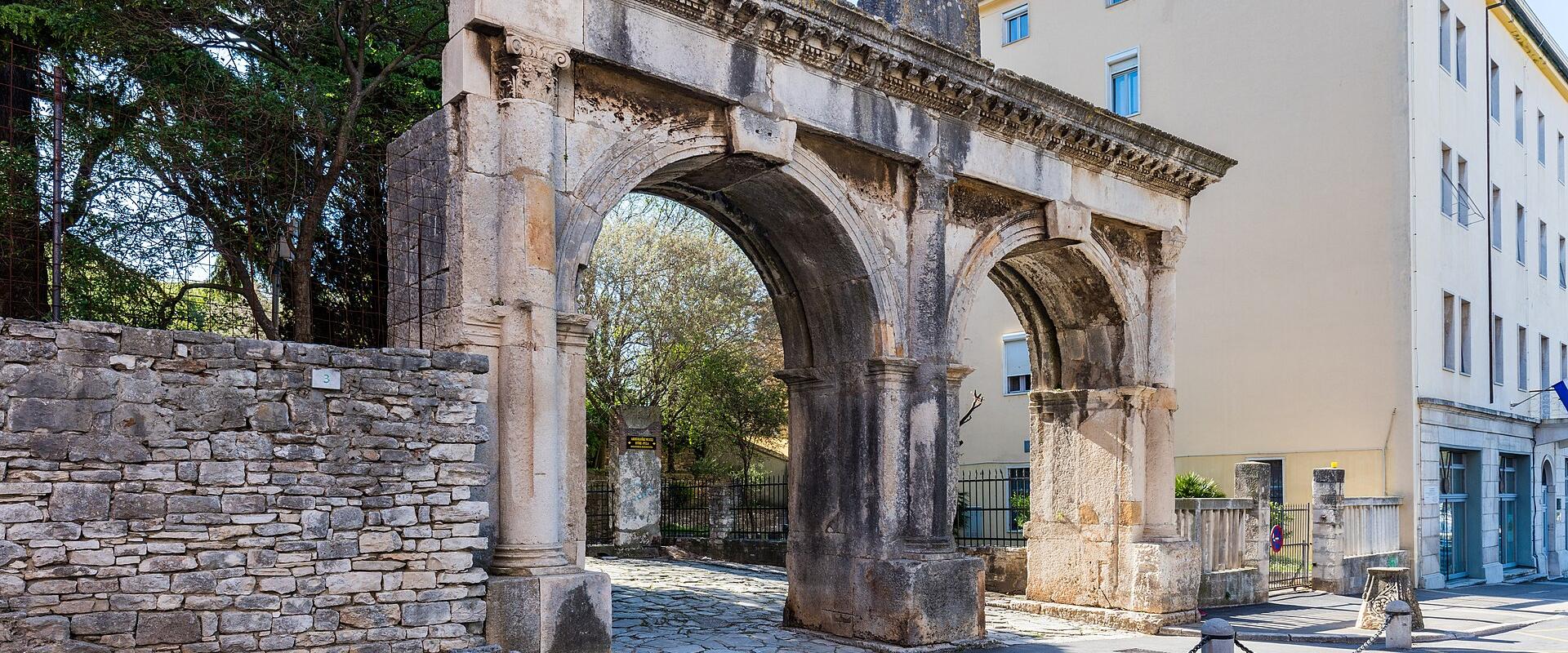
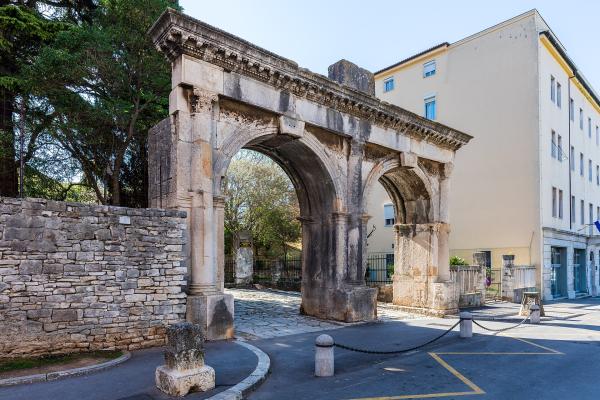
The Twin Gates, called Dvojna Vrata in Croatian and Porta Gemina in Latin, are a Roman city gate in Pula, on the southern tip of Istria, and they are among the best-preserved parts of the ancient defences of the town. Pula was a Roman colony called Pola, founded in the first century BC, and it grew into a wealthy city with temples, a forum, theatres and an amphitheatre, all of which survive in some form. The city was surrounded by walls with several gates, and the Twin Gates are the one that remains most complete, a short walk from the Forum and from the Arena. They are generally dated to the second or third century AD, which makes them roughly eighteen centuries old.
The structure is a double arch, and its name comes from the two round openings through which people and carts once passed side by side. Between and above them are three decorative semi-columns, and a relief of a wreath adds an ornamental touch. The stonework is of the pale local limestone that gives Pula its warm tones, and the gate has the balanced, dignified look of Roman civic architecture. It was part of a wall that enclosed the city and that was largely dismantled in later centuries, when the town outgrew its ancient limits, and the gate is one of the few pieces that remain in place. In the medieval period, the gates were buried for defensive reasons, and they were later excavated and preserved, which explains why they are in such good condition.
Nearby, an inscription honours a man named Lucius Menacius Priscus, who is described as a local senator credited with funding a public works project for the city's water supply. Such inscriptions are valuable, since they tell us about the people who shaped the town and about the way wealthy citizens paid for civic improvements. The inscription is a reminder that Roman cities depended on private generosity as well as public funds. The site is compact and can be visited in a few minutes, and there are no opening hours or admission fees, so it is easy to include on a walk.
The gates stand close to other attractions. The Archaeological Museum of Istria, housed in a building next to the gate, displays finds from the Roman period and earlier, and the Venetian castle, called the Kaštel, stands on the hill above. The Small Roman Theatre, the Forum with the Temple of Augustus, the Arch of Sergii and the Arena are all within a few minutes on foot, and the old town streets are full of cafés. The Museum of Olive Oil and the James Joyce statue outside Café Uliks are among the quirky stops in the area.
The gates suit history lovers, photographers and anyone exploring Pula on foot. Visit in the morning or evening for softer light, and combine it with the other Roman monuments.
Categories
More photos coming soon
Nearby Attractions
Other places to visit in Pula
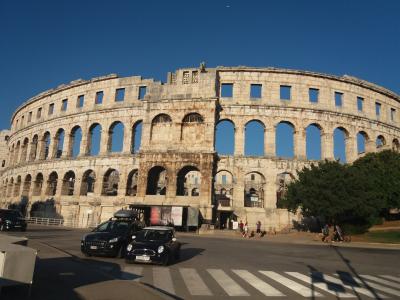
Pula Arena
Roman amphitheater, one of the best-preserved worldwide
History & Heritage · Ancient Sites
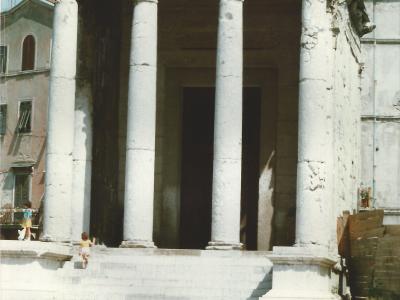
Temple of Augustus
Well-preserved Roman temple dedicated to Augustus
History & Heritage · Ancient Sites
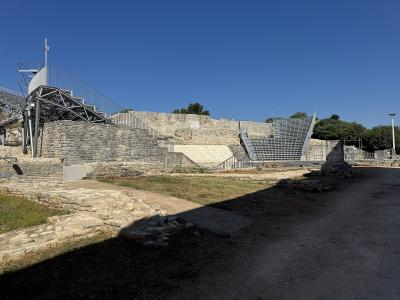
Pula's Roman Theatre
Small Roman theatre ruins in Pula old town
Cultural Experiences · History & Heritage
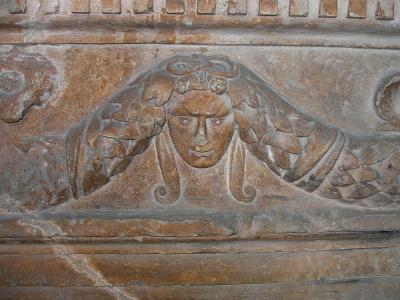
Museum of Olive Oil
Museum of Istrian olive oil history and tasting
Cultural Experiences · Food & Gastronomy
Questions people ask
Quick Facts
Best Time to Visit
May to October offers warm weather, lively festivals, and ideal conditions for sightseeing, beaches, and exploring Pula’s Roman and medieval heritage.