Where Cavtat is
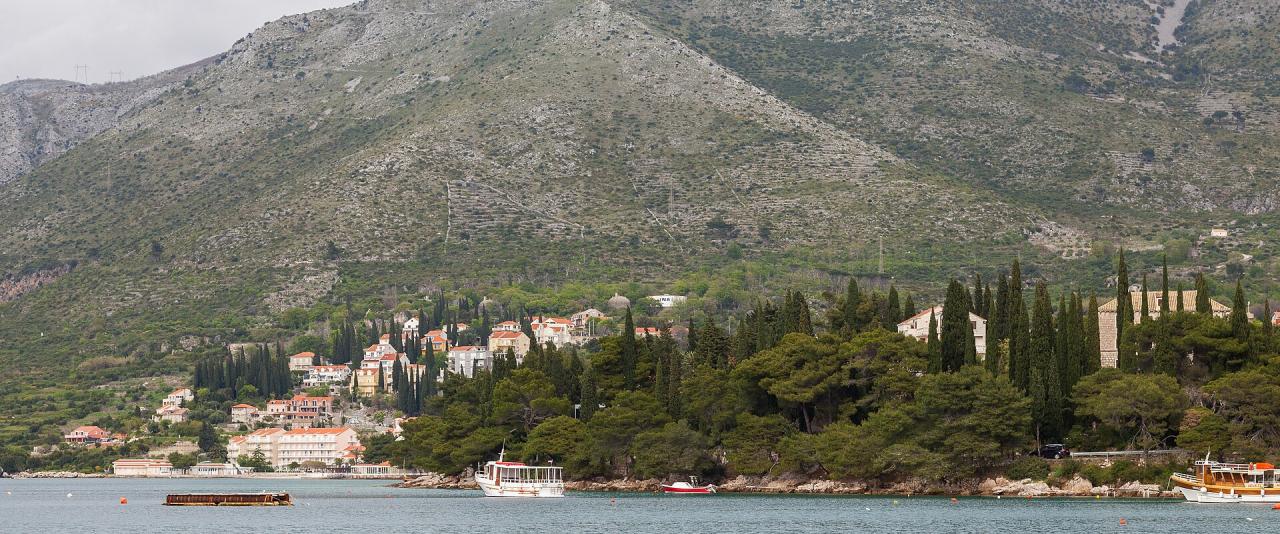
Cavtat is a small harbour town about 15 km south-east of Dubrovnik, at the start of the Konavle region, close to Croatia's southernmost border. It sits on a narrow peninsula between two bays, with a palm-lined seafront, a compact old centre and wooded headlands on either side. About 2,000 people live here year-round.
The town is older than Dubrovnik itself. Greek colonists founded Epidaurus here in the 6th century BC, and it later became the Roman town of Epidaurum. When it was destroyed in the 7th century, its refugees helped found the settlement that became Dubrovnik. Cavtat was later rebuilt under the Republic of Ragusa, which called it Ragusa Vecchia, or "Old Ragusa".
Why stay in Cavtat
Cavtat suits travellers who want to visit Dubrovnik without staying in the Old Town:
- Proximity to the airport: Dubrovnik Airport at Čilipi is a short taxi ride away, which makes Cavtat practical for the first or last night of a trip.
- Atmosphere: evenings are quieter than in Dubrovnik, though the seafront is still lively in summer.
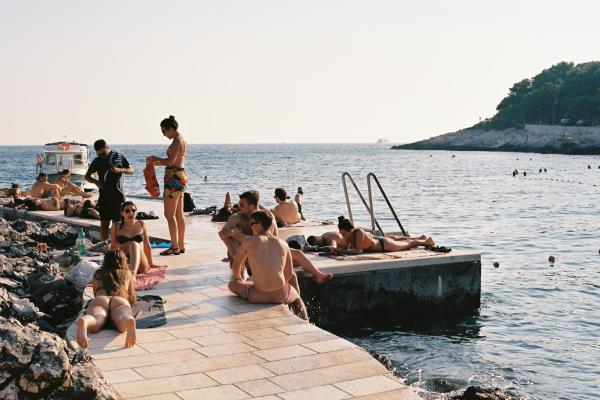
- Swimming: there are rocky and pebble swimming spots all around the peninsulas, within walking distance of most accommodation.
The trade-off is that you have to travel into Dubrovnik for the walls, museums and evening events. Cavtat itself has plenty of restaurants, but less nightlife.
Getting to and from Dubrovnik
- By boat: in season, small passenger boats run between Cavtat harbour and the old port in Dubrovnik, with several sailings a day. The trip gives a good view of the Old Town walls from the sea. Services depend on the weather and are reduced or stop in winter.
- By bus: a public bus line operated by Libertas Dubrovnik links Cavtat with Dubrovnik year-round, ending near Pile Gate and the main bus station.
- By car or taxi: the drive takes around half an hour, longer in summer traffic. Parking in Dubrovnik is limited and expensive, which is a good reason to take the boat or bus.
What to see in town
- The Račić Mausoleum, on the hill at the end of the peninsula, in the cemetery of St Rocco. Ivan Meštrović, Croatia's best-known sculptor, designed it for a local shipowning family in the early 1920s. It is a domed white-stone chapel with carved angels and bronze details. It opens to visitors in season for a small fee, and the hill gives views over both bays.
- Vlaho Bukovac House, the birthplace of the painter Vlaho Bukovac (1855–1922), one of Croatia's leading artists. It is now a museum holding his paintings and studio, as well as murals he painted on the walls as a young man.
- The Rector's Palace, which houses the collection of the jurist Baltazar Bogišić, another native of Cavtat. It includes a library, prints and archaeological finds.
- The Franciscan Monastery of Our Lady of the Snow, at the southern end of the seafront, with Renaissance paintings in its church.
- St Nicholas Church on the seafront, a Baroque parish church.
Coastal walks and swimming
A footpath runs round the Rat peninsula through pine woods, passing many rocky platforms with ladders into the sea. A similar path circles the Sustjepan peninsula on the other side of town. Both are easy walks of under an hour and are the main places to swim in town. The town beaches are small and pebbly. For more space, take a water taxi to one of the nearby coves or go to the beaches in the neighbouring village of Mlini, back towards Dubrovnik.
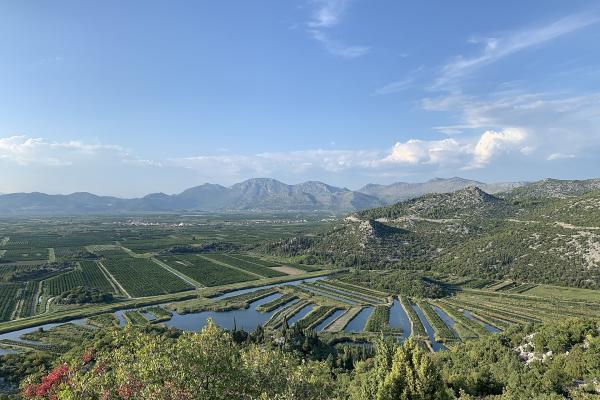
Konavle, the valley and hills behind Cavtat, is a farming region with a different character from the coast:
- Wine: local wineries make Malvasija Dubrovačka, a white wine, among others. Many accept visits by appointment.
- Sokol Grad, a restored hilltop fortress near the border, now open to visitors.
- Traditional embroidery and costume, which can be seen at the Konavle museum in Čilipi. Folk events also take place there on some Sundays in summer.
- Montenegro: the Bay of Kotor is within day-trip range by car or tour. You will cross an external Schengen border, so bring your passport and allow time at the crossing.
Practical notes
Cavtat is busiest in July and August, when the town's hotels and apartments fill and excursion boats crowd the harbour. Many restaurants close between November and March, and boat services stop, though the bus continues. May, June, September and early October are the best months for a quieter stay with warm sea.