What Plitvice is
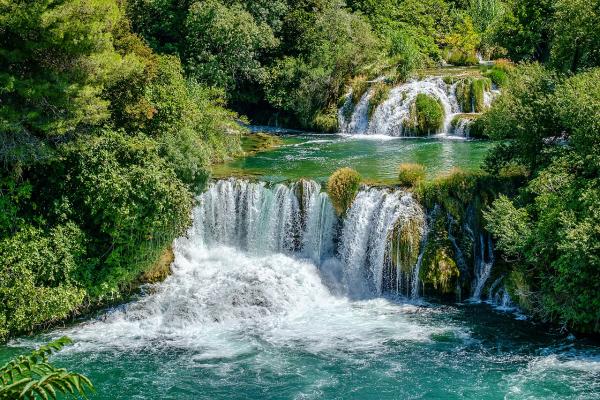
Plitvice Lakes National Park is Croatia's oldest and largest national park, founded in 1949 and listed by UNESCO as a World Heritage Site in 1979. It covers almost 300 km² of forested karst in Lika, inland between Zagreb and the Dalmatian coast. The core attraction is a chain of sixteen lakes linked by waterfalls and cascades.
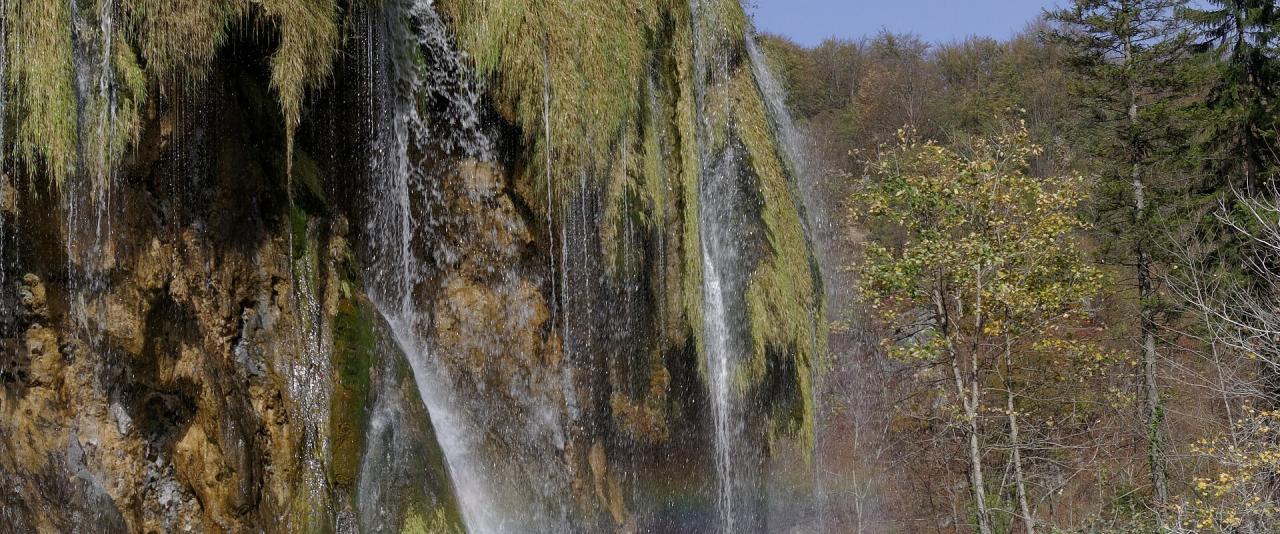
The lakes exist because of travertine (tufa): calcium carbonate that settles out of the water onto moss and algae and slowly builds natural dams. Those barriers are still growing, which is one reason the park is strict about staying on the paths. The Upper Lakes in the south sit on dolomite and are larger and more spread out. The Lower Lakes in the north lie in a limestone canyon and are more dramatic. The largest lake, Kozjak, separates the two groups. At the northern end, Veliki slap (the Great Waterfall) drops 78 metres and is the tallest waterfall in Croatia.
Tickets and prices for 2026
The park's official price list for 2026 sets day tickets by season:
- January–March and November–December: adults €10, students €6, children 7–18 €4
- April–May and October: adults €23, students €14, children €6
- June–September: adults €40 before 4 pm (3 pm in September), €25 after that; students €25/€15; children €15/€9
Children under seven enter free. Two-day tickets are also sold (€60 for adults in summer). The ticket includes the electric boat across Kozjak and the panoramic train within your chosen route.
Buy online through the park's official ticketing site, especially from June to September. Entry is managed by time slot and capacity per entrance, so a printed or phone ticket for a specific time is far more reliable than turning up and queuing. The cheaper late-afternoon summer ticket is good value, but leaves less daylight for a long route.
Entrance 1 or Entrance 2
There are two main entrances on the D1 road, a few kilometres apart:
- Entrance 1 (Rastovača) is at the northern end, next to the Lower Lakes and the best-known viewpoint over Veliki slap. Most day-trip coaches start here, so it is the busiest.
- Entrance 2 (Hladovina) is near Lake Kozjak and the park hotels. It is the natural start for the Upper Lakes.
Both have paid car parks. Cars pay by the hour (€2 per hour in summer, €1.50 in spring and autumn), and you pay when you leave. There are no exchange offices at the entrances, and cash machines are limited, so carry a card.
Walking routes
The park signposts several programmes, each a combination of boardwalks, trails, the boat and the train. The most popular are:
- From Entrance 1: a short loop of the Lower Lakes and Veliki slap (two to three hours), or a full route that adds the boat across Kozjak and the Upper Lakes, returning by train (four to six hours).
- From Entrance 2: a route covering the Upper Lakes first and then the Lower Lakes, also four to six hours.
For a first visit, a route that covers both the Upper and Lower Lakes is worth the extra hours. The Upper Lakes are quieter and have the long boardwalks across cascades, while the Lower Lakes have the canyon views. The lake trails total about 22 km. Beyond them, 36 km of marked hiking trails lead into the forest, where you will see far fewer people.
When to go
Each season changes the park:
- Spring (April–May): the waterfalls carry the most water and the lower prices apply.
- Summer: green and busy. The boardwalks get congested from late morning, so arrive at opening or come late in the day.
- Autumn (October): the beech and maple forest turns colour, and the crowds thin out.
- Winter: quiet and sometimes snowy. Some boardwalks and the boat may close because of ice or high water, and the route options shrink.
The park is open every day of the year. Hours vary by season, and ticket sales end mid-afternoon, so check the official site for the day of your visit.
Rules worth knowing
Plitvice is a protected landscape and the rules are enforced:
- No swimming anywhere in the lakes. This has been banned since 2006.
- Stay on the boardwalks and marked paths.
- Do not feed animals or pick plants.
- Dogs must be on a lead.
- No drones without a permit.
The boardwalks have no railings in many places and are wet and slippery near the falls, so wear shoes with grip. Food options inside the park are limited to a few kiosks and restaurants at the main stops, so bring water and something to eat.
Getting there and staying nearby
Plitvice is roughly a two-hour drive from Zagreb or Zadar, and a little more from Split. Intercity buses on the Zagreb–Zadar/Split routes stop at both entrances. Check the return times before you set off, because the last buses can be full in summer.
Staying overnight in the park hotels or in villages along the D1, such as Mukinje, Rastovača or Grabovac, lets you be at the gate when it opens. That is the single best way to see the lakes without crowds.