

Step Back Into the Colosseum’s Shadow
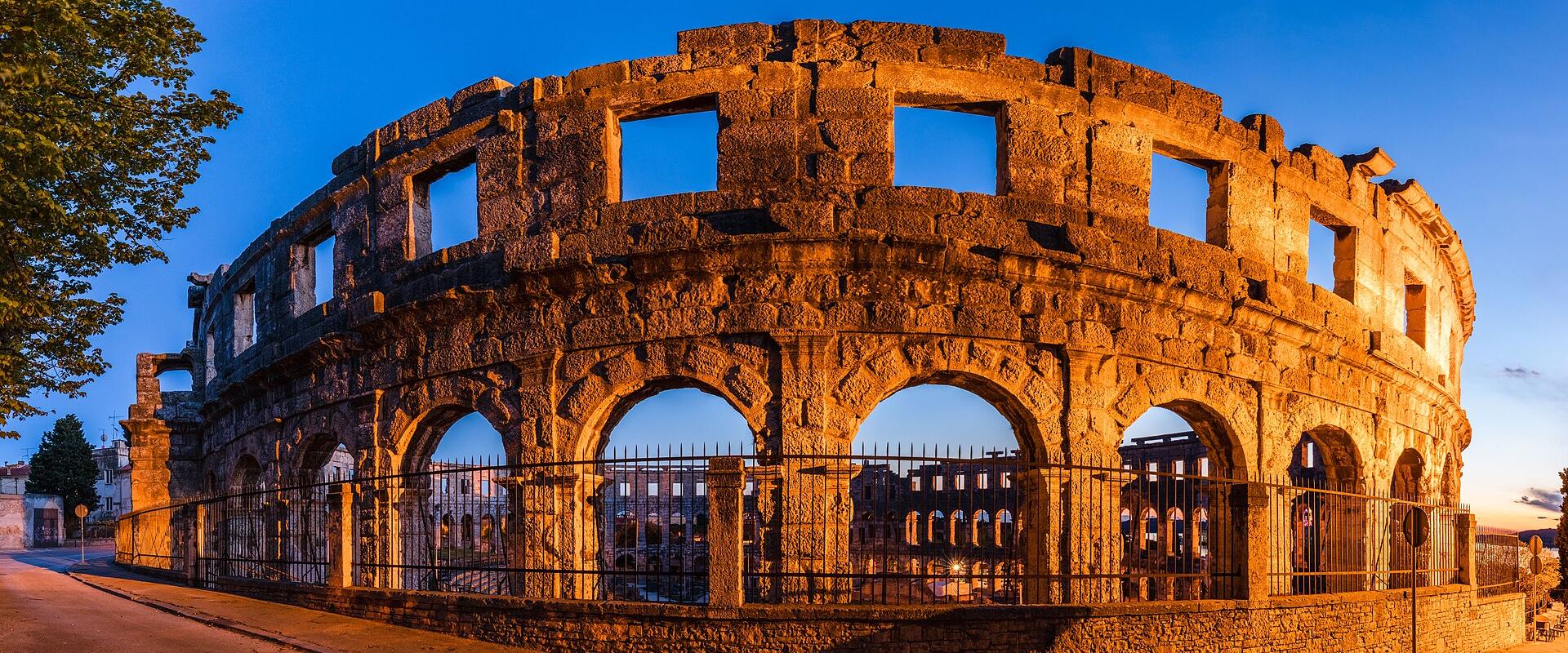
I still remember the first time I stood beneath Pula’s limestone arches, feeling the ancient stone hum against the soles of my boots. While Rome’s Colosseum dominates global headlines, this Istrian giant holds its ground with a quiet, undeniable authority. Built between 27 BC and AD 68, it stands as the only Roman amphitheater to preserve its complete circular wall. The sheer scale is humbling: it measures 132 by 105 meters and rises 32.45 meters high, a feat of engineering that still baffles modern architects.
Originally, up to 23,000 spectators packed into these seats. Their cheers would have echoed off walls carved from local stone, while sand—harena in Latin—covered the central floor to soak up blood. That same ground now hosts massive international concerts. You can buy tickets online for a night of rock or opera, then wander the subterranean passages where Roman precision remains visible in every arch. It is not just a relic. It is a living, breathing venue.
The Adriatic breeze blows through the arches, carrying the scent of nearby pine and the distant hum of modern life. It feels real, grounded, and powerful. Come see it before the crowds arrive at sunset.
Gladiators, Guitars, and Good Vibes
Pula’s Roman Arena offers a sonic paradox where ancient limestone meets modern amplification. This 1st-century structure remains the only one with its complete circular wall intact, standing 32.45 meters tall against the Adriatic sky. Construction began under Augustus around 27 BC and concluded under Vespasian in AD 68.
Imagine 23,000 roaring spectators filling these seats for gladiatorial bouts centuries ago. Today, those same acoustics carry electric guitar riffs with startling clarity. The venue hosts major international concerts, effectively transforming the harena pit into a stage for global stars. You might catch a heavy metal band performing where warriors once fought, a striking visual contrast.
Logistics are straightforward for modern visitors. Online ticketing ensures easy access to events like the Pula Summer Festival, where history collides with high-energy music. Partial wheelchair access is available, ensuring the vibe remains inclusive. Entertainment here proves timeless. Grab a ticket and feel the pulse of Istria. Come see how Rome still rocks the coast.
Beyond the Big Ring: Pula’s Roman Secrets
While the Arena’s limestone mass dominates the skyline, Pula’s history extends far beyond gladiatorial spectacles. Constructed between 27 BC and AD 68, this circular fortress stands 32.45 meters high, preserving a rare completeness among Roman amphitheaters. It serves not merely as a museum but as a vibrant performance space where the acoustics amplify rock concerts with startling clarity.
Just a short walk away, the Temple of Augustus rises with Corinthian columns that have withstood two millennia of weathering. Nearby, the Arch of the Sergii offers a striking contrast, its intimate scale feeling personal against the arena’s grandeur. The Roman Forum lies within a ten-minute stroll from the main square, inviting quiet reflection on engineering precision.
Visit early in the morning to witness the light hitting the stone just right, before the crowds arrive. The atmosphere feels authentic and serene, allowing you to appreciate the details without the noise. Wear comfortable shoes for the uneven cobblestones, and keep your camera ready, as the changing shadows in Istria create fleeting, perfect moments.
Beat the Heat and the Crowds
August in Pula brings humidity and throngs, so aim for spring or autumn instead. The Arena, a limestone colossus commissioned by Augustus and Vespasian, measures 132 by 105 meters and retains the only complete circular wall of its kind in the world. This structural integrity is best appreciated when the summer noise fades.
Skip the ticket queues by booking online before you arrive. The structure’s original capacity of 23,000 spectators now accommodates modern concerts, yet the off-season offers a rare, quiet intimacy. You can photograph the sand-covered center—the etymological root of harena—without obstruction or jostling.
Wear sturdy shoes for the uneven stone floors. Partial accessibility requires careful route planning, so check your path beforehand. The engineering precision of the subterranean passages reveals itself clearly without the distraction of crowd noise. This is a national cultural treasure, not merely a photo backdrop.
Grab a coffee nearby and watch the light hit the arches. The Adriatic breeze is gentler in the shoulder seasons, making the experience significantly more comfortable. Shadows at dusk provide perfect lighting conditions for photography. Enjoy the history without the stress of peak-season chaos. It is that simple.
Your Ticket to Istrian Magic
Slip through the limestone arches of the Pula Arena and you step directly into antiquity. Constructed between 27 BC and AD 68, this colossal structure once roared with the voices of 23,000 spectators watching gladiatorial contests. Today, it remains the only Roman amphitheater with its complete circular wall intact, standing at 32.45 meters high.
The stone walls still echo with modern energy, hosting international concerts under the open sky. Imagine watching a world-class band perform where emperors once watched. It is a living venue that bridges centuries without losing its grandeur.
After soaking in the Roman engineering marvel, head to a local konoba for fresh Istrian truffles. The contrast between ancient stone and rich, earthy flavors is unforgettable. Have you ever seen a concert under ancient stars? Share your thoughts below. Ciao for now! Marko.