


Whispers from the Adriatic: The Magic of the Sea Organ
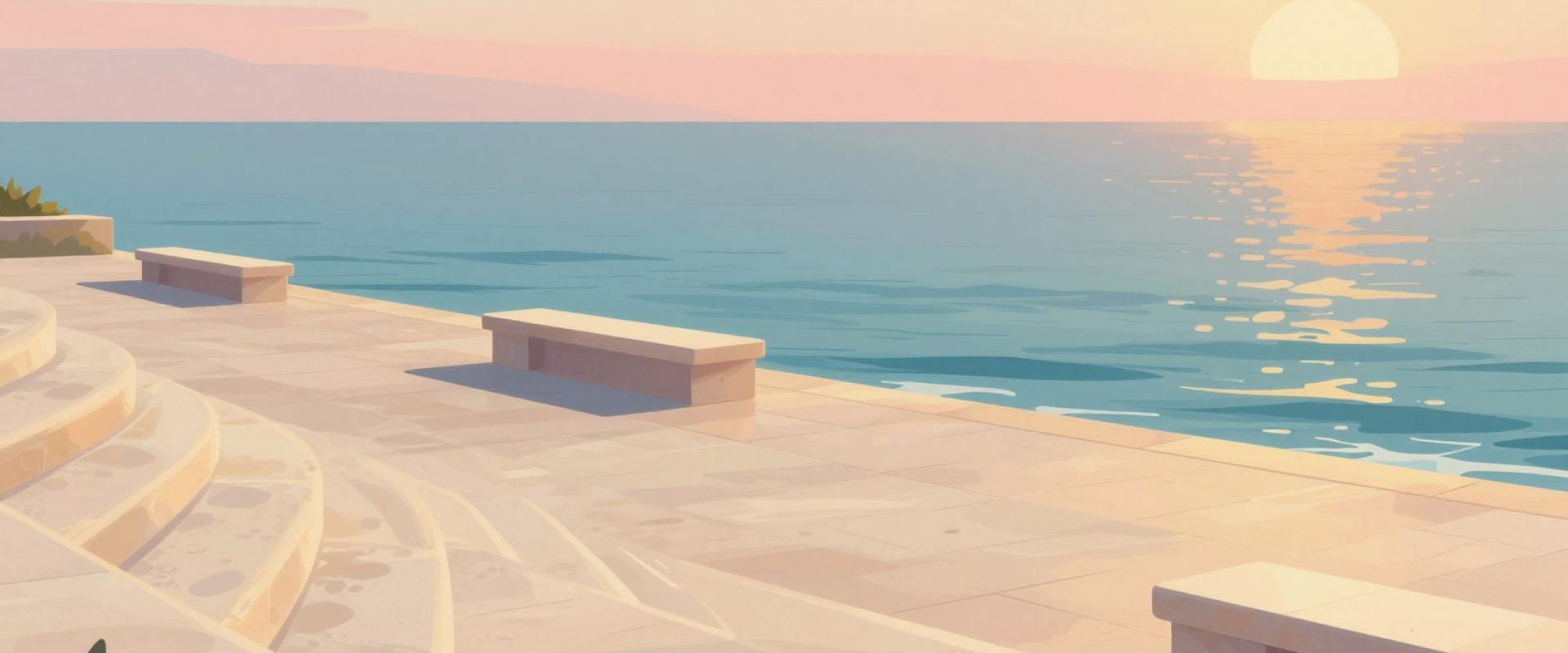
Zadar’s waterfront undergoes a subtle yet profound transformation at dusk, evolving from a simple promenade into an open-air auditorium. This architectural feat, conceived by Croatian designer Nikola Bašić, harnesses the kinetic energy of the Adriatic to generate melody without human intervention. Beneath seven broad marble steps lie thirty-five concrete pipes, each tuned to a specific pitch. As waves surge forward and retreat, they compress air within these tubes, creating a low-frequency resonance that vibrates through the stone.
The sound resembles ambient electronic music, evoking the minimalist styles of composers like Philip Glass. No instruments are played; the ocean itself is the performer. Visitors often sit on the wide steps, watching the sunset while the tide dictates the rhythm. The experience feels strangely ancient, despite its modern engineering. It offers a quiet refuge in a bustling urban center. You might come for the panoramic view of the harbor, but you will likely stay for the haunting, ever-changing song of the sea.
Chasing the Golden Hour: Sun Salutation’s Light Show
Zadar’s waterfront shifts dramatically as the Adriatic sun sinks below the horizon. This transformation centers on Pozdrav suncu, or "Greeting the Sun," an installation composed of 302 glass squares embedded directly into the stone pavement. During daylight hours, these panels quietly absorb sunlight through photovoltaic cells. By evening, they release that stored energy in a synchronized display.
Rhythmic pulses of light travel across the steps in waves. Couples and art enthusiasts gather on the marble tiers to witness the spectacle. The visual rhythm harmonizes with the nearby Sea Organ’s haunting musical tones. Nikola Bašić designed the site to merge technology with nature, allowing visitors to feel the vibration of the waves beneath their feet. It creates a rare intersection of light and sound.
Visit around 7:00 PM in summer for the peak effect. The experience remains free, yet feels priceless. Simply stand back and enjoy the moment.
Beyond the Steps: A Local’s Guide to Zadar’s Soul
Forget the guidebooks that call the Sea Organ a mere tourist trap. Nikola Bašić’s 2005 installation is a genuine architectural marvel where the Adriatic itself becomes the conductor. Thirty-five concrete pipes sit hidden beneath seven white marble steps, channeling wind from the retreating waves to produce a haunting, rhythmic chord. The pitch shifts with the tide’s mood, creating a soundscape that requires no human intervention.
Sunset draws the largest crowds, but the true magic unfolds when the water is calm. I recommend visiting on a weekday morning to hear the subtle, low-frequency hums that larger groups often miss. The interplay of light and sound feels intimate and personal, far removed from the typical tourist rush.
Just a short walk away, the Upper Town reveals Zadar’s historical layers. St. Donatus Church dominates the skyline with its imposing circular structure, a Byzantine relic that has stood for centuries. From there, descend into the Old Town to find a family-run konoba. Order the brudet, a rich fish stew that costs around 15-20 EUR, and pair it with a glass of local Plavac Mali. Sitting there, watching the sunset reflect off the sea, you’ll understand why Zadar’s soul lies in these simple, unplugged moments.