







- Where
- Cavtat, Dalmatia
- Directions
- Directions
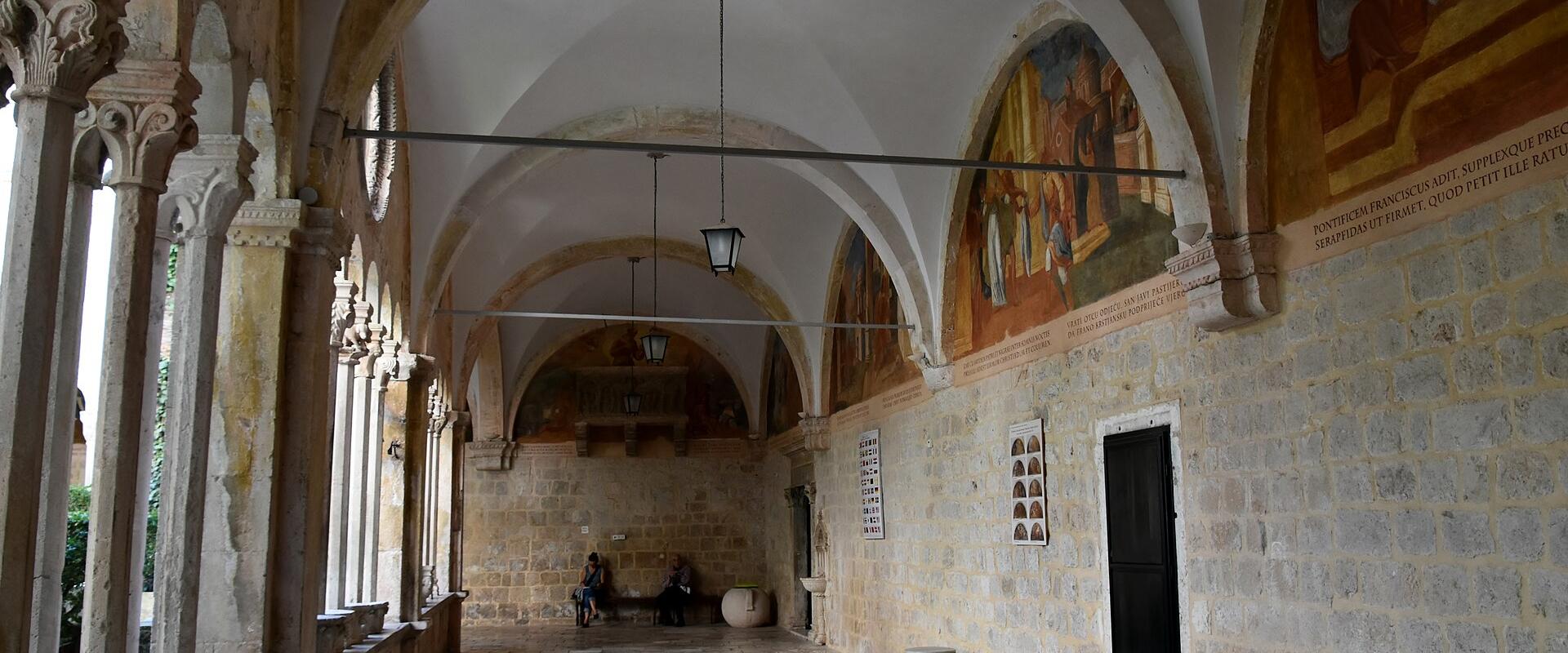
Cavtat is a small resort town on a peninsula at the southern end of the Dubrovnik Riviera, about twenty kilometres from Dubrovnik, and it is built on the site of the ancient Greek and Roman town of Epidaurum. The waterfront is lined with palm trees, cafes and a long promenade, and among the quieter sights at its edge is the Franciscan monastery, a modest complex of church, cloister and garden that gives a glimpse into the religious life of southern Dalmatia. Compared with the large and famous Franciscan monastery on the Stradun in Dubrovnik, it is small and rarely crowded.
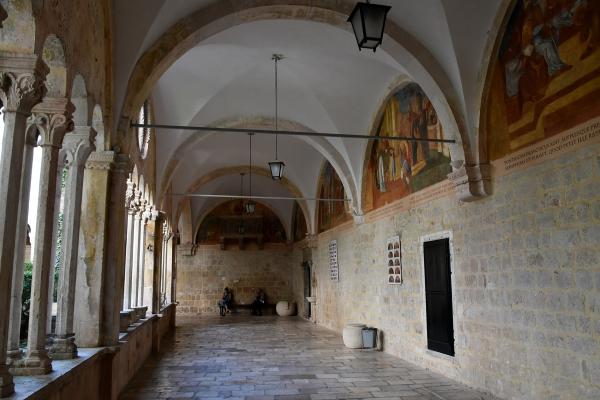
The Franciscans have been present along the Adriatic coast since the Middle Ages, where they founded friaries in towns and on islands, often close to the sea. They preached, taught and cared for the sick, and their monasteries were also centres of learning and art. In Cavtat, the monastery stands near the water and the main street, with a church that is open for services and a cloister of simple stone arches around a courtyard. The architecture follows the Franciscan ideal of plainness: unadorned walls, plain arches and a garden with a few trees and flowers.
The church holds altars and religious paintings that reflect the faith of the local community over the centuries, and the cloister offers a cool, shaded space that contrasts with the bright light and heat of the seafront. Details of its history are not well documented in popular guides, so it is best seen as a quiet stop rather than a major monument. Opening hours depend on services and on the friars, so it is wise to ask locally, and visitors are expected to dress modestly and keep quiet.
Cavtat has a number of other sights within walking distance, and the monastery fits comfortably into a morning walk. The Rector's Palace, called Knežev dvor in Croatian, once the seat of the Dubrovnik Republic's governor and now a museum with the collection of the scholar Baltazar Bogišić, stands near the waterfront. The Bukovac House Museum honours the painter Vlaho Bukovac, who was born in Cavtat and is among the best-known Croatian artists of the nineteenth century, and the Račić Mausoleum, a domed family tomb designed by the sculptor Ivan Meštrović on the hill above the town, is one of the most striking pieces of twentieth-century architecture on the coast. The seaside promenade, which runs around the bay, makes a pleasant walk.
Plan thirty minutes for the monastery and a half day for the town. The visit suits those interested in religious heritage, quiet places and the culture of the Dalmatian coast. Combine it with a swim at one of the nearby pebble beaches.
Categories
More photos coming soon
Nearby Attractions
Other places to visit in Cavtat
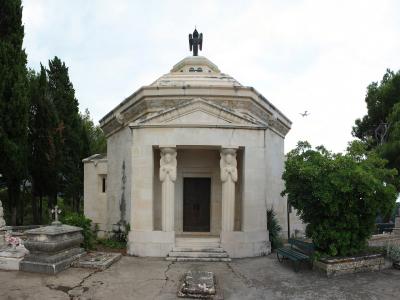
Mausoleum of the Racic Family
Mausoleum by Meštrović with sea views in Cavtat
History & Heritage · Historic Houses
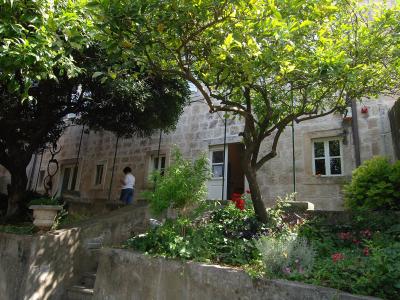
Bukovac House Museum
Home and studio of Croatian painter Vlaho Bukovac
Cultural Experiences
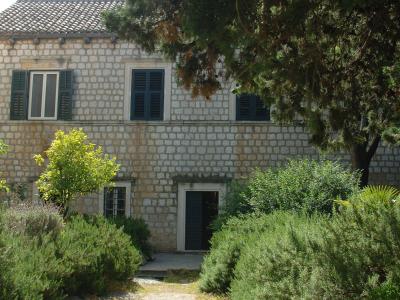
Rector's Palace (Knezev Dvor)
Historic seat of Dubrovnik Republic governance
Cultural Experiences · History & Heritage
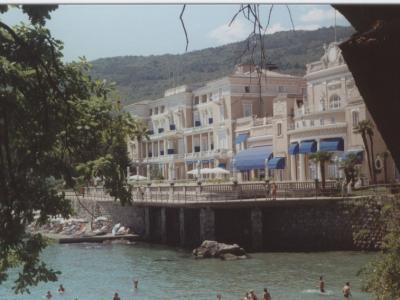
Seaside Promenade
Historic seafront promenade in Cavtat, Croatia
Coastal & Maritime · Promenades
Questions people ask
Quick Facts
Best Time to Visit
May to October offers warm, sunny weather and ideal conditions for swimming, boating, and exploring Cavtat’s historic town and scenic coastline.