







Mausoleum of the Racic Family
Mausoleum by Meštrović with sea views in Cavtat
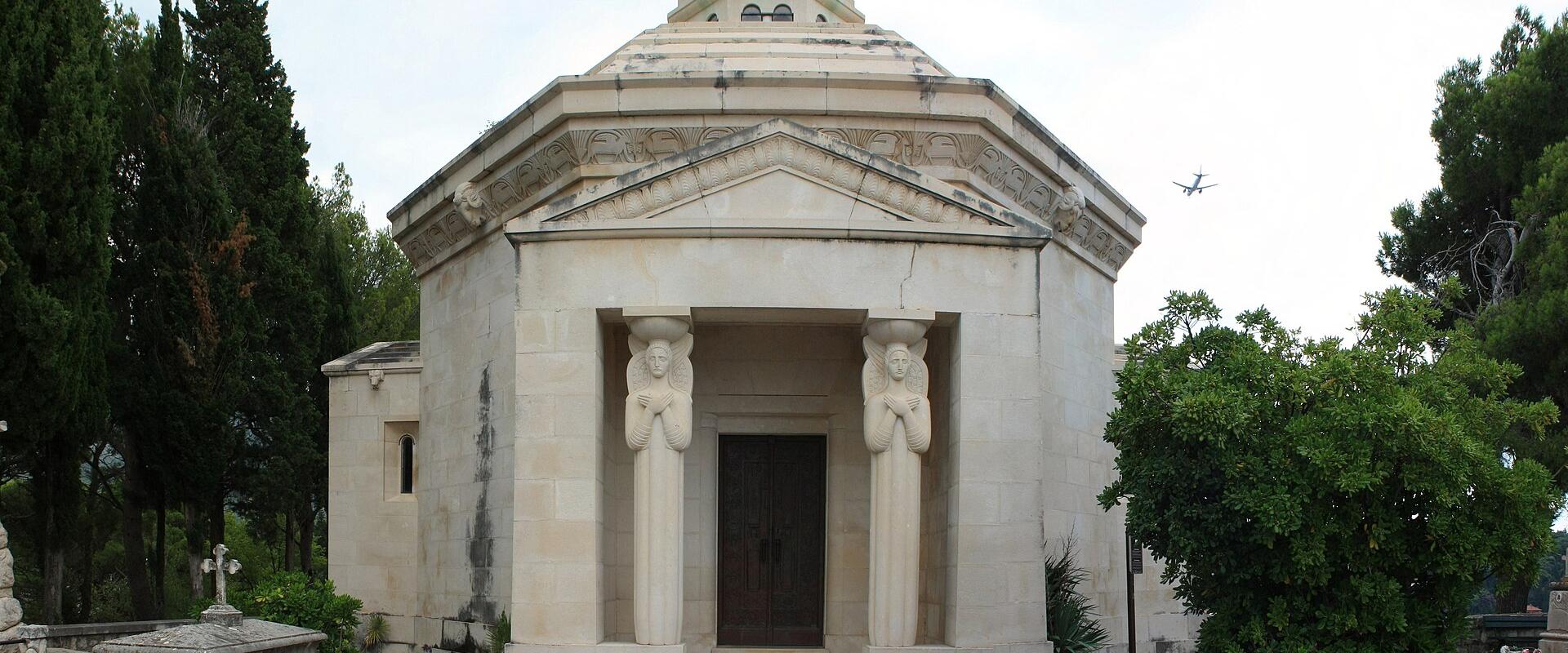
The Račić Mausoleum of the Račić Family crowns the small hill of the Rat Peninsula, which closes Cavtat’s harbour on its western side, a short climb above the town’s waterfront. It is one of the best-known works of Ivan Meštrović, the Croatian sculptor, born in what is now Croatia, who became internationally famous in the early twentieth century, and it was built for the Račić family, shipowners from Cavtat, in the years just after the First World War. Together with the cemetery around it, it forms one of the most carefully composed sites on the southern Adriatic coast.
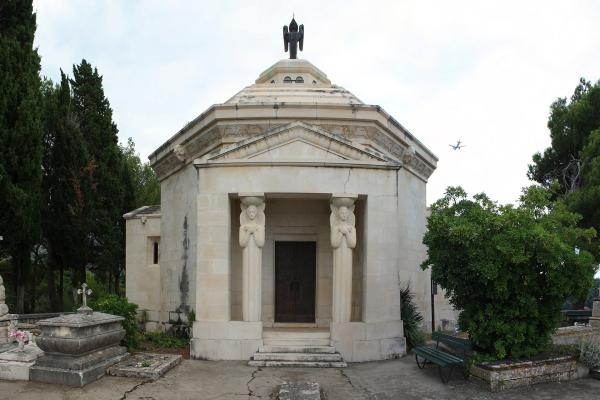
Meštrović designed it as a complete work of architecture and sculpture rather than a simple tomb. The building is a domed, centrally planned structure faced in pale stone, with a front of strong geometric lines and a solemn, classical order. Large carved figures stand at the entrance, and reliefs and sculptural details inside carry a religious and funerary theme, with a strong sense of dignity and restraint. The interior is intimate and quiet, and the work shows Meštrović’s style at an important moment, when he blended Byzantine, Secession and early modernist influences in a way that is easy to recognise in later works across the country.
The approach is part of the experience. A long stone stair rises through the cemetery’s cypresses and pines, and the climb gives glimpses of the sea and the old town below. From the platform near the mausoleum there are wide views across the bay, with the islands off the coast and, on clear days, the long line of coast toward Dubrovnik. The setting is peaceful, and visitors are expected to behave quietly, since this is still a working cemetery and a family tomb.
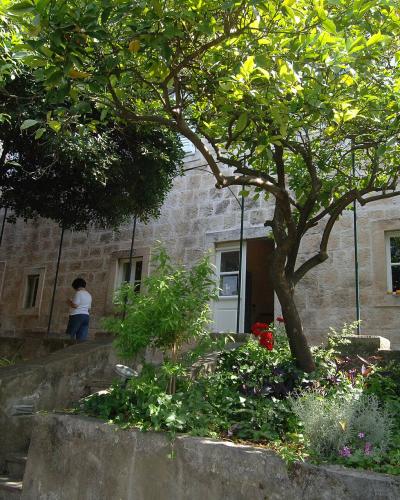
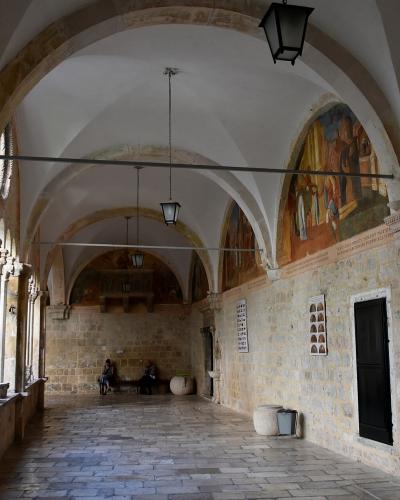
Visitors will find that Cavtat itself is the ancient Epidaurum of the Greek and Roman era, and today a relaxed seaside town with a promenade lined with cafés and restaurants. Close to the harbour you can visit the house museum of Vlaho Bukovac, the town’s best-known painter, and the Franciscan Monastery and the old Rector’s Palace, which are within a short walk. Together with the mausoleum they make a compact day of art and history.
The best times to visit are morning or late afternoon, when it is cooler and the light on the stone is softest. Opening arrangements have changed from season to season, so confirm times locally before climbing. The site suits art and architecture lovers, photographers, and anyone who likes a walk with a reward at the top.
Categories
More photos coming soon
Nearby Attractions
Other places to visit in Cavtat
Frequently Asked Questions
Quick Facts
Best Time to Visit
May to October offers warm, sunny weather and ideal conditions for swimming, boating, and exploring Cavtat’s historic town and scenic coastline.