







- Where
- Grožnjan, Istria
- Directions
- Directions
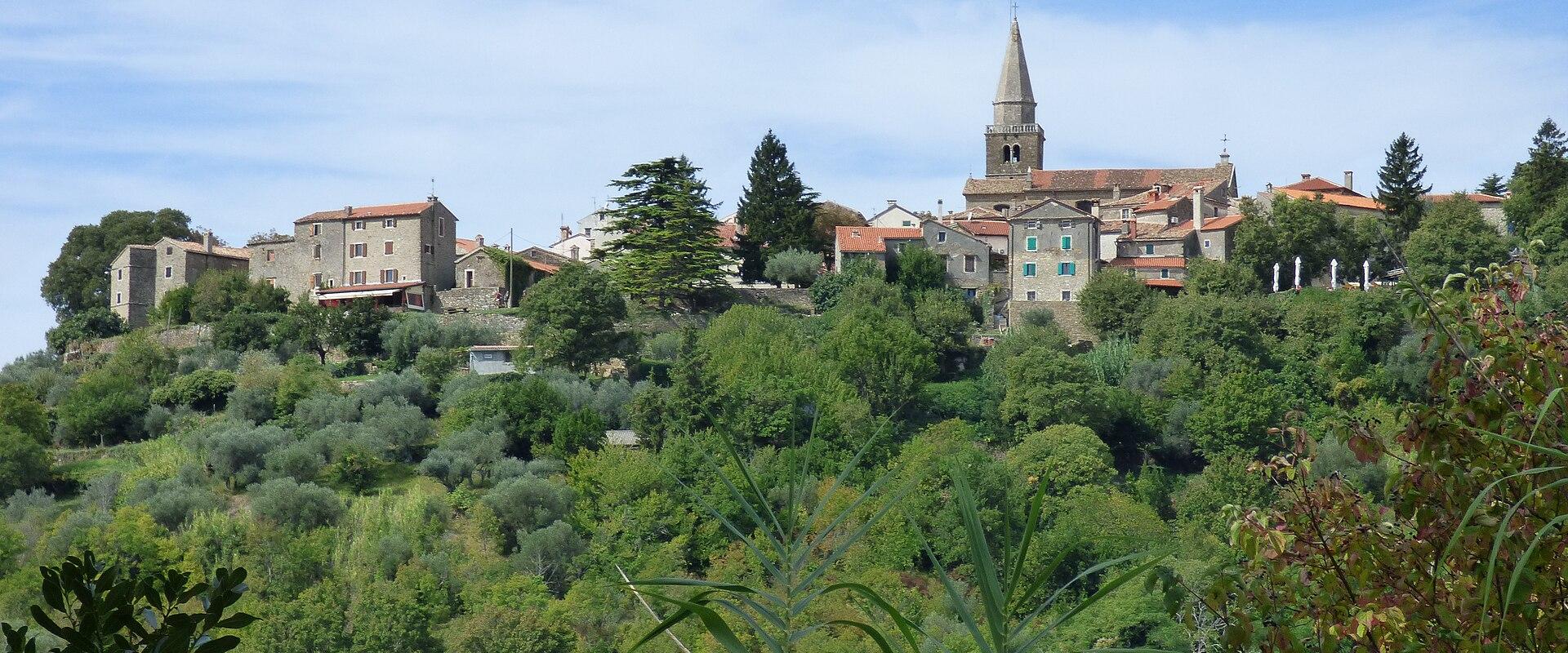
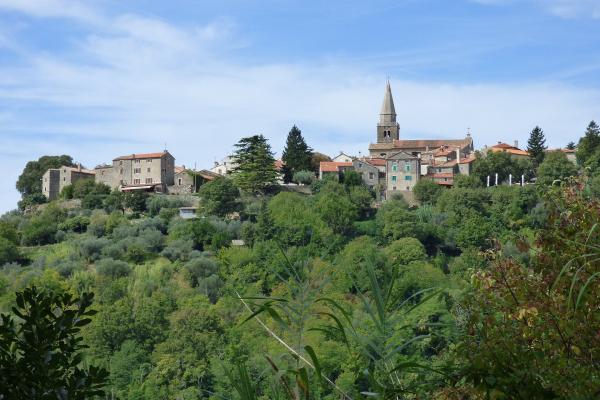
Grožnjan Historic Village is a hilltop village in northwestern Istria, in Croatia, with a population of only a few hundred at most, known far beyond the peninsula as the Town of Artists. It sits above the valley of the Mirna River, and its historic core, a compact knot of stone houses, lanes and courtyards inside old walls, is among the most atmospheric in the region. Instead of the busy resorts of Croatia’s coast, it offers a quiet, intimate place that invites exploration at a leisurely pace, and Grožnjan’s atmosphere rewards slow walkers.
The village’s history goes back to the Middle Ages. Its position on a ridge with long views across the valley made it a natural stronghold, and in the fourteenth century it came under the rule of the Republic of Venice, which held it for about four hundred years. Venetian influence is visible in the façades, windows and loggia, and the village kept its walls and gates, which still define its outline. Under Venetian rule it was a modest, agricultural town, its life centred on farming and local administration.
The twentieth century changed Grožnjan dramatically. After the Second World War a large part of the population left, and the village came close to abandonment, with houses standing empty and starting to decay. In the 1960s artists, sculptors and musicians began to settle and take over the empty houses, turning them into studios and galleries, and the village slowly came back to life. Since then it has had a distinct creative identity. International music workshops and concerts have been held here every summer, drawing young musicians from many countries, and the lanes are filled with the sound of practice from open windows.
Visitors will find that a stroll through the lanes is the main activity. Galleries, craft shops and small boutiques sell paintings, ceramics, jewellery and textiles, and many are open in the afternoon and evening during the season. Flower-filled courtyards, stone stairs and arched doorways make the village photogenic around every corner, and from the edge of the walls there are wide views over the valley. Konobas, as the small family-run taverns of Istria are called, serve Istrian specialities such as homemade pasta, truffle dishes, cured meats and local wine, and a meal on a terrace is part of the experience.
Cultural events fill the calendar, particularly in summer, with concerts, exhibitions and workshops, so it is worth checking the programme before visiting. The village’s main square, loggia and the Baroque church of St. Vitus, Modestus and Crescentia are close together at the centre, and the town walls and gates are easy to follow on foot.
Grožnjan suits art lovers, history enthusiasts and anyone who likes quiet, well-preserved villages. Go in the afternoon or evening, when the galleries are open and the light is warm, and expect to leave your car outside the old centre.
More photos coming soon
Nearby Attractions
Other places to visit in Grožnjan
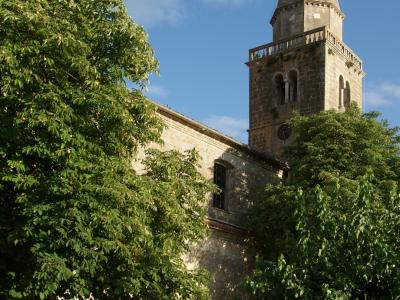
Grožnjan Main Square (Trg Palih Boraca)
Medieval square with Baroque church and art hub
Cultural Experiences · Urban Exploration
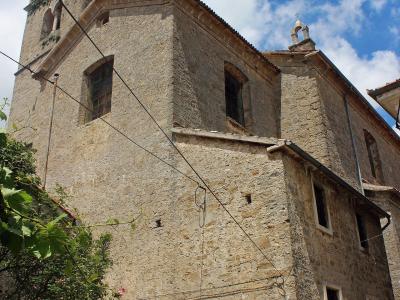
St. Vitus, Modestus and Crescentia Church
Baroque church with 18th-century altar and bell tower
Cultural Experiences · History & Heritage
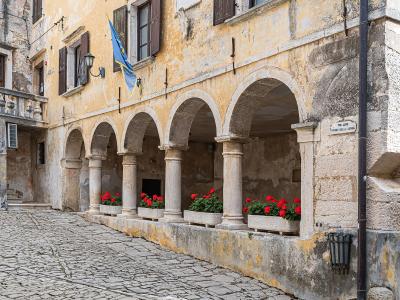
Grožnjan Loggia
Renaissance loggia with Venetian limestone columns
Cultural Experiences · History & Heritage
Church of St. Vitus, Modestus and Crescentia
Baroque church with historic altar and bell tower
Cultural Experiences · History & Heritage
Questions people ask
Quick Facts
Best Time to Visit
Early July to mid-August offers warm weather and lively festivals; spring and early autumn are quieter with mild temperatures and scenic countryside.