



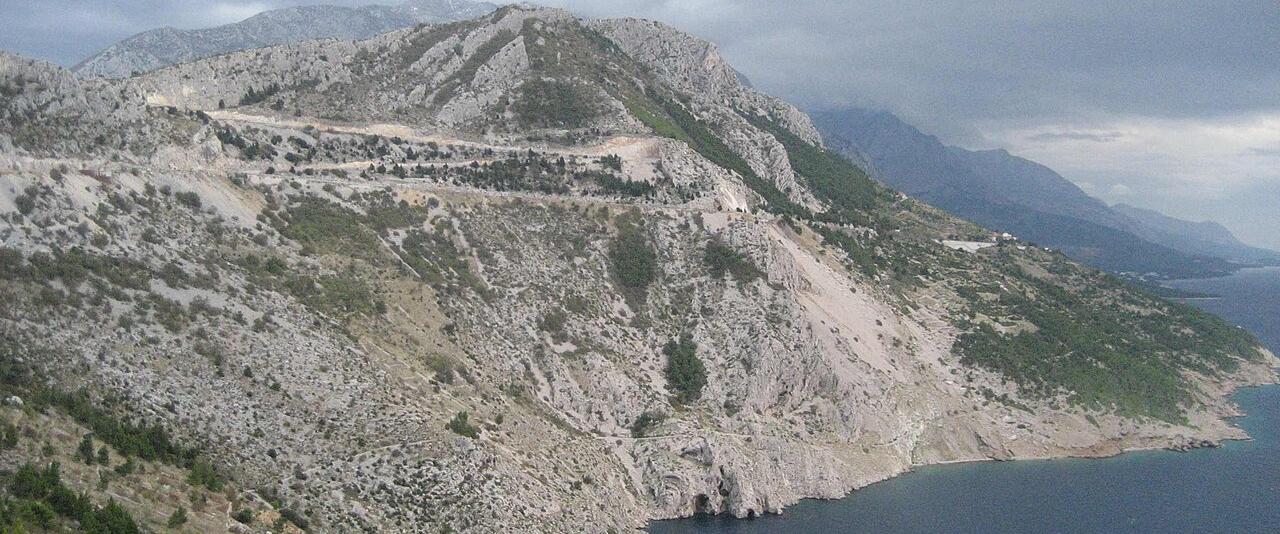
You need to be at least 18 to drive in Croatia on a foreign licence, but the minimum age to rent a car is set by each rental company: some rent to 18-year-olds for a young-driver fee, others start at 21 or higher, and almost all want you to have held your licence for at least a year. This guide covers the rest of what you need before you pick up the keys: documents, deposits and insurance, taking the car into Bosnia or Montenegro, motorway tolls (and the new toll system coming in 2027), car ferries, speed limits and the alcohol limit.
Quick facts (checked October 2026)
- Legal minimum age to drive a car on a foreign licence: 18
- Speed limits: 50 km/h in towns, 90 km/h on other roads, 110 km/h on expressways, 130 km/h on motorways
- Alcohol limit: 0.50 g/kg (0.05%) for most drivers; zero for young and professional drivers
- Dipped headlights or daytime running lights: compulsory in daytime from 1 November to 31 March
- Motorway tolls: take a ticket at the entry, pay at the exit by cash or card; example Zagreb–Split €26.40 for a car
- Roadside assistance (HAK): 1987
 The A1 motorway near Gospić, on the route between Zagreb and the Dalmatian coast. Image: Pudelek (Marcin Szala), CC BY-SA 3.0, via Wikimedia Commons.
How old do you have to be to rent a car in Croatia?
Croatian law recognises a foreign category B (car) licence from the age of 18, so an 18-year-old can legally drive here. Whether you can rent is a separate question, answered by the rental company's own terms.
Terms vary a lot. As an example, one large international chain's Croatian terms (checked October 2026) set the minimum age at 18 for every car class, charge drivers aged 18–20 a fee of €40 per rental, and require the licence to have been held for at least a year. Other companies set a minimum of 21 or more, restrict younger drivers to smaller cars, or add a young-driver charge up to the age of 25. Some also have an upper age limit.
So yes, you can rent a car at 18 or 19 in Croatia, but not from every company and usually at extra cost. Read the age, licence-held and fee lines in the terms before you pay, not at the desk.
Documents: licence, IDP and a card for the deposit
EU and EEA licences are valid in Croatia for as long as they are valid at home.
Licences from outside the EEA can be used for up to a year from your entry into Croatia. Croatia's Road Traffic Safety Act allows you to drive on a foreign licence or on an International Driving Permit (IDP). The UK government says a UK photocard licence is enough to drive in Croatia.
An IDP is a translation that you carry alongside your licence, not a replacement for it. If your licence isn't printed in the Latin alphabet, or the rental company's terms ask for one, get it before you travel: you can't buy one once you are in Croatia. It is also worth having if you plan to cross into Bosnia and Herzegovina: the UK government says drivers of hired cars there need the 1968 version of the IDP.
Bring a passport or ID card too. Rental companies normally block a deposit on a credit card in the main driver's name, and some do not accept debit cards for it, so check this before you book.
Insurance and the deposit
Basic rentals include the legally required third-party cover and usually a collision damage waiver with an excess: the amount you pay if the car is damaged. The deposit blocked on your card is often linked to that excess. Desks will offer extra cover to reduce it.
Before you sign, check three things in writing: the excess amount, whether tyres, glass and the underside of the car are covered, and what happens if you take the car on a ferry or across a border. Photograph the car, including the wheels, before you drive away.
Driving into Bosnia (Neum) and Montenegro
Since the Pelješac Bridge opened in 2022, you can drive from Split to Dubrovnik without leaving Croatia: the road crosses to the Pelješac peninsula and bypasses the short stretch of Bosnian coast at Neum. If you take the old coast road through Neum, you leave and re-enter Croatia within a few minutes.
 The Pelješac Bridge, which lets traffic between Split and Dubrovnik bypass the Bosnian town of Neum. Image: kallerna, CC BY-SA 4.0, via Wikimedia Commons.
Bosnia and Herzegovina and Montenegro are outside the EU, and Croatia's borders with both are external Schengen borders, so expect passport checks and queues in summer. Tell the rental company before you go: most charge a cross-border fee, and you need written permission plus proof of insurance that is valid in the country you enter. The UK government notes that driving without at least third-party insurance is illegal in Bosnia, and that "border insurance" can be bought at some crossings if your cover doesn't extend there.
 The Neum–Klek border crossing between Croatia and Bosnia and Herzegovina on the old coast road. Image: Ekem, CC BY-SA 3.0, via Wikimedia Commons.
Motorway tolls: how they work now, and the change in 2027
Croatia's motorways are tolled on a closed system run mainly by Hrvatske autoceste (HAC). You take a ticket at the entry toll plaza and pay at the exit, by cash or bank card. Lose the ticket and HAC charges double the toll for the longest route on that motorway.
Toll prices for a car (HAC category I, checked October 2026), from Zagreb:
- Zagreb to Split: €26.40
- Zagreb to Zadar (Zadar centar exit): €17.60
- Zagreb to Rijeka (Grobnik): €10.10
 A toll plaza on the A9 in Istria, part of the separately run Istrian Y motorway. Image: Jarba, CC BY 3.0, via Wikimedia Commons.
Regular drivers use an electronic tag (HAC sells ETC devices for €15 and runs fast lanes at some plazas), but a visitor doesn't need one. The Istrian Y motorway (A8/A9) is run by a different company, Bina Istra, with its own tolls.
The 2027 change. Croatia has passed a new Toll Collection Act that replaces the toll plazas with a free-flow electronic system. Its operating provisions take effect on 1 March 2027. Cars will be identified by an on-board tag or by automatic number-plate recognition, and drivers of light vehicles without a tag will have to register their plate and a means of payment. Under the act, using the motorway without registering means paying the toll plus a €120 penalty. If you rent a car for travel after March 2027, ask the company how tolls are charged on that car.
Taking a rental car on a ferry
Car ferries are run mainly by Jadrolinija. Vehicles travel only on ferry lines, not on catamarans, and you need the car's registration document when you buy a vehicle ticket. If you book a rental car online before you know its plate, Jadrolinija tells you to type "RENTAL" in the plate field.
 Ferries in Split harbour, the main port for the central Dalmatian islands. Image: Nick Savchenko from Kiev, Ukraine, CC BY-SA 2.0, via Wikimedia Commons.
On some lines, including Split–Stari Grad (Hvar), Split–Vis, Split–Vela Luka (Korčula) and Valbiska–Lopar, buying a ticket reserves a place for your car on a specific departure. Jadrolinija asks you to be at the port at least 45 minutes before departure, and advises an hour in summer. On lines without reservations, the ticket is valid for any departure that day, boarding is in order of arrival, and the operator recommends arriving one to two hours early in peak season. Check your rental terms too: some companies exclude ferry damage from their cover.
Speed limits, alcohol and other rules
Speed limits (unless signs say otherwise): 50 km/h in built-up areas, 90 km/h on other roads outside towns, 110 km/h on expressways and roads reserved for motor vehicles, 130 km/h on motorways. Fines start at €60 for 10–30 km/h over the limit outside built-up areas, and rise steeply after that.
Alcohol: the limit for car drivers is 0.50 g/kg (0.05%). It is zero for young drivers, professional drivers and driving instructors. In Croatian law a "young driver" is a holder of a Croatian licence under 24, but the UK government advises that the limit is zero for all drivers under 24. If you are under 24, don't drink at all before driving.
Also note:
- Dipped headlights or daytime running lights are compulsory in daytime from 1 November to 31 March.
- You can only use a phone while driving with a hands-free device.
- Carry a reflective vest inside the car, not in the boot, and wear it if you have to get out on the road.
- In snow or ice, cars without winter equipment are not allowed on the road. The UK government says winter tyres are required from 15 November to 15 April.
Parking
Croatian towns use paid parking zones, usually paid at machines or by SMS or app. Old towns such as Split, Dubrovnik, Hvar and Rovinj are largely closed to cars, and car parks near them fill up early in summer. If your accommodation is in an old town, ask before you arrive where to leave the car.
 The Krk Bridge, the road link between the mainland and the island of Krk. Image: Rkoster, CC BY 4.0, via Wikimedia Commons.
Is it worth renting a car in Croatia?
For the coast between Zadar and Dubrovnik, inland Istria, the Plitvice Lakes and the islands you can reach by car ferry, a car gives you freedom that buses can't. The main roads are good, the motorways are fast, and the coast road is a fine drive in its own right: see our Split to Zadar coast drive for a route. For Zagreb, Split or Dubrovnik alone, you don't need one: parking is expensive and the old towns are car-free.
If you rent, book early for July and August, read the terms for age, deposit and cross-border fees, and keep the toll and ferry costs in your budget.



,_A9_motorway.jpg)
.jpg)
