Croatia's thermal spa belt
Croatia's beaches get the attention, but the north of the country sits on a band of warm mineral springs that have been used since Roman times. Most of the spas, called toplice or terme, are in the green hills of Hrvatsko Zagorje and the plains of northern and eastern Croatia, with one well-known exception in inland Istria. In winter, when the coast is quiet, they are one of the best reasons to visit the continental side of the country.
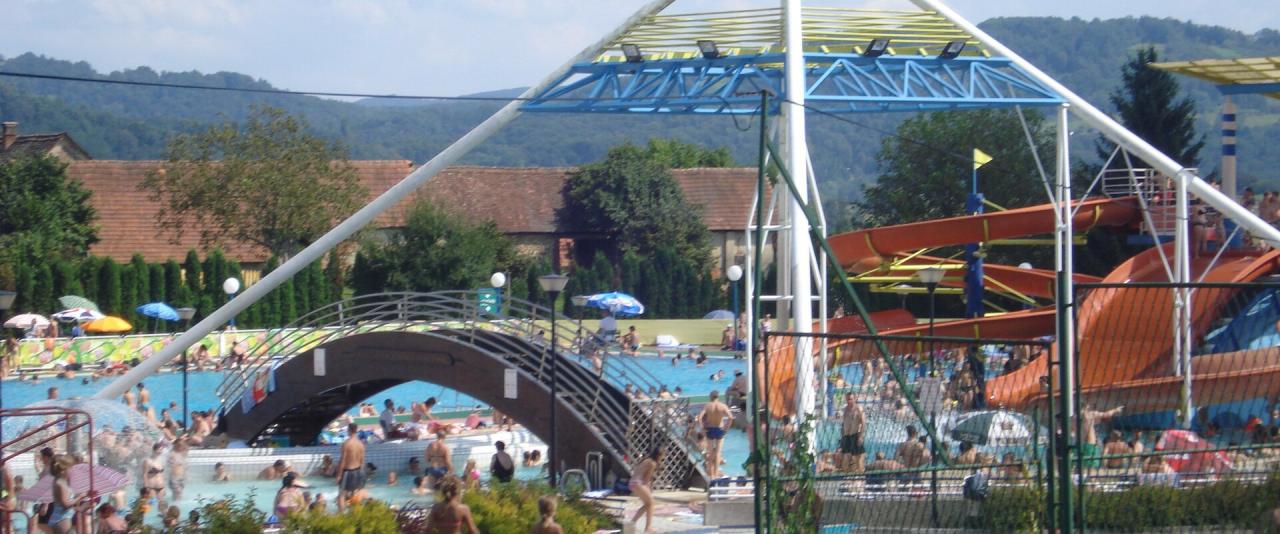
Spa resorts here range from family water parks with slides to quieter medical spas offering rehabilitation and treatments. Many combine both: outdoor and indoor thermal pools, a sauna area, a hotel and a medical or wellness centre. Day tickets are sold at most, so you don't have to stay overnight.
Spas within an hour of Zagreb
Hrvatsko Zagorje, north of Zagreb, has the highest concentration of spas and makes an easy day trip from the capital.
Terme Tuhelj is about 45 kilometres from Zagreb and one of the most popular family choices. Its sulphur-rich thermal water feeds indoor and outdoor pools, including an outdoor thermal pool that stays at around 32 to 33°C, which is very pleasant on a frosty day. There is a large water park area with slides, plus a sauna world for adults.
Krapinske Toplice is home to the Aquae Vivae resort, with a modern complex of indoor and outdoor pools and a children's area. The town has a long tradition as a health resort, and a specialised hospital for rehabilitation operates here.
Stubičke Toplice is smaller and quieter, with a rehabilitation hospital and a hotel spa, and is close to the Marija Bistrica pilgrimage site and the hill villages of the Zagorje.
Further north and east
Varaždinske Toplice, south-east of Varaždin, is one of the oldest spa towns in Croatia. The Romans built a bath complex here called Aquae Iasae, and its excavated remains can still be seen in the town. Today the town is known for its rehabilitation hospital and thermal pools.
Terme Sveti Martin, in Međimurje near the Slovenian and Hungarian borders, is a modern resort with an indoor water park, outdoor pools and a wellness centre, set among vineyards and cycling routes.
Daruvarske Toplice in Daruvar and the spa town of Lipik, both in western Slavonia, have long histories and handsome 19th-century spa architecture. They are quieter than the Zagorje resorts and suit a relaxed weekend combined with local wine.
Istarske Toplice
In inland Istria, near Buzet and the Mirna valley, Istarske Toplice sits at the foot of a high cliff where a sulphurous spring rises. It has been used for bathing for centuries and is today a health resort with a hotel and thermal pool. The water's sulphur smell is noticeable. It pairs well with a winter trip to the nearby hill towns of Motovun, Oprtalj and Hum, and with Istria's truffle season, which runs into the winter months.
Choosing a spa for a family trip
For young children, choose a resort with a dedicated children's pool and slides, such as Terme Tuhelj, Aquae Vivae in Krapinske Toplice or Terme Sveti Martin. Quieter medical spas like Stubičke Toplice, Varaždinske Toplice or Istarske Toplice suit adults looking for rest, massage and treatments.
Prices vary by season, day of the week and the facilities you use, and many resorts offer family tickets and packages that include accommodation, so compare current offers on the official websites. Weekends and school holidays are busiest; weekdays are calmer and sometimes cheaper. Sauna areas in Croatia often follow Central European rules: they are mixed and textile-free, and children are usually not allowed, so check before you go if that matters to you.
Practical tips
Bring swimwear, flip-flops, a towel or bathrobe (some resorts rent them) and a padlock if lockers require one. Most resorts have restaurants, but hours may be limited on winter weekdays. Doctors advise limiting time in very warm or sulphur-rich water, and people with heart or blood pressure conditions, as well as pregnant women, should check with a doctor first.
By car, the Zagorje spas are under an hour from Zagreb. Public transport is possible but slower, with bus connections to the larger spa towns. In snow, winter tyres are required on Croatian roads, and the hill roads of Zagorje can be icy in the mornings.