The Amber Coast and Ancient Roots
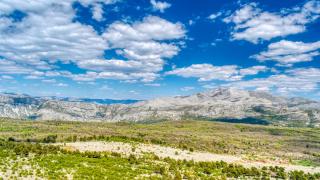
Istria refuses to be neatly categorized. While visitors often draw immediate parallels to Tuscany, the resemblance ends at the surface. Beneath the olive groves lies not soft, rolling earth, but stark limestone karst. Here, ancient trees cling to rugged slopes with tenacious grace, their gnarled roots gripping dry soil in a silent testament to resilience. This unique topography has forged a culture that feels distinctly its own—a quiet, sophisticated fusion of Slavic endurance and Italian artistry.
Stone-paved streets in hilltop villages like Motovun wind upward toward medieval fortifications that have watched over the region for centuries. But look closer at Grožnjan, and the energy shifts. Once a humble sheep-farming village, it now hums with the creative pulse of artists who have claimed its whitewashed walls as canvas. Vibrant modern works hang in galleries that contrast sharply with the surrounding rustic silence. This juxtaposition of contemporary creativity against ancient stone creates a living history, far removed from static museum exhibits.
The region’s culinary treasures emerge directly from this challenging landscape. White truffles, known locally as the "white gold" of Istria, hide beneath the roots of ancient holm oaks in the dense Motovun Forest. During the autumn months, locals guide eager hunters through misty woodlands, their dogs noses to the ground, searching for these elusive fungi. The reward is not just the thrill of the hunt, but the subsequent feast: simple pasta tossed in butter and cheese, fragrant with the earthy, musky scent of the forest floor.
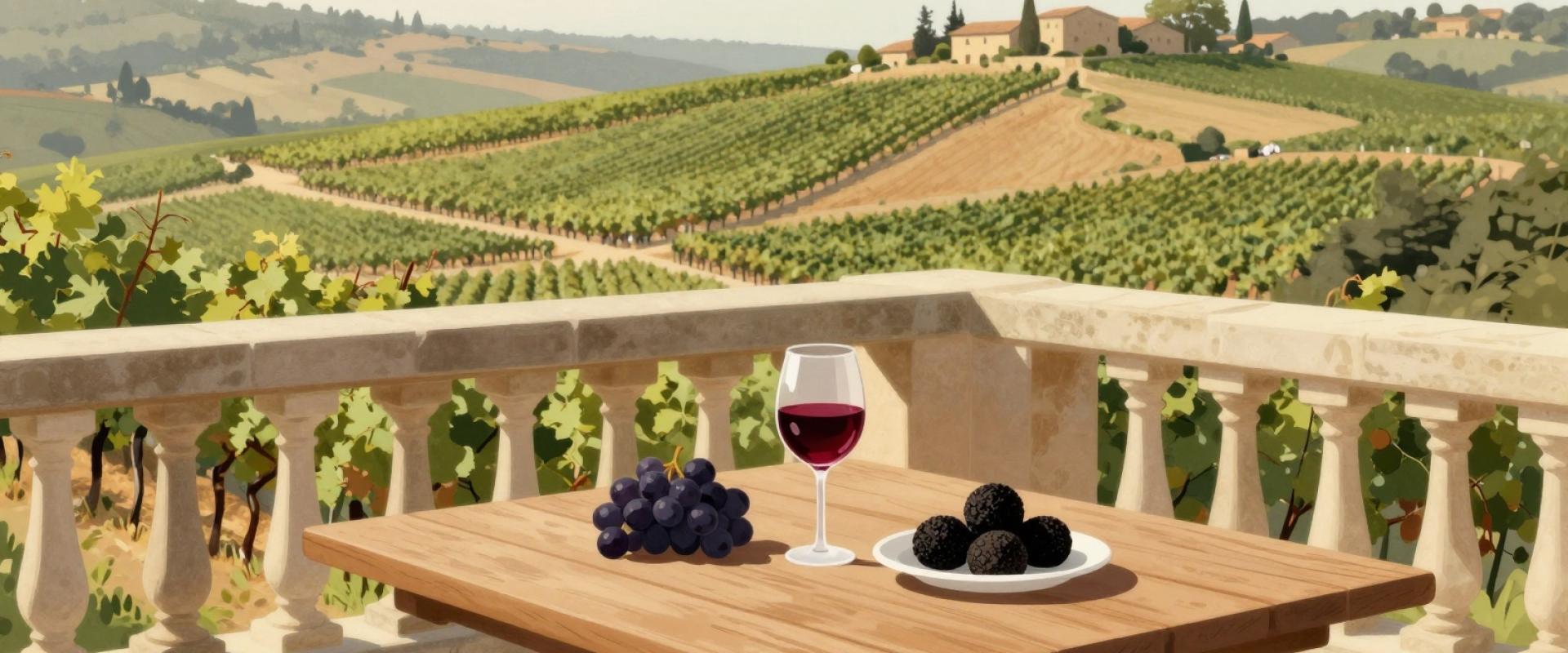
Wines from the nearby vineyards complement this rich fare. Teran, a robust red wine unique to the Istrian peninsula, pairs perfectly with heavy, truffle-laden dishes. Its deep, iron-rich flavor mirrors the mineral taste of the local soil. As you sit at a rustic table overlooking the valley, the connection between the land, the labor, and the meal becomes undeniable. This is not merely tourism; it is an immersion into a way of life that has persisted for generations.
Climbing the Vineyard Ladders
Motovun’s stone-paved streets wind upward, thick with the earthy perfume of black truffles and leading straight into historic cellars. Here, Teran—a robust red wine native to the Karst region—pairs effortlessly with rich local game dishes. The limestone architecture looms overhead, a testament to centuries of viticulture carved into the rock.
A short drive brings you to Grožnjan, an artistic hilltop village where galleries outnumber tourists. Olive oil production thrives here alongside a vibrant creative scene. Malvasia, a crisp white wine reflecting the Mediterranean climate, awaits sampling. It offers a refreshing counterpoint to the heavier reds, capturing the bright acidity of the local grapes.
Small-batch producers rarely open their doors to casual visitors. Booking a private tasting in advance grants access to these hidden gems. This strategy reveals the depth of Istria’s evolving wine industry, moving beyond commercial labels to understand the family stories behind each bottle.
Plan your route carefully to maximize time in these northern Croatian hubs. The contrast between Motovun’s medieval charm and Grožnjan’s artistic vibe offers a unique sensory experience. Each stop tells a different story of the land, inviting you to slow down and engage with the details.
Hunting the White Gold
Limestone ridges and ancient olive groves define Istria’s rugged terrain, a landscape that feels both timeless and distinctly Croatian. From October through January, the air turns crisp, signaling the perfect window for truffle hunting. Expert guides lead small groups through these wooded slopes, relying on trained dogs to sniff out the prized fungi hidden beneath the soil. Success demands quiet patience and sharp eyes as you watch the handlers interpret their dogs’ subtle movements.
Once the hunt concludes, the journey continues to a local konoba. Here, freshly unearthed truffles are shaved over simple pasta or eggs, served alongside robust regional wines. This meal is more than just dinner; it is an immersion into a gastronomic tradition that values raw, earthy flavors and community. The experience grounds you in the local rhythm, offering a tangible connection to the land and its people that no museum exhibit can replicate.
The act of hunting itself is a lesson in humility. You are a guest in the forest, moving at the pace of the dog and the guidance of the hunter. It strips away the noise of modern life, replacing it with the simple, profound satisfaction of finding something precious hidden in plain sight.
Sleeping Among the Clouds
Escape the coastal humidity by retreating to Istria’s hilltop villages. Grožnjan, often called the "City of Artists," buzzes with creative energy; wander its narrow lanes to discover open-air galleries and ceramics studios housed in restored stone buildings. Nearby, Motovun clings to its limestone ridge, offering a medieval atmosphere where ancient walls frame panoramic views of the Mirna River valley below.
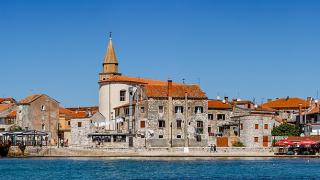
For a more grounded experience, seek out agriturismi that blend rustic charm with modern comfort. These traditional farm stays, constructed from local karst stone, offer a peaceful alternative to the crowded seaside resorts. Fažana and Novigrad provide distinct seaside flavors, ranging from quiet fishing harbors to lively promenade evenings.
Reservations fill quickly during peak season, so securing your stay early ensures access to the most coveted rooms with expansive views. The choice of accommodation sets the tone for your entire trip; staying high above the sea allows for cooler nights and clearer stars, enhancing the sense of separation from the bustling coast.
Your Roadmap to Relaxation
Secure your truffle and wine tours months in advance. Local producers often fill their small groups quickly, leaving little room for last-minute additions. The peninsula’s karst landscape, with its limestone ridges and ancient olive groves, creates a backdrop that feels distinctly separate from the rest of Croatia. This rugged terrain invites slow travel, encouraging you to linger in hilltop villages like Motovun, where stone-paved streets wind upward through centuries-old walls.
Engaging with residents reveals a culture shaped by centuries of Slavic and Italian interplay. Many locals speak Italian fluently, a testament to the region’s complex history. You can trace this heritage through the artistic vibe of Grožnjan, where galleries spill onto terraces overlooking the valley, or by exploring Motovun’s medieval fortifications, which offer panoramic views of the Mirna River valley.
Booking early ensures access to authentic experiences, from private tastings in family-owned cellars to guided hikes through pine forests. The seamless integration of these elements transforms a simple trip into a curated journey. Let the Mediterranean rhythm dictate your pace, savoring each moment without the pressure of a rigid schedule. Istria does not ask to be conquered; it asks only to be experienced, deeply and respectfully, one slow day at a time.