Why Kvarner
The Kvarner Gulf lies in Croatia's north, between the Istrian peninsula and the mainland coast below the Velebit mountains, with Rijeka at its head. Its islands, including Krk, Cres, Lošinj and Rab, are closer to central Europe than the Dalmatian islands, and many visitors arrive by car from Slovenia, Austria and Germany.
Krk, connected to the mainland by bridge, is the busiest. Cres, Lošinj, Rab and the small outer islands are generally quieter, especially outside July and August. They suit travellers who want swimming, walking and small towns rather than nightlife.
Cres: long, wild and empty
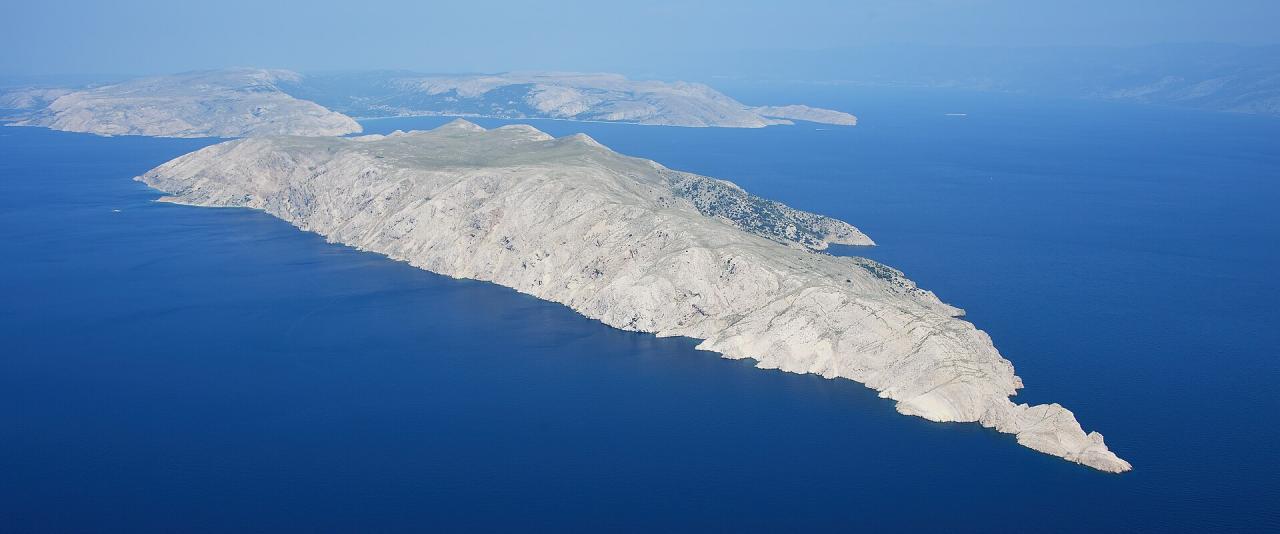
Cres is one of the largest islands in the Adriatic but has a small population, with most of its length covered by stone-walled pastures, sheep grazing land and oak woods. Highlights include:
- Cres Town, a Venetian-era harbour town with a small walled centre.
- Lubenice, a hilltop village perched on a cliff on the west coast, with a steep path down to a pebble beach far below.
- Griffon vultures, a protected species that nests on Cres's cliffs. A visitor and rescue centre in the village of Beli, in the north of the island, explains their conservation.
- Lake Vrana, a freshwater lake in the middle of the island that supplies drinking water to Cres and Lošinj. It is protected and swimming is not allowed.
Lošinj: towns, pine woods and a bronze athlete
Lošinj is joined to Cres by a short swing bridge at Osor, an ancient town on the narrow channel between the two islands. The island's main towns are Mali Lošinj and Veli Lošinj, both built around harbours, with promenades through pine woods.
In Mali Lošinj, the Museum of Apoxyomenos, opened in 2016, displays a Greek-style bronze statue of an athlete found on the seabed near the island of Vele Orjule in 1996. The Blue World Institute, a marine research and conservation group based in Veli Lošinj, studies the bottlenose dolphins that live around the archipelago and runs a small education centre.
Rab: sandy beaches and four bell towers
Rab lies further south-east, close to the mainland below Velebit. Rab Town is known for its four bell towers rising above the old town on a narrow peninsula. The north of the island, around Lopar, has some of the few sandy beaches in Croatia, including Rajska plaža, which is shallow and good for children. The island's west side, the Kalifront peninsula, is covered by holm oak forest with walking trails and rocky coves.
The small outer islands
- Susak, west of Lošinj, is unusual for the Adriatic: much of it is covered in fine sand, and it is largely car-free. Its residents have a distinctive dialect and traditional costume.
- Ilovik and Unije are small, quiet islands south and west of Lošinj, reached by passenger boats and catamarans. They have very few facilities, so check what is open before an off-season visit.
Getting there
The main crossings are run by Jadrolinija:
- Cres: car ferry from Brestova in eastern Istria to Porozina on Cres, or from Valbiska on Krk to Merag on Cres.
- Lošinj: by road over the bridge at Osor from Cres. Passenger catamarans from Rijeka also call at Cres and Mali Lošinj.
- Rab: car ferry from Stinica on the mainland to Mišnjak on Rab, or from Valbiska on Krk to Lopar on Rab. A passenger catamaran from Rijeka also serves Rab.
- Susak, Ilovik and Unije: passenger boats and catamarans from Mali Lošinj, with some services from Rijeka.
Timetables are much reduced outside summer, and the bura can disrupt crossings on the Kvarner channels. Check sailings with the operator before planning connections.
Making the most of the quieter islands
- Go in June or September. The sea is warm, accommodation is easier to find and towns are calm.
- Bring a car for Cres and Rab if you want to explore beyond the main towns; buses are infrequent.
- Combine islands: a loop of Krk, Cres and Lošinj, or Krk and Rab via the Valbiska–Lopar ferry, works well for a week.
- Respect nature rules: do not swim in Lake Vrana, and keep a distance from vulture nesting cliffs and dolphins at sea.