Croatia's great coastal mountain
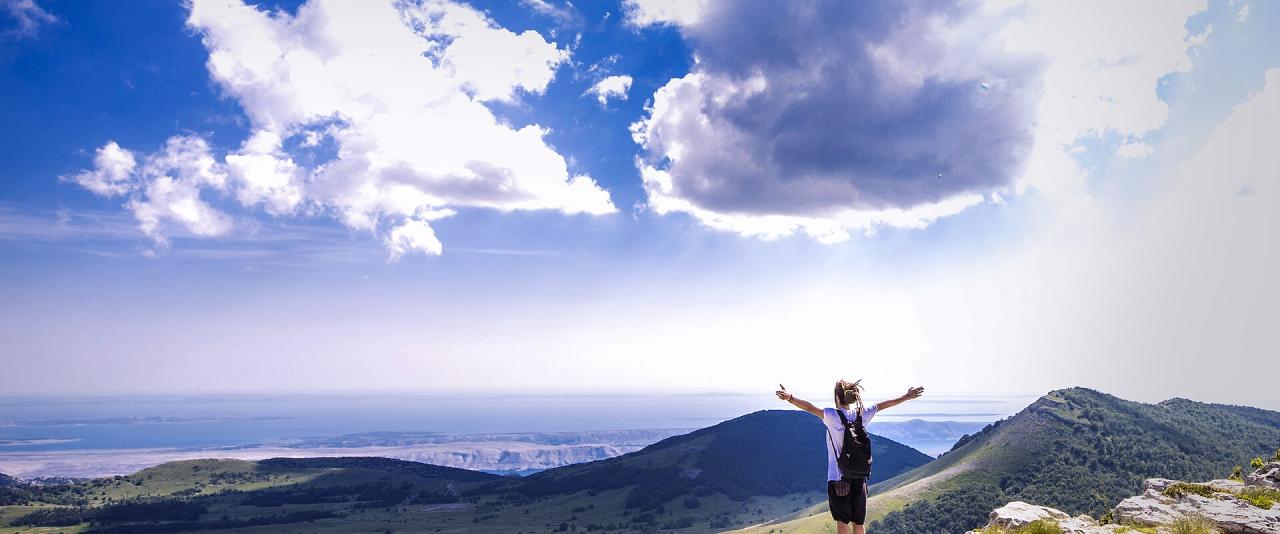
Velebit is the longest mountain range in Croatia, running for about 145 kilometres parallel to the Adriatic coast between Senj and the Zrmanja river. On one side it drops steeply to the sea; on the other it faces the cooler, greener uplands of Lika. The whole range is protected as Velebit Nature Park and has been a UNESCO biosphere reserve since the late 1970s, and it contains two national parks: Northern Velebit and Paklenica.
That mix of karst, beech and fir forest, high meadows and canyons supports some of Europe's larger mammals, including brown bear, grey wolf and Eurasian lynx, along with Balkan chamois, red and roe deer and a long list of birds. Seeing the big carnivores is never guaranteed, but Velebit is one of the best places in Croatia to try.
Rewilding Velebit and the Lika Plains
The most organised way to watch wildlife here is through Rewilding Velebit, a local team working with Rewilding Europe. On the Lika Plains, an area of grassland at the foot of the mountains, they have released herds of grazing animals to restore natural grazing: Bosnian mountain horses, konik horses and Tauros. Tauros are cattle, bred back to resemble and replace the extinct wild aurochs; they are not related to pigs or wild boar.
The team runs guided photographic safaris across a roughly 1,500-hectare section of the plains in a converted Land Rover Defender, with a local nature guide. Safaris run from April to October and last around two and a half to three hours. Hoopoes are often seen on the grasslands, feeding on insects disturbed by the grazers. Bookings go through the Rewilding Velebit website or Rewilding Europe's Wilder Places platform; check there for current prices.
Wildlife hides
Rewilding Velebit also operates a network of wildlife hides in the wider landscape, available for half-day or overnight stays between April and October. Some are equipped with beds, and rangers choose the hide for each group depending on recent sightings. Species seen from the hides include lynx, wolf, brown bear, red and roe deer, wild boar, badger and fox, though as with all wild animals, nothing is promised. Part of the hunting land in the area is being shifted from shooting to wildlife watching, and fees from hides and safaris help fund that work.
Northern Velebit National Park
Northern Velebit, a national park since 1999, is the place for high-mountain scenery and chamois. The Zavižan area, at around 1,600 metres, has Croatia's highest weather station, a mountain hut and the Velebit Botanical Garden, founded in 1967. From here, Premužić's Trail, built in the 1930s, runs along the ridge through some of the most dramatic karst landscape in the country and is easy to walk in sections.
Chamois are often seen on the rocky slopes around the trail, especially early in the morning. Brown bears live throughout the park, but they are shy, and you are far more likely to see tracks or scat than the animal itself. Golden eagles and other raptors patrol the ridges. The road up to Zavižan is narrow and partly unpaved, and snow can close it well into spring.
Paklenica and the southern Velebit
On the coastal side near Starigrad, Paklenica National Park is known for its two limestone canyons, Velika and Mala Paklenica. It is popular with climbers and hikers, and the cliffs are good for birdwatching: peregrine falcons and other birds of prey nest here, and the canyon walls attract a range of rock-loving species. Early mornings outside the busy summer weeks are the quietest and most rewarding times.
The bear refuge at Kuterevo
Near Otočac, the village of Kuterevo is home to a refuge for orphaned young brown bears, run by a local association with the help of volunteers. It is not a zoo or a wildlife park: the bears live in large forest enclosures and cannot be returned to the wild. Visitors can see the bears and learn about how they ended up there, and the refuge relies on donations. It is a good stop for families who are unlikely to see a wild bear on the trail.
Practical tips
The best months for wildlife watching are May, June, September and October, when animals are active and the weather is reasonable. Dawn and dusk are the most productive times. Bring binoculars, layers for rapidly changing mountain weather and plenty of water, as springs are scarce on the karst.
Respect the animals: keep your distance, don't feed anything and stay on marked trails. Tell someone your route before longer hikes, as mobile coverage is patchy on the high ridges. Both national parks charge entrance fees, collected at the park entrances.